
When University of Saskatchewan professor Bart Lardner walked through the trade show at the National Cattlemen’s Beef Association convention in San Antonio, Texas, in 2021, he wasn’t looking for a new research project.
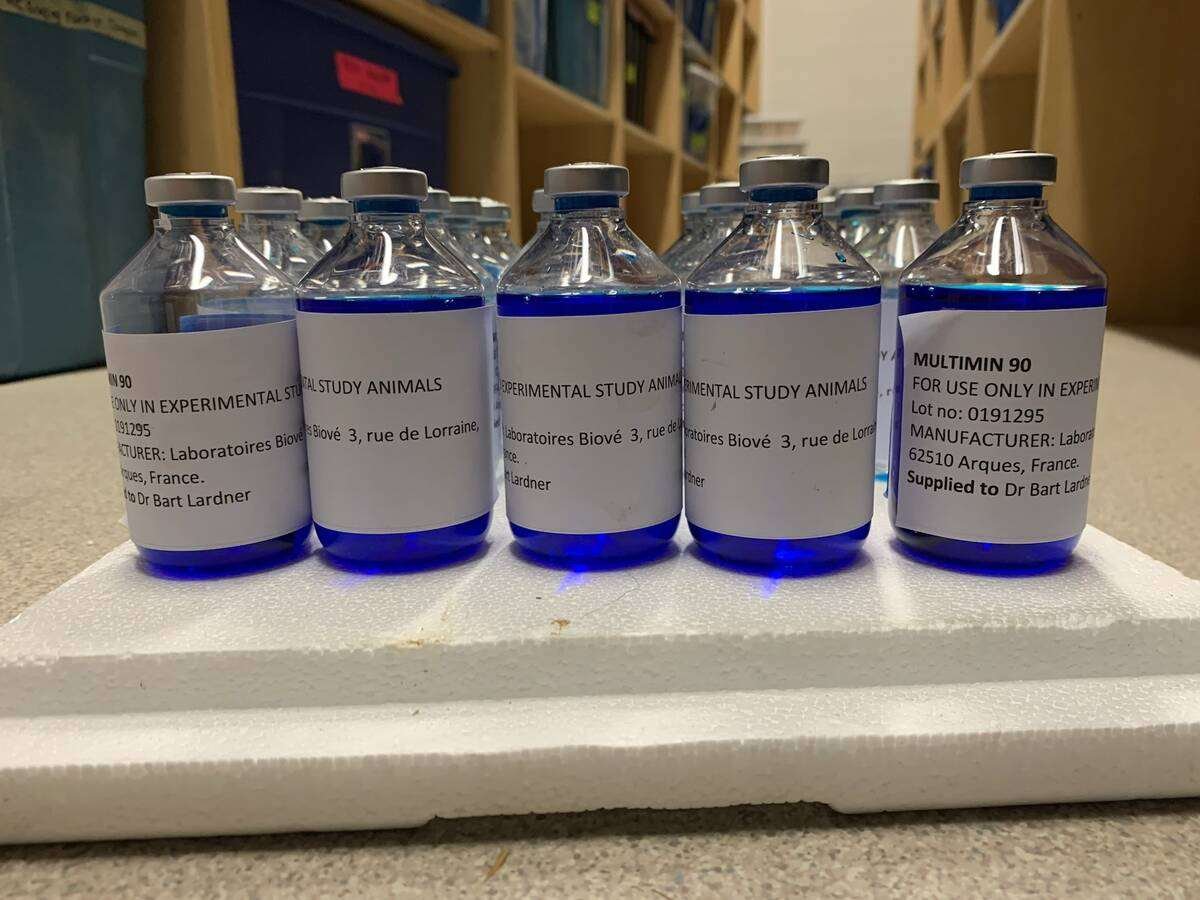
However, one product booth caught his interest — an injectable mineral called Multimin 90.
Why it matters
Mineral uptake among cattle is highly variable. An injectable mineral could change that.
“Keeping my eyes open for new ideas at these shows, you just never know, always looking for that opportunity. I saw their booth and the rest is history,” said Lardner, who works in the department of animal and poultry science at the university’s College of Agriculture and Bioresources.
At the time, he said no extended research work had been done in Canada with Multimin 90, a major brand of ready-to-use injectable trace mineral that was commercially licensed and available for livestock producers.
“I had to get special research permission, and they actually shipped it to me from their head office in Ireland,” he said.
That chance encounter turned into a three‑year study (2021-23), run through the university’s Livestock and Forage Centre of Excellence near Clavet, Sask.
Multimin 90 has been commercially available since about 2010 in the United States and 2019 in Europe, but Lardner’s work was the first formal beef study done in Canada, which he said helped pave the way for its 2023 registration in Canada.
Besides a cow-calf operation, injectable supplements are also designed for backgrounder, stocker, feedlot and dairy animals.
Lardner said the overall research goal was to look at whether an injectable trace mineral could help solve a long‑standing problem of highly variable mineral intake in beef cow herds.
For most cow‑calf operations, mineral supplementation means free‑choice granular mineral in tubs or feeders, which is convenient but far from precise.
“With 100 cows, intake of that mineral is all over the map,” said Lardner.
“One gets everything and one gets nothing. That’s the challenge (because) intake is variable.”
The rule of thirds in the mineral tub
Jack Fisher, cattle nutritionist at Delta Animal Solutions in Alberta, consults for U.S.-based Axiota Animal Health, which markets and distributes Multimin 90 in Canada.
With more than 30 years in the field, Fisher says he’s seen a renewed focus on trace minerals in the last decade.
“Producers often do the best they can to put a product in front of them, but the cow says, ‘I don’t eat mineral today,’ ” he said.
Fisher said research shows that the rule-of-thirds guideline applies in cow herds, where about 33 per cent of the animals eat the right amount of mineral, a third overeat and another third never adequately consume it, leaving many of them under-supplemented.
“In some controlled studies, some cows eat zero for the entire test period, and some cows, you believe it or not, two kilograms a day. So your average mineral consumption might look like it’s going down appropriately, but some of those cows are not doing the job,” said Fisher.
Into the blood in hours, not weeks
By injecting trace minerals, producers take out the selectivity of cattle’s choice and also avoid the loss of minerals in the rumen, where sulphur and other compounds bind up some of the trace minerals, said Fisher.
After injection, the product goes from the injection site into the blood in the first eight to 10 hours and from the bloodstream into the liver within 24 hours.
This is a much faster way to restore functional mineral levels in the liver compared with conventional mineral programs, which can take six to eight weeks to catch a cow back up.
This speed is especially valuable during stressful events such as breeding and weaning, which increase cattle’s trace mineral demand.
Trace minerals are also critical for reproduction and overall herd performance. Multimin 90 targets four key elements:
- zinc — 60 mg/mL
- manganese — 10 mg/mL
- copper — 15 mg/mL
- selenium — 5 mg/mL
“Copper, zinc, manganese and selenium are very important for fertility,” said Lardner.
The question he and his research team asked was, could an injectable product help ensure every cow gets what she needs and when she needs it?
Inside the three-year trial
Throughout the three-year University of Saskatchewan study, researchers followed commercial beef cows over three production cycles. The study used a crossover design with two treatment groups:
- Multimin 90 injectable plus free‑choice granular mineral.
- Free‑choice granular mineral only (control).

|
“With 100 cows, intake of that mineral is all over the map. One gets everything and one gets nothing. That’s the challenge (because) intake is variable.” Bart Lardner, University of Saskatchewan professor |
Each year, the groups swapped treatments, so cows served as their own controls over time. The injections were given twice per year: one month before calving and one month before breeding.
The researchers tracked:
- cow performance (body weight and body condition)
- calf growth
- pregnancy rates
- mineral status, using blood serum rather than liver biopsies
Copper up, pregnancy rates flat
Lardner said the accumulated data revealed that the effects of Multimin 90 look modest but potentially meaningful.
“For zinc, manganese and selenium, the blood serum mineral concentrations between the two groups of cows did not differ. However, copper levels at preg‑testing were greater for the Multimin group compared to the cows that only ate the granular mineral,” he said.
Pregnancy rates averaged 92 per cent in the Multimin 90 cows and 90 per cent in the control group over the three years.
“That wasn’t statistically different, but obviously there was a slight numeric increase. Is that relevant? Don’t know,” he said.
Cost, handling and the overdose risk
However, in other trial studies, Fisher said giving a strategic shot before artificial insemination resulted in about a nine to 10 per cent improvement in pregnancies.
The Saskatchewan data also showed there was no effect on cow body weight or body condition, and no difference in calf growth between the two groups.
Even so, Lardner sees the injectable as a necessary tool for helping herds with mineral uptake, especially given today’s production realities.
“Between what beef cows are experiencing (with) cold winters, dry summers, poor quality pasture … anything to get that cow pregnant is a useful tool,” he said.
Lardner said return on investment is the main positive for using injectable trace minerals, and Multimin 90 helps set up the breeding herd for success under stress.
“I think you’ve set your breeding beef herd, your female cows, up for a better chance to get pregnant,” he said.
“Anything we can do to make sure our cows get pregnant, it might be an extra $5 to $10 a head, but those calves are worth $4,000 today.”
However, he cautioned that producers need to weigh out the overall real costs and challenges of using injectable trace minerals.
“The cons are the cost. It’s another expense. Each animal has to be injected. You’ve got to run them through the chute two times a year. You’ve got to handle them twice,” he said.
Lardner also said injectables do have their limitations and risks, such as the potential for overdoses.
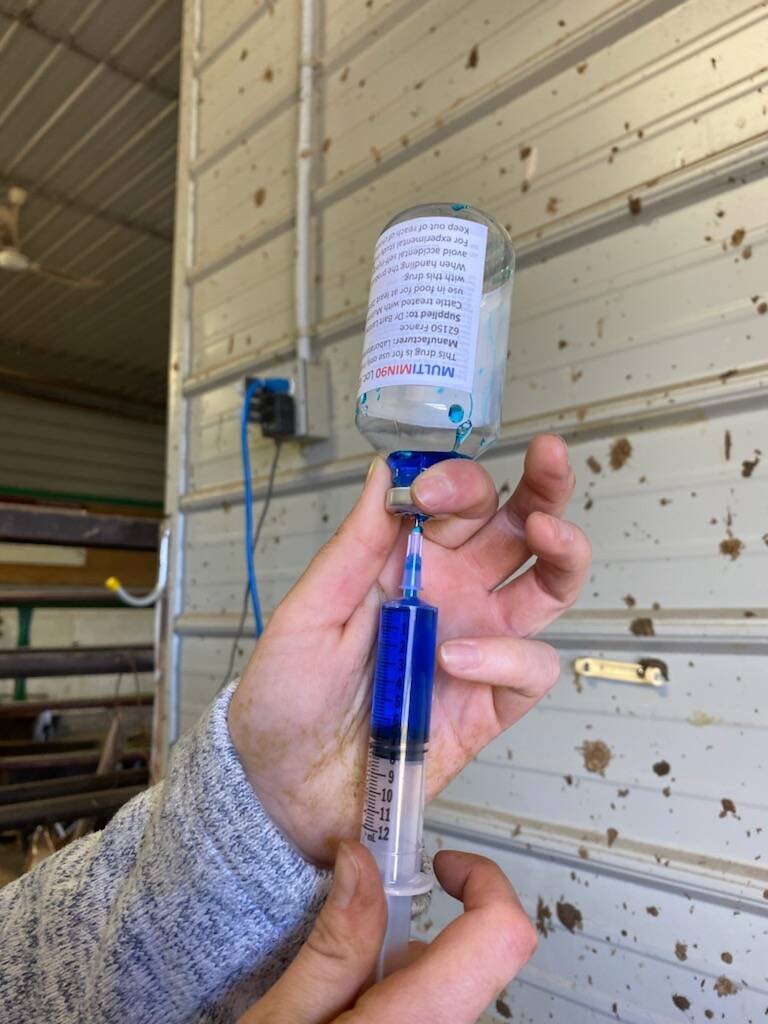
Injectable trace minerals are categorized as veterinary drugs rather than standard livestock feed. The Canadian Food Inspection Agency and Health Canada’s Veterinary Drugs Directorate regulate these to ensure precise dosages, especially concerning selenium limits.
Fisher said injectable trace minerals must be used inside a veterinary-guided program to target the right cattle, timing and dosage.
The post Injectable trace minerals target the cow that won’t eat appeared first on Farmtario.


