
Don Mills Collegiate Institute’s Emerging Green Technologies and Environmental Stewardship program is cultivating a land connection and agricultural legacy for culturally diverse inner-city students.
Why it matters
Fewer Canadians have any direct tie to agriculture or to how their food is grown. Programs like Don Mills Collegiate’s are betting that food literacy, taught in the heart of the city, can start rebuilding that connection.
The stewardship program provides students with real-world experience in greenhouse management, urban and Indigenous farming techniques, aquaculture, hospitality and tourism integration and local restaurant partnerships.
“The first reaction I often get is, ‘Why are you talking about agriculture when you’re in a city school?’” Daniel Kunanec, the school’s assistant curriculum leader and stewardship program instructor, told AgScape’s general meeting attendees in May.
“We should all be connected to the land. We should all understand our food systems. We should all understand seasonality. We should all have a sense of food literacy.”
He said the school isn’t farming, it’s teaching urban farming and forestry, noting “it’s really important to know that we understand the differences, we respect the differences, but we also embrace the opportunities.”
Student-led design
The program began small in 2000, with the reimagining of the school’s interior courtyard for a koi pond designed and built by students.
“We learned that if we develop spaces with the students in mind, by the students, the power of that is a better space. It’s a cleaner space; it’s a happier space,” he said.
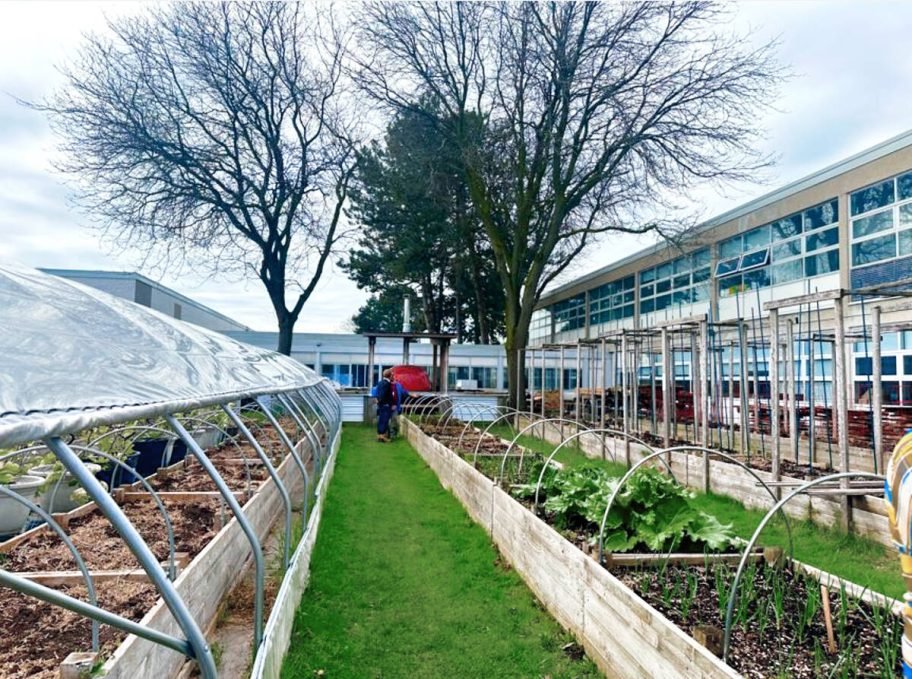
The first iterations were on paper, but students now use SketchUp to create and continually update the designs from simple raised beds to a hoop-house polytunnel, outdoor kitchen and wood-fired oven.
SketchUp utilizes Google Earth, providing insight into seasonal sun exposure, wind and the heat retention of the school’s 1950s porcelain brick, allowing students to refine the design to maximize growth in the microclimate.
Over the last 26 years, the program’s urban planning lens has evolved to build understanding and create affordable and sustainable food systems that make cities more livable.
For example, the polytunnel extends the growing season, and some harvested produce is sold at wholesale to a Michelin Star restaurant, with profits reinvested in the urban farm.
How the program funds itself
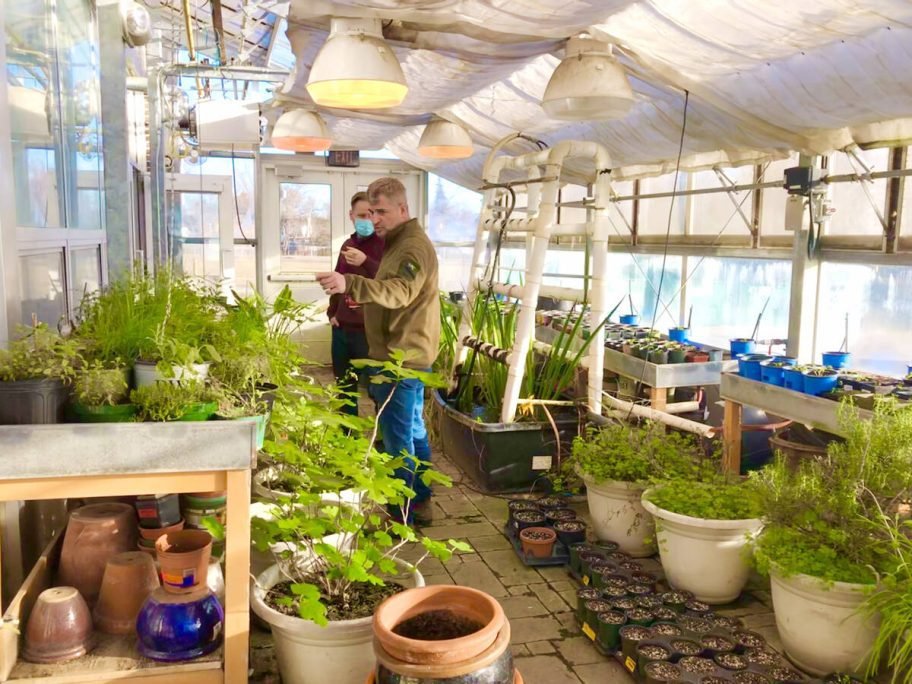
Students drive the program’s success, selecting only the best seeds for seedlings for what is now a closed-loop supply system: the hospitality and tourism program harvests and saves seeds for the green industry program to use.
“It’s not a big (greenhouse) space; some years we’ve had in excess of 5,000 seedlings go through there. For us, that’s a big deal,”said Kunanec.
Finding funds to support the program has always been a challenge, one students have risen to, Kunanec said.
“We have Grade 11s and 12s that are (writing grant proposals),” with a great deal of success, he said. “We’ve raised well in excess of three-quarters of a million dollars for our program at the school in 26 years.”
The Stewardship program uses long-term planning, including using school trees felled by the emerald ash borer a decade ago for the outdoor kitchen. Kunanec said the students milled the lumber on site, stacking, storing and seasoning it. Some of those graduates, now professional designers and carpenters, volunteer in the program.
Aquaponics, ready in a box
Paighton Smyth, of Trouw Nutrition and AgScape board member, said the program highlights the “critical value of food literacy” in Ontario classrooms while also showing the real-world barriers and challenges educators face getting support for these vital programs. And the solutions youth bring to the table when given the opportunity.
“By fostering a deep connection between students and the land, he has created a space where young people feel empowered to take risks, lead with curiosity and see themselves as vital contributors to their community,” she said.
The hope-based education model gives students insight into greenhouse management, irrigation systems, lighting, seasonality and climate change mitigation in a positive, practical way.
For example, after observing the slow government response to Hurricane Katrina, they set out to develop a ready-to-use aquaponics system using available plumbing and materials after a natural disaster in the school’s dust-collection storage room.
“Could we create, like Rubbermaid packs, that would go out with some basic instructions. Get it to the people that are the tradespeople, the understanders, the doers, the builders,” said Kunanec.
Once built, the system could support fish fry, seeds and food production.
The aquaponics system is fully integrated into the stewardship program, with students now experimenting with different species of fish.

“We should all be connected to the land. We should all understand our food systems. We should all have a sense of food literacy.”
— Daniel Kunanec, Don Mills Collegiate Institute
Farming the subway
Lately, students have been exploring the potential for abandoned subway stations and underground pathways to grow mushrooms or other plants using LED lights. The goal is to support community farmers’ markets supplied by underground urban farms within a five-block radius of where the food was grown. Given that one Toronto resident is growing lettuce in an apartment parking garage and selling it to city restaurants, Kunanec said the goal is within reach.
“These students will be the ones to do it,” he said confidently. “They have a sense of what the world is like because they’ve lived it, they’ve done it, they’ve grown it, they’ve picked it, they’ve prepared it, they’ve tasted it, they’ve shared it.”
2000 — Program begins with a student-designed koi pond in the courtyard
26 years — How long the stewardship program has run and evolved
5,000+ — Seedlings grown in the greenhouse in a single year
$750,000+ — Raised through student-written grant proposals
The post Inside the city school where students design and run their own urban farm appeared first on Farmtario.


