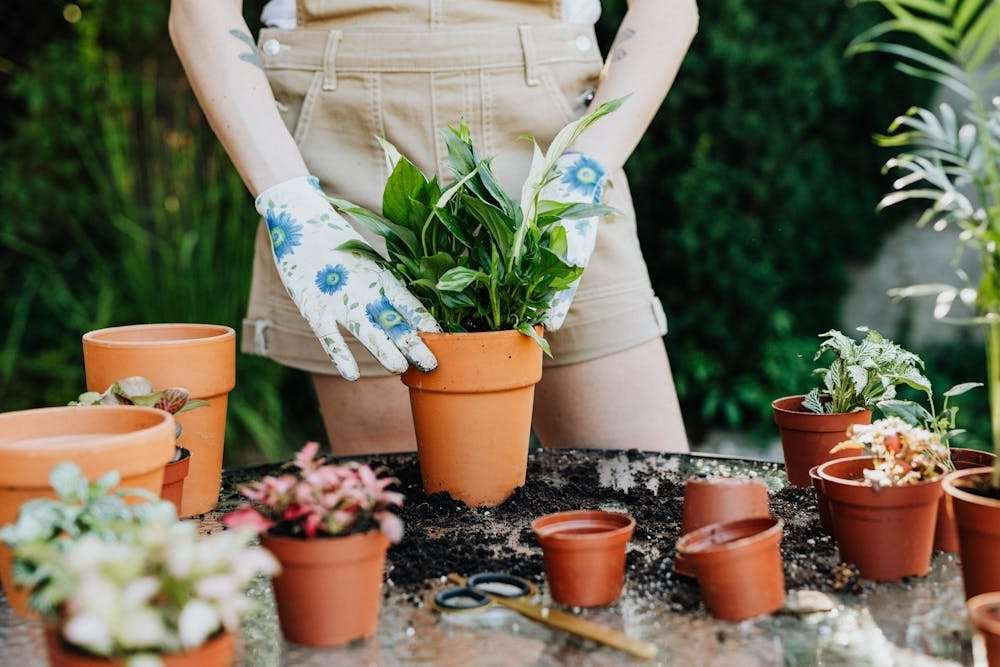
April is a time of planting and plenty. With the sun returning in the northern hemisphere, farmers and gardeners are springing into action.
Yet the sowing season comes with a hefty carbon footprint. Our garden sheds are swimming in petroleum: plastic pots, trays, and more are some of the most common tools that use fossil feedstocks.
These fossil products can leach microplastics into the soil, where they linger for hundreds of years. Invariably, they also end up entering the human bloodstream.
Dealing with the problem means reducing plastic use in the graden, starting today. Pots and seed trays are a good place to start.
Thankfully, commercial growers and home gardeners alike have more choice than ever when it comes to biodegradable containers that meet their needs.
Is your garden addicted to plastic?
Plastic has taken over almost every corner of modern horticulture. Inside a typical garden shed are plastic seed trays, compost bags, polytunnel covers, and netting. Petroleum is usually hiding in seed packets, too, as well as clips for trellises and nets.
The use of plastic is understandable. The material is incredibly cheap and light. It is also highly insulating. This is a useful property, especially in commercial horticulture. A few degrees of soil warmth can decide whether seeds germinate or not.
This combination of cheapness, strength, and superior insulation makes it difficult for gardeners to dispense with plastic, especially in colder regions.
Yet plastic comes with irreversible costs. Today, soil microplastic is so common worldwide that even fresh compost is riddled with its residues.
The solutions to this plastic dependency depend on what kind of gardening you do.
Small-scale growers can upcycle household staples. Cardboard toilet rolls and paper can all be used to craft DIY pots that are 100% circular, free, and avoid unnecessary resource use.
However, commercial growers face greater economic pressures. The demands of scale and efficiency mean that business owners need purpose-built pots that save on time, space, and energy. This is where biobased, biodegradable pots come in.
Ditching plastic: natural fibres and bioplastics
Broadly, there are two types of biodegradable pots on the market.
First are pots made from minimally processed plant fibres. Usually, they consist of natural grass or wood fibres compacted into a pot shape. These natural pot materials mimic fossil plastic in lightness, flexibility, and ease-of-use if not in appearance.
Then there are bioplastic plant pots. Although these are also made from plant feedstocks, these are processed so heavily that they resemble fossil plastics, both in physical appearance and chemical structure.
Natural fibre pots
A popular potting material in the minimally processed category is coconut coir. Coir is the hairy fibre that covers coconut shells.
As they are made from entirely organic material, coir pots can be planted straight out into garden soil if necessary, without any risk they will break into nasty compounds.
Other kinds of minimally processed plant-based pots are biodegradable bamboo or wood fibre pots. These can also be planted straight into the ground around the plant, offering a time-saving advantage over conventional pots and avoiding root disturbance. All these materials offer lightness and biodegradability in one.
A third class of plant fibre pots are ‘bag’ pots that are effectively fabrics. Haxnicks and other companies sell fully biodegradable versions made from hemp and cotton fibre – both organic materials that melt away in the natural environment without nasty side-effects.
These soft, sack-like pots are also unmatched in lightness and ease of storage. These are easy to transport or fold away flat when not in use.
Then there are the outliers. Dutch startup Plantic makes a potting material that is difficult to classify along the fibre versus bioplastic spectrum.
Its pot material sits somewhere between the less processed plant fibre pots and fully bioplastic options. They feature a natural finish resembling cardboard. This is thanks to the recycled paper content. However, the material also contains a patented bio-resin – a more heavily processed biochemical that adds strength and binding properties to the mix.
Bioplastic pots
Coconut coir and bag pots look like they are made from natural materials. However, other biodegradable options are almost indistinguishable from ordinary plastics.
One of the major European companies producing bioplastic plant pots is UK’s Solinatra, which makes renewable materials specifically for the horticulture segment.
Its materials closely mimic conventional fossil plastic products in appearance, with the only major difference being that they are biodegradable in soil.
Solinatra uses agricultural waste as raw materials to make its pots. Opting for a non-food feedstock means its manufacturing process does not deplete crops for human consumption.
Perfectly pelletted
Aside from formulating a durable and biodegradable material, Solinatra has also developed a scalable manufacturing process for it. This is an important factor in driving adoption through the industry.
First, agro-waste is processed and dried to a fine powder. Solinatra then compacts this into small pellets. The pellets then go in for the final process of moulding and setting into the trays and pot shapes.
Solinatra’s pelleting process makes its product more attractive for other companies to work with. This is because fossil-based plastics are also sold and used in pellet form.
When other manufacturers want to produce their own biodegradable pots using Solinatra’s material, they can simply drop the company’s pellets into their existing machine. In other words, switching to renewable feedstocks does not require costly technical upgrades, minimising the cost of decarbonising their production lines.
Solinatra’s biobased pot material is now poised to enter international supply chains. In 2024, major horticultural manufacturer Modiform selected Solinatra material to make a fossil and PFAS-free plant pot that could be compostable in cold soil. Its partnership Solinatra marks an attempt to move towards a lower-carbon manufacturing line.
Will the industry shift?
On the whole, biodegradable pots offer huge sustainability gains over those made from fossil plastics. However, they are still more expensive to make. To get cheaper, demand for these alternatives from big commercial plant growers would have to increase significantly.
Regulation banning single-use plastic is one of the most effective ways to boost adoption. Yet horticultural businesses must also be convinced that plant-based materials work.
There is evidence that biodegradable materials support healthy growth and protect plants in transit just as much as fossil plastic.
One study from 2025 at Auburn University showed that basil plants grown in renewable pots reach marketable size and quality in eight-weeks, a reasonable commercial time-frame.
However, the study also highlighted a downside of biodegradable pots from a commercial perspective – some biobased materials may be too compostable for growers.
By the time plant fibre containers have been transported, displayed, and sold to customers, they may already be degrading. In terms of marketability, less processed options like coconut coir or paper pulp, tend to fall short.
Bioplastics, on the other hand, rivalled virgin plastics on strength and durability. This makes them the obvious choice for commercial growers wanting to reduce their carbon footprint and minimise product losses.
Pros and cons
While durable enough for commercial uses, bioplastic pots have drawbacks too.
There is still scientific uncertainty about how different bioplastics break down in soil. Like oil plastics, certain bioplastics are known to create microplastics as they degrade. Their long-term impacts on the soil and our bodies are not fully understood yet.
Further, there are currently no EU laws governing labels like biodegradable or compostable. Although there are international standards for measuring a product’s biodegradability, what exactly a company means by these terms is still imprecise and largely opaque to the average consumer.
In light of this uncertainty, opting for the less processed plastic alternative, such as plant fibre pots, could be the maximally sustainable choice – especially for home gardeners who don’t need pots that can withstand long periods in-transit or storage.
Clips and more
Pots are only the most obvious places where plastics have infiltrated the gardening toolkit.
Smaller items like trellis and plant clips are just as likely to be made from the plastic as pots and for the same reasons – their lightness, durability, and moldability.
Dutch biobased gardenware company Kratiste offers an alternative. It makes biodegradable odds and ends for the eco-conscious gardener, including bio-arches and climbing boards for taller plants to cling onto. They also produce biodegradable clips for securing the plants.
What’s clear from a fossil inventory of our garden toolkit is that horticulture is still far too dependent on petrochemicals.
It is more urgent than ever that we move our gardening practices away from plastic at every scale and step of the growing process – from private allotments to commercial nurseries.
When it comes to choosing biobased products, commercial nurseries will have different demands to a smaller-scale urban gardener. Yet the biobased industry is already making enough materials to meet the needs of both markets.
With options ranging from coconut coir pots to textile bags and bioplastics that pass for conventional fossil materials, we have the technological know-how and the industrial production lines to grow petroleum-free.
The post Is your garden addicted to plastic? appeared first on World Bio Market Insights.