

Japan Airlines (JAL) is broadening its carbon credit and removal efforts to achieve net-zero CO₂ emissions by 2050. However, it does not view offsets as a substitute for cutting emissions from its aircraft.
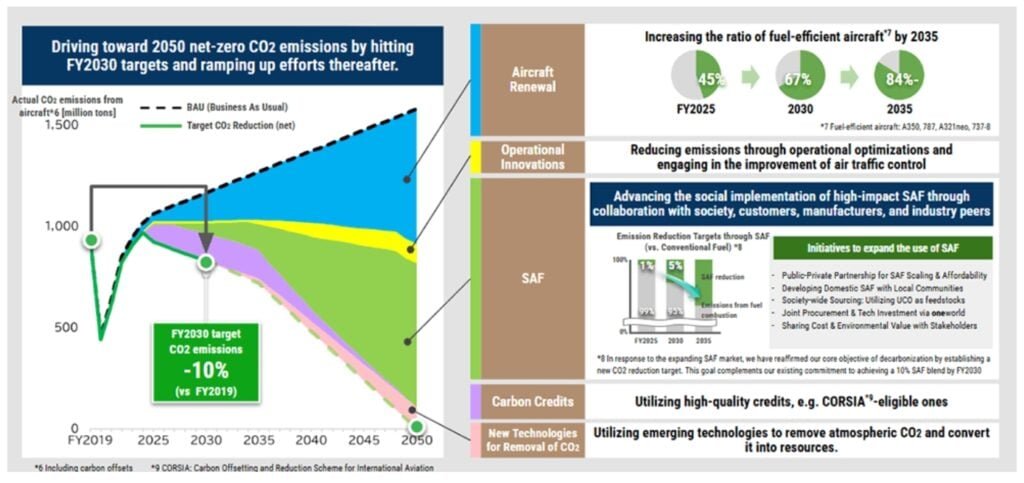
Instead, JAL is creating a layered decarbonization strategy. It starts with more fuel-efficient aircraft and operational upgrades, followed by sustainable aviation fuel (SAF). Carbon credits and removals will tackle emissions that are tough to eliminate.
- This approach is evident in JAL’s emissions profile. In FY2025, the airline reported 9.13 million metric tons of net CO₂ emissions from aircraft, a drop from 9.69 million tons in FY2024 and below its FY2025 target of 9.21 million tons.
At the same time, JAL improved its emissions intensity to 0.8461 kg of CO₂ per revenue tonne-kilometer, down from 0.9595 kg in FY2024. The airline aims to reduce aircraft emissions to 8.28 million tons by FY2030, a 10% drop from its FY2019 baseline.
In contrast, emissions from ground facilities were notably lower at about 54,000 tons in FY2025.
This gap highlights why aviation faces a tough carbon challenge. Most of JAL’s emissions stem from aircraft fuel combustion, meaning major reductions must come from changes in aircraft, fuel, and operations, not just offsets.
SAF Remains Central to JAL’s Emissions Strategy
JAL is placing SAF at the core of its near-term emissions reduction plans.
The airline reached its FY2025 goal of replacing 1% of total fuel uplift with SAF, which is about 40,000 kiloliters. JAL aims for at least 10% SAF use by FY2030. This should lead to a 5% reduction in aircraft CO₂ emissions that year.
The airline has also invested in domestic SAF supply chains and projects to boost SAF production in Japan.
However, scaling SAF remains challenging. Global production is small compared to aviation fuel demand, and high costs, limited feedstocks, and infrastructure issues limit supply.
JAL expects some emissions to continue even after maximizing aircraft efficiency, making operational upgrades, and using SAF. Its long-term plan estimates that about 10% of residual emissions could remain by 2050. This creates a need for carbon removals and other high-quality credits.
JAL Tightens Its Carbon Credit Framework
JAL is now focused not just on buying carbon credits but also on selecting those that genuinely support its climate strategy.
In October 2025, the airline set up the JAL Group Carbon Credit Utilization Regulations. This framework outlines group-wide principles for choosing and using carbon credits. It also considers international standards, including ICAO’s CORSIA.
The airline emphasizes factors like additionality and permanence when assessing credits.
The airline has invested in BeZero Carbon, a carbon-credit ratings company, to evaluate credit quality and enhance transparency in carbon markets.
This approach is crucial because JAL’s strategy goes beyond merely offsetting emissions. The airline seeks to build a portfolio of credits that meets specific quality and compliance needs.
CORSIA and J-Credits Add Another Layer
CORSIA is becoming a key aspect of JAL’s carbon strategy. This global mechanism, created by ICAO, aims to tackle CO₂ emissions from international aviation through a market-based system.
JAL has participated in CORSIA from the beginning and has retired significant volumes of CORSIA-eligible credits.
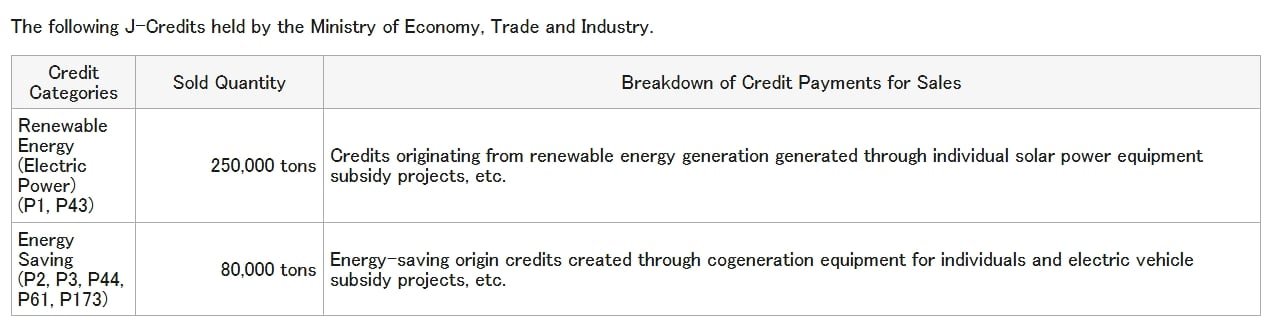
- The airline is also enhancing its use of Japan’s J-Credit system. J-Credits are government-certified units generated through activities like energy efficiency, renewable energy, and forest management that reduce or remove CO₂.
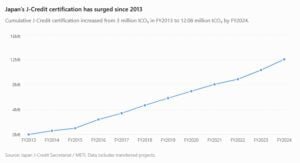
JAL’s interest goes beyond carbon reduction. The airline is developing a “locally produced, locally consumed” carbon-credit model, linking climate projects with regional economic activity in Japan.
This model can involve forests, conservation projects, and blue-carbon ecosystems like seaweed beds and tidal flats. JAL has also included J-Credits in its passenger offset strategy, allowing customers to support domestic projects.
Meanwhile, its voluntary passenger offset program is expanding. JAL recorded 5,012 carbon-offset users in FY2025, up from 2,310 in FY2024 and just 385 in FY2022.
Climeworks Deal Brings Carbon Removal Into the Strategy
JAL’s carbon strategy advanced in September 2026 with an agreement with Climeworks Solutions for carbon dioxide removal credits to meet CORSIA requirements.
This agreement combines CORSIA-compliant removals with Climeworks’ direct air capture (DAC) credits. It will also include other removal methods, like biochar and soil carbon sequestration.
The deal provides JAL access to engineered carbon removal without relying on a single pathway. Climeworks’ DAC technology captures CO₂ directly from the air for permanent storage.
Its Mammoth facility in Iceland aims to capture up to 36,000 tons of CO₂ annually once fully operational. Climeworks reported 675 tons of net carbon removal from Mammoth in the first half of 2026, compared to 119 tons during the same period in 2025.
Carbon Credits Complement, Rather Than Replace, Reductions
JAL’s strategy reflects the tough economics and technological limits of aviation decarbonization.
The airline must cut the largest share of emissions through aircraft renewal, operational efficiency, and SAF. Yet, aviation cannot fully eliminate all fuel-related emissions, especially on long routes.
So, carbon credits are a second layer of the strategy.
JAL combines CORSIA-eligible credits, J-Credits, domestic projects, passenger offsets, and carbon removals to build this layer. It focuses on additionality, permanence, and regulatory eligibility. This shows a market where buying a credit matters less than proving its quality and intended use.
For JAL, the path to net-zero isn’t based on offsets alone. The airline uses carbon markets to address residual emissions while pushing for reductions through aircraft efficiency, operations, and SAF.
As CORSIA grows and carbon removal tech advances, this mix could be key for airlines. It helps them cut down major emissions while tackling the tougher ones that remain.
- READ MORE: 2026 Could Redefine Voluntary and Compliance Carbon Market Convergence, with Japan Leading the Way
The post Japan Airlines Cuts CO₂ to 9.13M Tons, Expands Carbon Credit Strategy appeared first on Carbon Credits.


