JPMorgan Chase is changing how it measures climate progress and green financing as global energy demand rises. The U.S. banking giant has updated its emissions targets, expanded the types of projects that count toward its green finance goal, and launched a new center focused on energy and the environment.
The changes reflect the bank’s view that cutting emissions must go hand in hand with reliable and affordable energy. Its updated approach includes financing for nuclear power, electricity grids and other low-carbon energy activities.
The bank also extended key climate targets from 2030 to 2035. It says the targets will help track progress across its lending portfolio, but they will not restrict its financing decisions.
The changes were announced on October 14, alongside the release of JPMorganChase’s 2025 Sustainability Report. They mark a broader approach to climate finance as artificial intelligence, manufacturing and electrification increase demand for power.
Heather Zichal, Head of the Center for Energy and the Environment and Global Head of Sustainability, said:
“Meeting energy demand while balancing affordability, security, reliability, and sustainability, what we call the ‘Four Forces,’ is one of the defining economic opportunities of our era.”
Oil, Power and Auto Sectors Get New 2035 Emissions-Intensity Targets
JPMorganChase first set portfolio-level emissions targets in 2021. These targets measure the carbon intensity linked to its financing in selected industries.
Carbon intensity measures emissions against a unit of business activity or output. Tracking it helps the bank assess how emissions linked to its lending change over time.
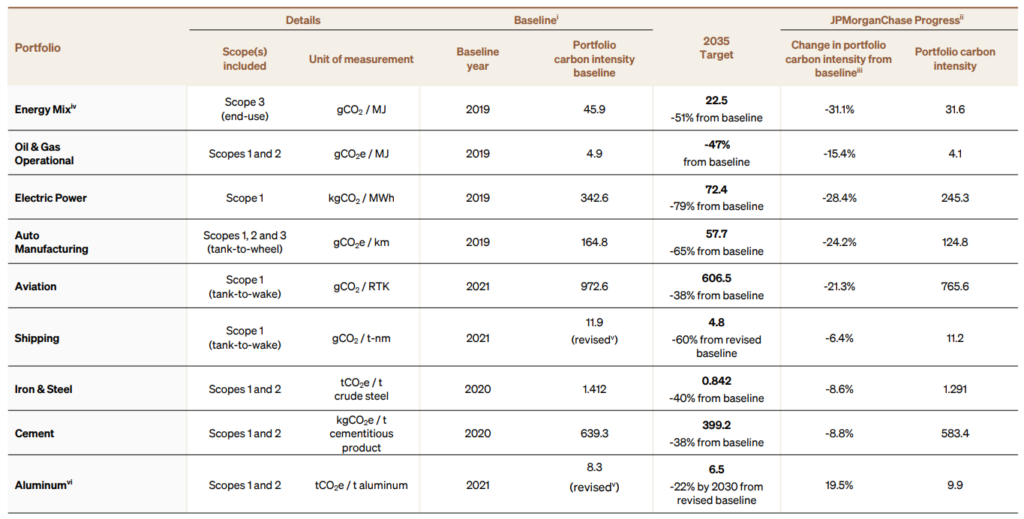
The bank has now updated its targets to align with the International Energy Agency’s 2025 Net Zero Emissions by 2050 scenario. The updated targets use 2035 as their target year rather than 2030. Three major changes stand out:
- Oil and gas: The target is now a 47% reduction in carbon intensity by 2035, compared with the previous 45% reduction target by 2030.
- Electric power: The target rises to a 79% reduction by 2035, from the previous 69% target by 2030.
- Auto manufacturing: The target increases to a 65% reduction by 2035, compared with the previous 48% target by 2030.
These percentages refer to carbon intensity, not total emissions. They also do not mean the bank has already achieved these reductions. They are targets for measuring changes across its financing portfolio.
The bank also stresses that the IEA scenario is one possible path to reaching net zero, not a prediction of what will happen. JPMorganChase says its targets may change as technology, markets and available information develop.
Green Financing Now Includes Nuclear Power and Electricity Grids
JPMorganChase has also widened the types of activities that count toward the green objective of its $2.5 trillion Sustainable Development Target. The bank launched this 10-year goal in 2021. It aims to finance or help arrange more than $2.5 trillion for sustainable development by the end of 2030, including a $1 trillion green finance objective.
Under the new rules, eligible activities include:
- Nuclear energy,
- Electricity networks,
- Grid upgrades,
- Electric vehicle charging infrastructure, and
- Zero- and low-carbon power generation at companies using various energy sources.
The change reflects the bank’s view that a cleaner energy system needs more than renewable power plants. Electricity grids need to link new energy sources to users. They must also provide reliable power to meet rising demand.
However, the expanded definition has an important effect on the reported figures. JPMorganChase applied the new eligibility rules to earlier years, too, allowing it to measure past financing under the updated system.
As a result, a higher green finance total does not necessarily mean the bank provided the same amount in new funding during that period. Some of the increase reflects activities that now qualify under the broader rules.
Bank Reports $520 Billion in Green Finance
JPMorganChase reported that it had financed or helped arrange $1.2 trillion toward its $2.5 trillion Sustainable Development Target by the end of 2025. Of that total, $520 billion counted toward its green finance objective.
- The bank reported $217 billion in sustainable development financing during 2025, including $96 billion under the green objective.
The expanded eligibility rules contributed $145 billion to the reported green finance total. This is an important point when looking at the bank’s progress. The new figure includes financing that meets the new rules, not just new funding.
The green objective supports activities such as low-carbon energy, clean technology and projects that improve climate resilience. The bank says it has financed or helped arrange more than $500 billion in low-carbon energy since 2021. Its tax-focused investment team has also helped finance one in every four gigawatts of U.S. renewable energy and storage capacity, according to the bank.
These figures show the scale of JPMorganChase’s financing activity. However, money counted toward a green finance target is not the same as a measured reduction in greenhouse gas emissions. The actual climate impact depends on the projects financed and the results they deliver.
New Center Will Focus on Energy and Climate Challenges
Alongside the target changes, JPMorganChase launched its Center for Energy and the Environment (CE&E). The new center brings together the bank’s Center for Carbon Transition and its Corporate Sustainability functions. It aims to combine energy and climate expertise with policy knowledge and financial services.
The bank says this approach will help it identify barriers that money alone cannot solve. These include slow permit approvals, delays in connecting projects to electricity grids, worker shortages, supply chain problems, and uncertainty about future rules.
The center plans to work across businesses, policymakers and investors to help address these challenges. The bank has also placed greater emphasis on what it calls four forces: affordability, security, reliability and sustainability. It argues that energy investment must consider all four to support lasting progress.
This wider focus comes as power demand rises from data centers, artificial intelligence, manufacturing and electrification. JPMorganChase says it facilitates nearly $100 billion a year to help add new energy supply from different sources.
Emissions Targets Will Not Limit Lending
A major part of the updated strategy is the bank’s view that financed-emissions figures cannot tell the whole story. Financed emissions are greenhouse gas emissions linked to the activities of companies that a bank lends to or supports. These figures can track changes in a portfolio. However, the bank notes that gaps in data and different measurement methods can limit their usefulness for decisions on individual loans.
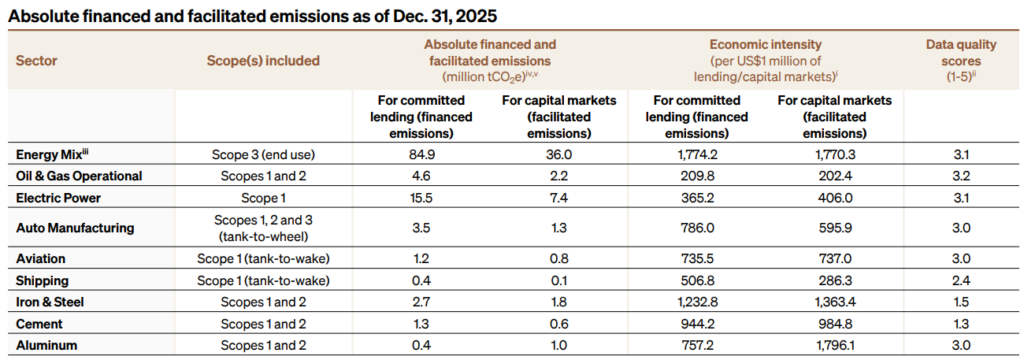
JPMorganChase will continue using its climate targets to monitor trends and guide discussions with clients. However, it says the targets are not designed to restrict financing. This means the bank may continue to finance companies across different energy sectors while tracking how its portfolio’s carbon intensity changes.
The approach also reflects the bank’s focus on energy security and affordability. Nuclear power and grid upgrades might qualify for green finance rules. The bank sees them as key to a reliable, lower-carbon energy system.
The wider definition does not mean every activity at a company that uses fossil fuels automatically qualifies as green. Eligible activities must still meet the bank’s own criteria.
Will Broader Green Finance Deliver Measurable Climate Gains?
JPMorgan Chase’s new strategy focuses more on the capital it directs to energy projects. It also tracks emissions intensity closely.
The changes also make its green finance figures broader. This can help capture more low-carbon infrastructure types. However, readers need to tell the difference between new financing and amounts that qualify due to rule changes.
The bank’s approach also leaves open questions about how quickly its clients will cut emissions and how much the financing will contribute to real-world climate progress. Its updated targets provide a way to track portfolio trends through 2035, while the new center aims to address practical barriers to energy investment.
For investors and climate-market observers, the key measures to watch will be future financing totals, progress against the revised emissions-intensity targets, and evidence of actual emissions reductions. These will help show whether the broader strategy leads to changes beyond the way the bank reports its activities.
The post JPMorganChase Extends Climate Targets to 2035 and Expands Green Finance Rules appeared first on Carbon Credits.