
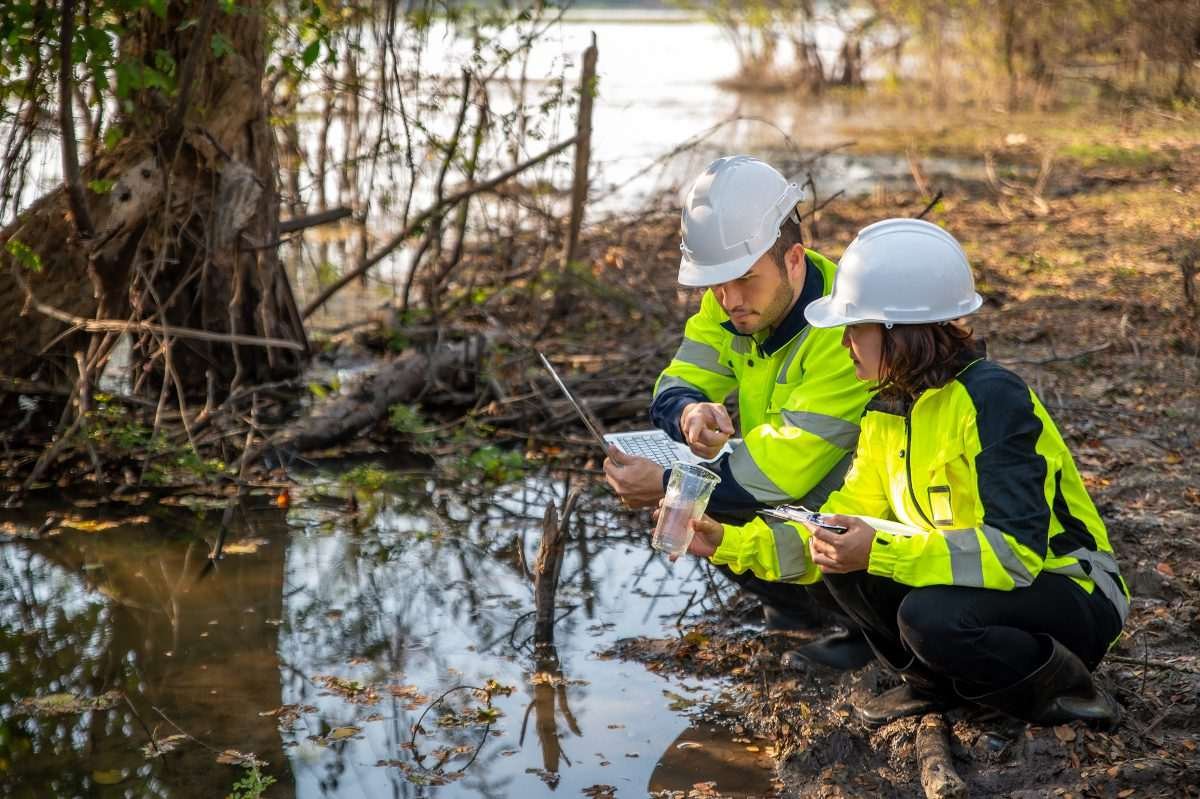
Only 14.3% of England’s rivers, lakes and estuaries have achieved good ecological status in the latest Environment Agency classifications, prompting environmental groups to call for more comprehensive monitoring and stronger action on pollution.¹
The regulator published its latest Water Environment (Water Framework Directive) Regulations classifications on 6 August, providing the first comprehensive national update since 2019 on the ecological and chemical condition of England’s water bodies.²
All 4,658 surface water bodies were assessed against standards covering wildlife, water quality and physical habitat. The results show 14.3% achieving good ecological status, while 65.4% were classified as moderate, 17% as poor, 3.1% as bad and 0.1% as high.³
The figure for good ecological status stood at 16.3% in 2019, although the EA cautioned against making a direct comparison between the two figures. It said changes to monitoring and classification since then include a wider set of monitoring data, and more risk-based monitoring targeted at places where problems are suspected.⁴
The classification system also applies a “one-out, all-out” principle, meaning a water body can fail to achieve good ecological status because of a single element. Around a third of water bodies failing to achieve good status did so because of only one element, according to the EA.⁵
The agency pointed to the River Foss in Yorkshire, which achieved good status for every ecological indicator apart from phosphate, where it was rated moderate, resulting in an overall moderate classification. Across England, 82% of individual ecological indicators were rated good or high.⁶
Environment Agency chair Alan Lovell said: “The results show that too many water bodies are still not achieving the standards we want to see.”⁷
The EA identified pressures including sewage discharges, agricultural nutrients and surface water run-off from urban areas and transport. It also highlighted increased regulatory activity, including a record 10,000 inspections of water company sites, while annual farm inspections are due to rise from 4,000 to 6,000 over the next three years.⁸
All surface waters also continue to fail the separate assessment of good chemical status, largely because of persistent pollutants that accumulate in the environment and can take decades to break down.⁹
Monitoring gaps prompt questions
The Rivers Trust said the results demonstrated that little progress had been made, while questioning whether the monitoring regime provides a sufficiently complete picture of river health.¹⁰
The charity argued that greater use of risk-based monitoring could mean water bodies considered to be at relatively low risk receive insufficient long-term attention. It also raised concerns about the range of chemicals covered by Water Framework Directive chemical classifications, particularly emerging contaminants.¹¹
The Rivers Trust is calling for an integrated monitoring system combining regulatory monitoring with citizen science, remote sensing and other sources of environmental data.¹²
Tessa Wardley, Director of Communications & Advocacy for The Rivers Trust, said: “In order to take action to ensure healthy, wild, natural rivers, we need to understand where the problems are. This requires consistent and comprehensive monitoring and transparent sharing of that data, and that includes risk-based monitoring of rivers and waterbodies, with a broad coverage of regular monitoring at all sites. We would like to see the Environment Agency (EA) go further, incorporating citizen science and other sources of data to get a much fuller picture of river health in order to take the necessary action.”¹³
She added: “While 82% of individual indicators rated ‘good’ sounds positive – almost 86% of waterbodies tested still have one indicator that is failing which means there is little chance that the overall health of the waterbody is good – so, we still have a big problem. And the EA testing is not as comprehensive as it needs to be.”¹⁴
The charity also called on the EA to publish full site-level data, arguing that without knowing which monitoring sites contributed to individual water-body classifications it is difficult to determine whether problems elsewhere in a catchment may have been missed.¹⁵
It also questioned the scope of chemical monitoring, saying Water Framework Directive classification focuses on a limited group of priority substances and does not adequately cover many emerging contaminants of concern. The Trust noted that the EU has recently added new priority substances and, in some cases, introduced more stringent standards.¹⁶
Chemical pollution in focus
The finding that all surface waters fail good chemical status prompted particularly strong reaction from environmental campaigners.
The EA said the widespread failure is largely attributable to persistent pollutants including mercury, PFOS – one of the PFAS group of chemicals – and PBDE flame retardants. Such substances can remain in the environment for long periods and accumulate in organisms and ecosystems.¹⁷
Ami McCarthy, head of politics at Greenpeace UK, described the findings on chemical pollution as “sobering” and called for action to prevent harmful chemicals entering the environment at source. She also highlighted agricultural pollution alongside pollution associated with the water industry.¹⁸
Craig Bennett, chief executive of The Wildlife Trusts, criticised the lack of progress in tackling chemical contamination, while Richard Benwell, chief executive of Wildlife and Countryside Link, called for the Government to keep pace with stronger EU safeguards on persistent chemicals and require polluting companies to contribute to clean-up costs.¹⁹
Professor Alex Ford, Professor of Biology at the University of Portsmouth, also questioned whether existing chemical monitoring captures the full extent of contamination, saying he was “confident we would be failing on a larger list of contaminants” if regulators expanded the range of substances being assessed.²⁰
‘Major national challenge’
Reaction to the ecological classifications also focused on the limited progress evident since the previous national assessment.
James Wallace, chief executive of River Action, said England’s rivers remained among the “filthiest in Europe”, pointing to sewage and intensive agriculture as major sources of pollution.²¹
Dr Jess Neumann, Associate Professor of Hydrology at the University of Reading, said the results showed that restoring England’s waters remained a substantial challenge despite increased public attention, enforcement and investment.
“It shows that restoring the health of rivers, lakes and coastal waters remains a major national challenge,” she said.²²
The EA argues that the classifications should be considered alongside a much larger body of monitoring evidence and says the new data will be used to target investment and enforcement.²³
It cited the River Roch as an example of the potential impact of targeted intervention. Phosphate levels there improved from poor status in 2019 to good in 2025 following the introduction of a catchment permit requiring sewage treatment works upstream of the Manchester Ship Canal to remove more phosphate from their discharges.²⁴
Environment Secretary Angela Eagle said the latest results “underline the need for wholesale change across the water sector”, pointing to what she implied were the stronger regulatory powers now in place and £22.1 billion earmarked for water-company environmental improvements by 2030.²⁵
The Government has also proposed what it presents as a more integrated approach to water management in its water white paper, while the EA said the new classifications would help direct action by water companies, farmers, businesses and local authorities.²⁶
For The Rivers Trust, however, better integration of monitoring itself will be essential if that action is to be effectively targeted.
Wardley said: “We can’t do this on our own, and need the EA to keep gathering data, accompanied by strong enforcement and targeted action to boost river health.”²⁷
Notes
[1] “New data to drive action to improve England’s rivers and lakes”, Environment Agency, 6 August 2026.; [2] Ibid.; [3] Ibid.; [4] Ibid.; [5] Ibid.; [6] Ibid.; [7] Ibid.; [8] Ibid.; [9] Ibid.; [10] The Rivers Trust, Latest river monitoring data does not give full picture of river health as it leaves out ‘low risk’ rivers and harmful chemicals, 6 August 2026.; [11] Ibid.; [12] Ibid.; [13] Ibid.; [14] Ibid.; [15] Ibid.; [16] Ibid.; [17] Environment Agency, op. cit.; [18] “All bodies of water in England polluted with toxic chemicals, official data shows”, The Guardian, 6 August 2026.; [19] Ibid.; [20] Ibid.; [21] Ibid.; [22] “Only 1 in 7 of England’s rivers, lakes and estuaries meet ecological standards”, Financial Times, 6 August 2026.; [23] Environment Agency, op. cit.
[24] Ibid.; [25] Ibid.; [26] Ibid.; [27] The Rivers Trust, op. cit.


