
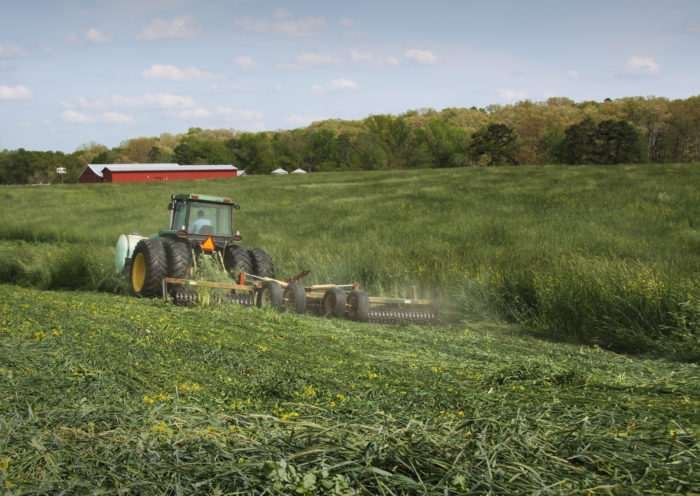
On Thursday, August 6, 2026, the Senate Agriculture Committee convened to consider the Agricultural Act of 2026, the farm bill draft presented by Chairman John Boozman (R-AR). The wide-ranging markup covered every title of the farm bill – from commodity programs and nutrition to research and agriculture credit – and the consideration of amendments along the way.
As the Committee debated the bill’s commodity title, Senator Peter Welch (D-VT) offered an amendment to increase transparency and accountability, enforcing so-called “actively engaged in farming” rules. A portion of the subsequent exchange between Senators Welch, Grassley (R-IA), and Chairman Boozman is excerpted below.
Senator Welch: One of the things of concern to me is that some of the commodity programs, the support goes to people who don’t drive tractors…When I learned that 92,000 people in urban areas received about 2.6 billion dollars, that’s of concern to me because I would like the support we provide to agriculture to go to people on tractors, not in cities.
Senator Grassley: I think you and I believe that people that are actively engaged ought to be the only ones receiving farm payments….
Chairman Boozman: I would ask Senator Welch, if this is so important, why is it that dairy programs don’t have any actively engaged requirements?…
Senator Welch: First of all, the dairy farmers are on the farm! I mean, in dairy it’s unbelievable what’s happening. Dairy farmers, they’re not only working on the farm, they’re working off the farm. The only way dairy farmers can make it is that they’re milking the cows, and then one of the partners is out there working in the city for a wage job because they can’t make it. So, you know, bottom line here is that on the accountability question, that should be a principle that we apply across the board. Whether it’s the SNAP program or it’s a support program, the intention of Congress is that the actual farmer get the money or the actual person who’s in need of nutrition gets the nutrition aid. So when it comes to this principle of accountability, I’m all in on any program.
Senator Grassley: Yes, sir. I still haven’t figured out this opposition to knowing where this money goes. And if it’s going to somebody on Wall Street that doesn’t ever see the farm, never gets dirt under their fingernails, I think it’s pretty darn simple.
These actively engaged in farming (AEF) rules, which apply to several of the largest agricultural support programs, are theoretically intended to ensure that taxpayer dollars support actual farmers in need, not passive investors and speculators. While the amendment and bill failed that day, the debate highlighted a fundamental question facing policymakers: how do we keep the “farm” in the farm safety net?
What’s the Problem?
The US operates a wide range of farm safety net programs to provide support for American farmers and ranchers in times of need. For example, commodity programs like the Agricultural Risk Coverage (ARC) program and the Price Loss Coverage (PLC) program were conceived to provide financial support for farmers when low commodity prices or yields threatened farm viability. Evolving out of predecessor programs dating back to the first farm bill in 1933, the stated goal of these programs is clear: keep farmers on their land.
Problems arise, however, when programs aimed at keeping farmers afloat during tough times instead contribute to the financial portfolios of investors and speculators. For example, through the early 2000s, many southern landowners received rice commodity program payments despite their land no longer being farmed at all. The failure to enforce robust AEF requirements has benefited the largest landowners, raised land values that squeezed active farmers off their land, and allowed absentee landlords to increase rental rates to capture these payments. In some cases, landlords simply cancelled their leases since they could make more from direct government payments than through their rental agreements. Today, there remain approximately 1.5 million acres that receive commodity payments for rice even though that particular farm no longer produces rice.
AEF requirements are a key tool to ensure that farm program payments actually go to hardworking farmers. This blog post reviews current and proposed ways of defining and enforcing AEF standards, and argues that Congress and the US Department of Agriculture (USDA) must close enforcement loopholes to responsibly and effectively administer farm safety net programs that support actual farmers and ranchers, as intended.
The “Actively Engaged in Farming” Requirement
Congress first implemented AEF requirements in 1987 as part of the Farm Program Payments Integrity Act. While earlier farm bills introduced payment limits for individual program participants, USDA, Congress, and agricultural stakeholders began to recognize that payment limits alone were not enough to secure the integrity of farm payment programs. Instead, individuals had dodged payment limits by reorganizing their businesses into corporations, joint ventures, and other legal farm entities to maximize their payments from any given program. A Government Accountability Office (GAO) report from 1987 describes the problem: “Farm reorganizations among producers receiving payments at or near the payment limit allow producers to avoid the payment limit and increase program costs… As more and more producers near or meet the limit, the number of new persons from farm reorganizations among those producers can increase correspondingly.”
Ultimately, the GAO recommended that Congress and the USDA limit farm program payments only to individuals who are “actively engaged in the entity’s farming operation, with actively engaged defined as a significant independent contribution of capital, land or equipment and labor or management” (emphasis in original). Those first AEF requirements were adopted in 1987, and the standard has been refined several times since.
Since AEF’s initial introduction, the GAO has published a number of reports highlighting consistent shortcomings in the application of these requirements. Reports from the early 2000s suggested a need for more stringent definitions of terms, including “significant contribution” and “active personal management.” GAO also concluded that “USDA does not review a valid sample of farm operation plans to determine compliance and thus does not ensure that only eligible recipients receive payments.” Congress and USDA have each made several changes since AEF requirements were first introduced, changing how AEF requirements apply and how they are defined, while GAO has consistently determined those changes were falling short.
Current AEF Requirements
Today, statute requires that payment recipients make significant contributions to: 1) land, capital, equipment, or a combination thereof, and 2) active personal labor, active personal management, or a combination thereof (7 U.S.C. §1308-1). What counts as a “significant contribution” in each category, and across business structures, is formally defined in USDA regulations (7 CFR Part 1400) and is summarized below.
- Land, capital, and equipment contributions must be at least 50% of what is necessary for the farm operation within each respective category (e.g., at least half of the land necessary for farm operations). If the person or entity contributes across a combination of land, capital, or equipment, their combined contribution needs only to account for 30% of their share of the farming operation’s total value.
- Active personal labor contributions must be either 1000 hours per year or half of the total hours needed to run the farm.
- Active personal management contributions must be regular and continuous and be at least 25% of the management hours required for the farm or at least 500 hours of management time.
Each of these AEF requirements is applied slightly differently across varying types of farm entities, including individuals, Trusts, qualified pass-through entities, corporations, LLCs, and estates.
Crucially, landowners almost always qualify as AEF on land that they own, even if no other contributions are made. The only exception is for landowners who rent out farmland purely under flat cash rental agreements because they do not share in any of the risk of the farm operation. Flat cash rental agreements are different from sharecropping or flexible rents, where landowners and tenants share in the profits and losses based on the farm’s production. Therefore, because landlords with flat cash leases do not equitably share risk with their tenants, these landlords are not considered to be AEF unless they meet another requirement. If married, both spouses are assumed to be actively engaged if one spouse meets the requirements, and for businesses composed only of family members, the requirement to contribute land, equipment, or capital is waived for family members as long as they make a significant contribution of personal labor and/or personal management. A family member is defined as “a person to whom another member in the farming operation is related as a lineal ancestor, lineal descendant, sibling, first cousin, niece, nephew, spouse, or otherwise by marriage”.
Where the Actively Engaged Requirement Is, and Is Not, Applied
Not every farm program, even programs that make direct cash payments, has a requirement that recipients be actively engaged in farming. ARC and PLC, the largest commodity price and income support programs, both have actively engaged requirements, as do Marketing Assistance Loans (MAL), which are short-term loans to provide cash flow by using crops as collateral. Some ad hoc income-support programs such as the Farmer Bridge Assistance (FBA) program have an AEF requirement, while others, including the Assistance for Specialty Crop Farmers (ASCF) Program, crop insurance, and conservation programs, do not.
As Senator Boozman noted in his comments during the recent farm bill markup, the Dairy Margin Coverage (DMC) program, which provides income support for dairy farmers, does not have an AEF requirement. While there is no specific reason to exclude dairy operations from this requirement – as Senator Welch notes – the structure of the DMC program and dairy operations themselves greatly reduce the likelihood of improper payments to non-farmers. The DMC program – unlike ARC and PLC – is more akin to a quasi-insurance product, requiring a premium paid by the farmer to receive program benefits. Dairy operators also log the most on-farm hours and fewer off-farm hours of any farm type, and more than 97% of US dairy farms are family-owned. Additionally, if a dairy farm ceases operation or changes what it produces, its eligibility for DMC participation would immediately be impacted. In contrast, ARC and PLC payments are administered based on a farm’s “base acres”, which in many cases were determined by that farm’s planting decisions many years prior. Therefore, current payments made to farms (and to investors) can be for a crop the farm has not grown in decades (see here for more information on base acres).
Ultimately, requirements that payments go only to individuals who are actively engaged in farming are designed to maintain the integrity of the farm safety net. Congress created farm support programs for farmers, people on tractors and with dirt under their fingernails, not investors and speculators. Robust AEF rules would make sure that is the case.
Loopholes and Exceptions
Unfortunately, a series of loopholes means that billions of dollars meant to support farmers are improperly spent. In practice, individuals and entities self-certify their actively engaged status. Farm businesses and individuals must file forms with the FSA that identify all members of their farm business (form CCC-901) as well as a farm operating plan that describes the contributions made to land/capital/equipment and labor/management (form CCC-902I for individuals and CCC-902E for entities). Once filed, these self-certifications are reviewed by the local FSA County Committee or state office and are considered valid unless there is a major change in the farm operation, such as the addition or removal of members or changes in management. Each year, FSA staff at the local, state, and national level audit a small number of farm operations. Farms can be flagged for end of year review if they had a major restructuring or payments above a certain threshold, and they can also be manually flagged for review if staff have some reason to believe that the information is inaccurate.
Since AEF requirements were first introduced, the GAO has continued to consistently find that they fall short of their stated goal. For instance, a 2018 GAO study found that an average of $884,495 went to each of the top 50 recipients of farm program payments in 2015, each with an average of eight members receiving individual payments – only one of whom claimed personal labor as their qualifying AEF requirement.
FSA oversight of AEF eligibility remains a challenge for several reasons. The scope of activities that constitute active personal management remains sufficiently vague to allow for broad and subjective determinations of qualification. We discuss this in more detail below. Further, FSA methods for verifying AEF claims rely on interviews with payment recipients, which previously have been shown to result in overstatements of farming activities, rehearsed statements, and unverified claims made with help from hired consultants – which is more common for large operations. More recently, GAO found that FSA did not consistently maintain compliance enforcement efforts and many offices failed to conduct audit interviews at all. This report also found that nearly all FSA reviewed claims of active personal management qualification met the required criteria. By FSA’s own determination, this high compliance rate is due to the vague definition and subjective nature of determining what activities qualify under active personal management, and the reliance of consultants by large farming operations claiming AEF for their clients.
Defining “Active Personal Management” Continues to be a Challenge
A 2015 USDA rule clarified the definition of significant contribution of active personal management, and limited the number of managers – individuals claiming active personal management – per non-family farm operation to three for large or complex operations. However, the rule applied the manager restriction only for non-family farms, while allowing for unlimited managers under the active personal management criteria for family farms. This distinction is critical given that over 90% of all farms are classified as family-farms. While the vast majority of family-farms are just that – actual working family partnerships growing food and crops – this loophole allows a small number of the largest corporations to exploit farm payments.
Prior to the 2015 rule, GAO documented overuse of the “active personal management” criteria to meet AEF requirements. This 2004 GAO report found that “99% of payment recipients asserted they met eligibility requirements through active personal management.” Even following the rule revision, a more recent GAO report still found that management formed the basis of 75% of AEF qualification claims and nearly one-quarter of AEF claims were based on management alone.
Since the 2015 USDA rule changes to AEF requirements, little has changed regarding the definitions. Rather than tightening the AEF definitions and strengthening enforcement, Congress has instead expanded the types and number of entities that may qualify for payments for each farm operation. The 2018 Farm Bill expanded the number of family members who qualify for payments, while USDA published a subsequent rule that automatically qualified those members under AEF requirements if they received income from the farm. Essentially, under the 2018 rules, a broad range of family members are automatically assumed to meet AEF requirements without the need to certify contributions to the farm operation. The One Big Beautiful Bill Act (OBBB) of 2025 further eroded program integrity by allowing absentee investors to receive payments through S-corps and other pass-through entities. While each of those entities is still required in theory to meet the AEF requirements, it is clear the definitions – particularly regarding active personal management – and enforcement remain sufficiently vague that payments are flowing to individuals who have found loopholes in the system to qualify for payments without ever setting foot on the farm.
The Environmental Working Group, as previously mentioned, recently published findings that over 92,000 farm program recipients live in major metropolitan areas around the country, far from the farms on which they are supposedly “actively engaged in farming.” Between 2020 and 2025, these individuals received over $2.6 billion in farm program payments. Other reporting has indicated ultrawealthy individuals are increasingly buying farmland as investments and including farm safety program payments as part of their expected return on investment, pricing new and existing farmers out of the market and further concentrating farmland in the hands of a decreasing number of individuals and corporations.
While AEF requirements are closely intertwined with payment limit rules, AEF requirements specifically serve to ensure that payments are actually reaching hardworking farmers, and not absentee billionaire investors or speculators. Payment limits – which NSAC has previously examined in more depth and will be the subject of future NSAC blogs – promote responsible taxpayer spending and ensure funds are available for the small and midsized farms most in need of support.
Proposed Changes to Actively Engaged Requirements
Congress has considered several proposals to amend AEF requirements over the past several years. Senator Grassley, a longtime champion of strengthening farm program integrity and closing AEF loopholes, has introduced several bills and farm bill amendments. In the OBBB debate, NSAC supported Senator Grassley’s amendment to codify in statute the definition of “significant contribution of active personal management”, and limit the number of individuals per farm operation allowed to claim the active personal management designation to one person or legal entity per farming operation.
This amendment alone was estimated to save $5 billion in improper payments made to individuals and entities not truly actively engaged in the farm operation. Senator Grassley withdrew his amendment after receiving assurances – as he vocalized in the recent August markup – from Senate Republican leadership that such a proposal would receive attention and support in future farm bill discussions. This amendment was identical to approved language in both of the House and Senate 2018 Farm Bills passed out of each respective chamber. The language, however, was stripped out of the final bill in the joint conference committee process.
During the most recent farm bill markup in August 2026, Senator Welch joined Senator Grassley in leading the effort to strengthen the integrity of farm programs and submitted a series of amendments that addressed components of AEF requirements, payment limits, and other oversight and enforcement mechanisms. For example, among Senator Welch’s amendments were proposals to:
- Amend the definition of “significant contribution of active personal management” and limit farming operations to one person qualifying under that AEF category (Welch 12)
- Allow any number of individuals to qualify under AEF with 1000 combined hours of active personal labor or active personal management; limit total farm program payments to $250,000 regardless of individuals eligible for payments; return Marketing Assistance Loan gains and Loan Deficiency Payments to $75,000; and remove the special treatment for peanuts allowing for double payments (Welch 13)
- Remove the qualified pass-through entity loopholes created by OBBB that allow for a nearly unlimited number of entities per farm to qualify for program payments (Welch 15)
- Require family and non-family farms to retain records when more than three members are receiving payments or one member qualifies under AEF through active personal management, and require FSA to conduct audits of these records when ARC/PLC error rates exceed 6% (Welch 17)
- Require family and non-family operations to meet the same AEF requirements, while allowing for all individuals who qualify under personal labor requirements to qualify for payments (Welch 19)
As outlined at the top of this post, these amendments sparked a back-and-forth between Chairman Boozman, Senator Welch, and Senator Grassley, among others. While the specific amendment introduced for debate at that moment would have merely required an audit of farm payments without enacting any changes to AEF or payment limits (Welch 17, noted above), the exchange highlighted the continued challenge of strengthening AEF requirements despite their widely recognized common sense and pragmatism. NSAC will continue to advocate for stronger definitions and enforcement mechanisms related to AEF requirements to ensure that farm program payments go to hardworking farmers, and our agricultural programs keep the “farm” in farm safety net.
The post Keeping the “Farm” in the Farm Safety Net appeared first on National Sustainable Agriculture Coalition.


