
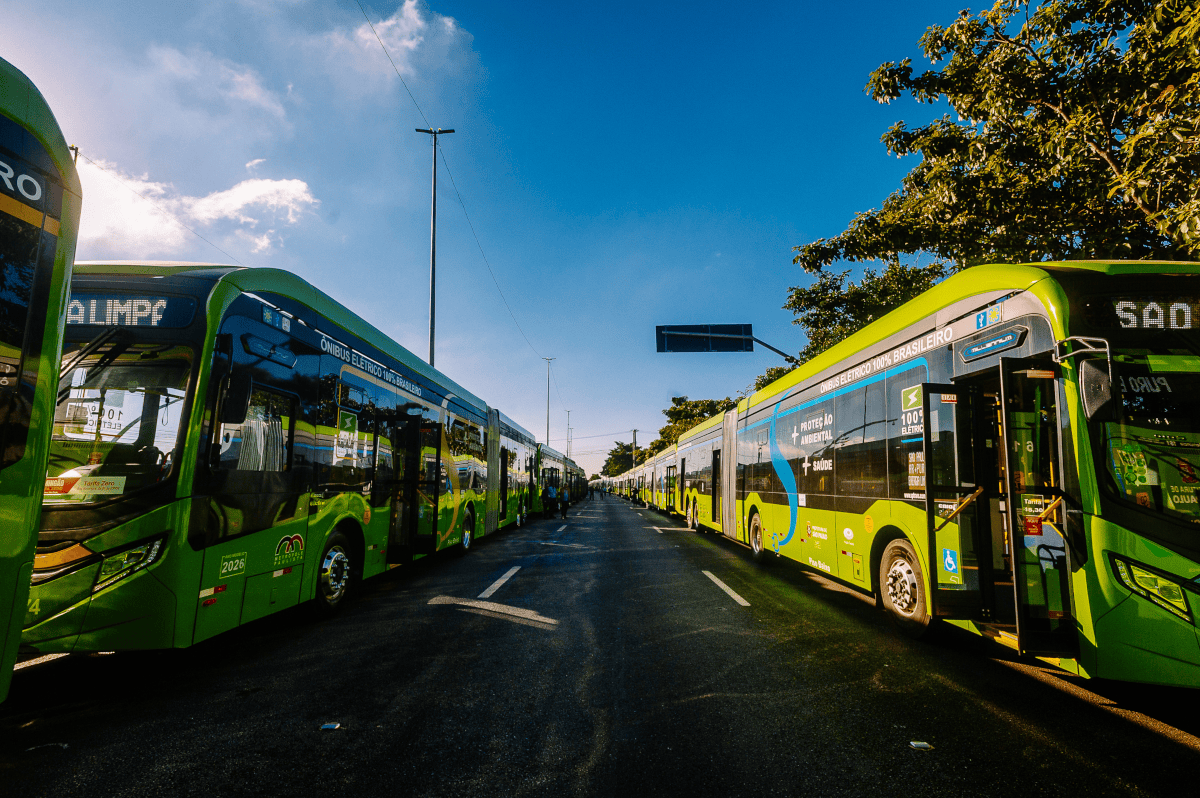
Latin American cities now have more than 10,000 electric buses in operation, marking a significant milestone in the region’s shift towards zero-emission public transport.
According to data from E-Bus Radar, announced by C40 Cities and the International Council on Clean Transportation (ICCT) at the Lat.Bus 2026 transport event in São Paulo, electric buses are now operating across more than 80 cities in 13 Latin American countries.
Santiago, São Paulo and Bogotá account for more than 7,000 of the vehicles between them, demonstrating the increasing scale at which electric buses are being deployed in some of the region’s largest cities.
Fleet expansion
São Paulo now operates 1,759 electric buses, making it the largest fleet in Brazil and the second largest in Latin America. The total includes 1,570 battery-electric buses and 189 trolleybuses.
The city added 500 electric buses in a single deployment in June 2026. C40 estimates that São Paulo’s current fleet avoids approximately 130,000 tonnes of CO₂ emissions and 57 million litres of diesel consumption annually.
The expansion has been supported by an investment programme worth approximately R$6.5 billion (approximately £920 million), combining domestic and international finance, with institutions including the Brazilian Development Bank (BNDES), World Bank and Inter-American Development Bank participating.
São Paulo has also introduced regulations preventing operators from replacing buses reaching the end of their working lives with new diesel vehicles, progressively shifting the municipal fleet towards lower- and zero-emission alternatives.
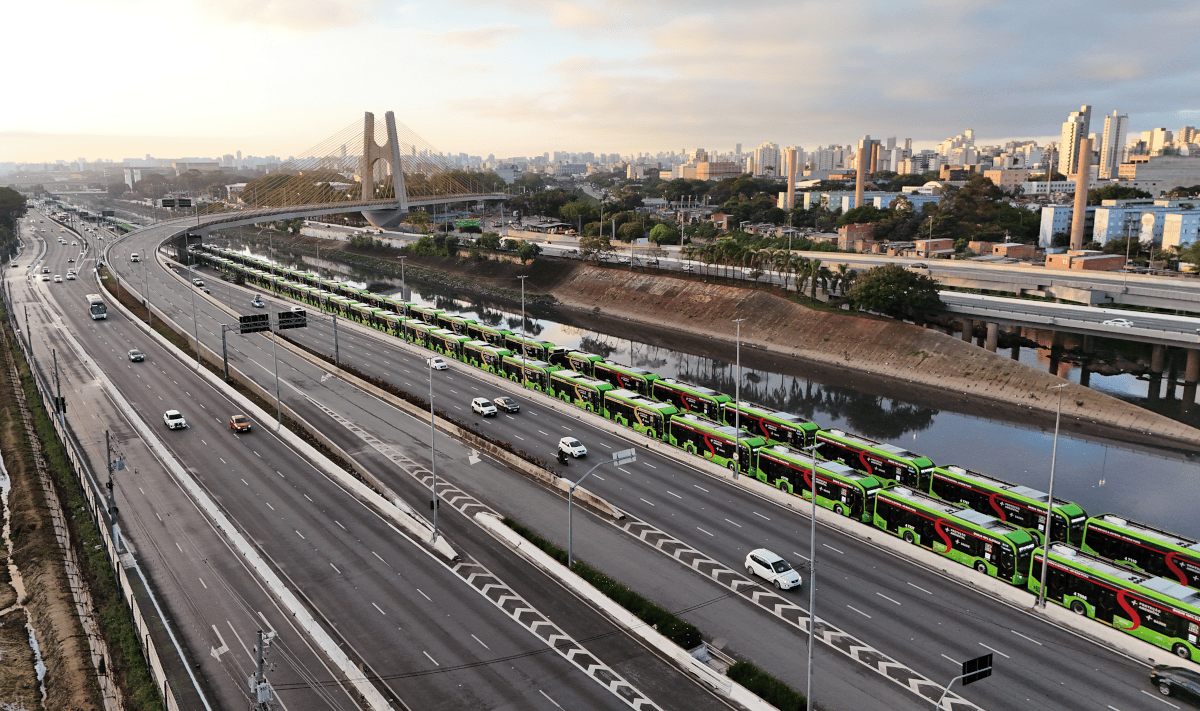
The city’s bus network carries more than seven million passengers each day.
“Reaching 10,000 electric buses in operation shows that the transition to zero-emission transport is no longer a promise but a reality in Latin American cities,” said Ilan Cuperstein, C40 Cities Regional Director for Latin America.
He added that financing need not prevent other cities from following suit, with established models now available to support fleet electrification.
Investment spreads to other cities
Electric bus programmes are also progressing elsewhere in Brazil, combining vehicle procurement with investment in charging infrastructure.
In Recife, the Federal Government has formalised an investment of R$319 million for 100 electric buses and associated charging infrastructure for the metropolitan region. Work supported through the Brazil Mutirão programme has included procurement reviews, economic modelling and validation of routes for the new vehicles.
Belo Horizonte is preparing for its first approximately 100 electric buses, with 27 chargers being commissioned at the city’s bus depots. The project is being funded through Brazil’s New PAC infrastructure programme.
In Rio de Janeiro, work is under way to prepare terminals for future electric buses, including studies of charging infrastructure and economic and financial modelling. Salvador is meanwhile working towards electrifying at least half of its BRT fleet.
Since 2019, C40 Cities and the ICCT, through the Zero Emission Bus Rapid-deployment Accelerator (ZEBRA) partnership and other initiatives, have supported cities including São Paulo, Bogotá, Mexico City, Salvador and Curitiba with financing and procurement models for zero-emission buses.
C40 said collaboration between municipal authorities, financial institutions and suppliers has helped reduce financing costs and enable larger-scale procurement, providing models that could support further expansion of electric bus fleets across the region.


