
Advanced Agricultural Leadership Program (AALP) alumni from 12 classes and two generations explored Cambodia and Vietnam recently in their pursuit of curiosity, knowledge, leadership, networking and friendships.
“It’s important for us, as alumni, to be connected while we engage in our communities and industries”, said Gabe Ferguson, AALP Class 14 alumni and former AALP director. “We all have so much to learn from each other and the world around us. A trip like this inspires and energizes our alumni, who have significant influence within Ontario agriculture.”
The tour started in Phnom Penh and Sien Reap areas of Cambodia and looked at agricultural production and processing of cashew nuts, rubber, cassava and bananas.
“I see a lot of opportunity to continue growing trade among our countries, such as cashews, coffee, and tea from Vietnam, and from Canada, pork, beef, chicken, seafood and soybeans,” said Teresa Van Raay, AALP Class 9.
There was much to be learned of Cambodia’s tragic past with visits to the Tuol Sleng Genocide Museum, a former school turned torture centre known as Security Prison 21.
Lotus silk farming is a significant crop in Cambodia. The delicate fibre of lotus silk stems are hand-harvested and used to make a rare and eco-friendly fabric. The stems must be harvested and processed within 24 hours while still wet, or the fibres will break. Its production is highly labour-intensive, taking 6,500 to 10,000 lotus stems to create a single scarf.
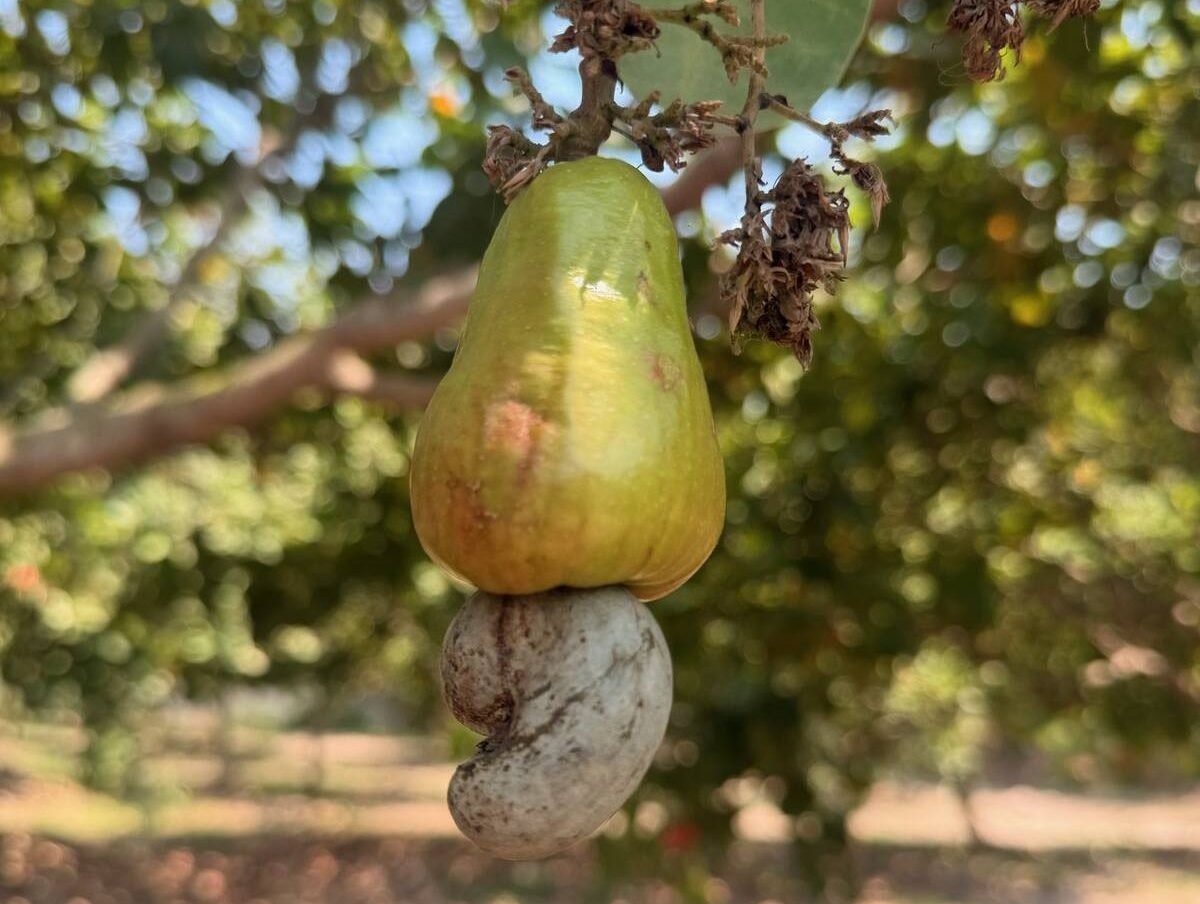
Cashews are ripe and ready to harvest when the nut protrudes from the bottom of the “apple” and the fruit falls to the ground. Photo: AALP
Farm-raised … crocodiles
A boat ride to the floating village of Chong Khneas in the Tonlé Sap Lake area explored where about 3,000 people, or 700 families, live. Electricity is provided by solar panels or generators for only the most basic needs. Here they have a complete village with a school, church, stores, a pub, boat repair shop, fuel station, water station, small livestock farms (pigs and chickens), gardens, homes and other everyday needs provided on boats. The murky waters below certain boats hosted caged farms of crocodiles and fish. Crocodiles in the wild are extinct due to hunting, yet the market for farm-raised crocodiles is strong for both their leather and meat. It was surprising to see hair washing, children’s water sports and cooking pots all using the same water source.
Then off to Vietnam. First stop was Ho Chi Minh City, formerly known as Saigon and still called Saigon by the locals. French control of Saigon from 1858 to 1954 is evident in the architecture throughout the city, with the Cathedral, Post Office and Opera House, as well as many hotels and houses functional reminders of the not-too-distant past. Apparently, the French fancied Saigon as ‘the Paris of the East’.
Clear too were the memories of the Vietnam War (1955-1975) — or the American War, as the Vietnamese refer to it — and the French Indochina War (1946-1954). A few hours at the War Remnants Museum delivers a chilling reminder of the devastation during these periods and the lasting impact that dioxins from chemical weapons used continue to have on generations.
From the ashes of war has risen a thriving agricultural sector. A drive to the Cu Chi district offered a stop at the Agricultural Management Center for Research and Development and Hi-Tech Park. This government-backed project promotes urban agriculture through research, technology application and the production of high-quality crops and livestock. Other production tours included orchids, pearls, mushrooms, vegetables, fish and one of the largest worm farms in the country.
A boat ride to the Cai Rang floating market revealed a unique economy that wholesales produce to retailers from the waterway. Growers bring their products to the wholesaler boats starting at 3 a.m.
Then retailers pick up their produce for the day starting at about 5 a.m. Everything is sold here from meat to fish, fruits to vegetables, and clothes to household items. There is no refrigeration, so as noon comes with the heat of the day most of the sales have been completed. After hundreds of years of operation, this market is declining as modern land warehouses and trucking replace this traditional water access.
“I get a sense that Cambodia and Vietnam are very efficient in food production and enjoy general population health and happiness,” said Jack Greydanus, AALP Class 5. “Are we too state-dependent? There, families are the social safety net. Here, we want government to be our safety net. I think there are some lessons in social responsibility that we can learn from them.”
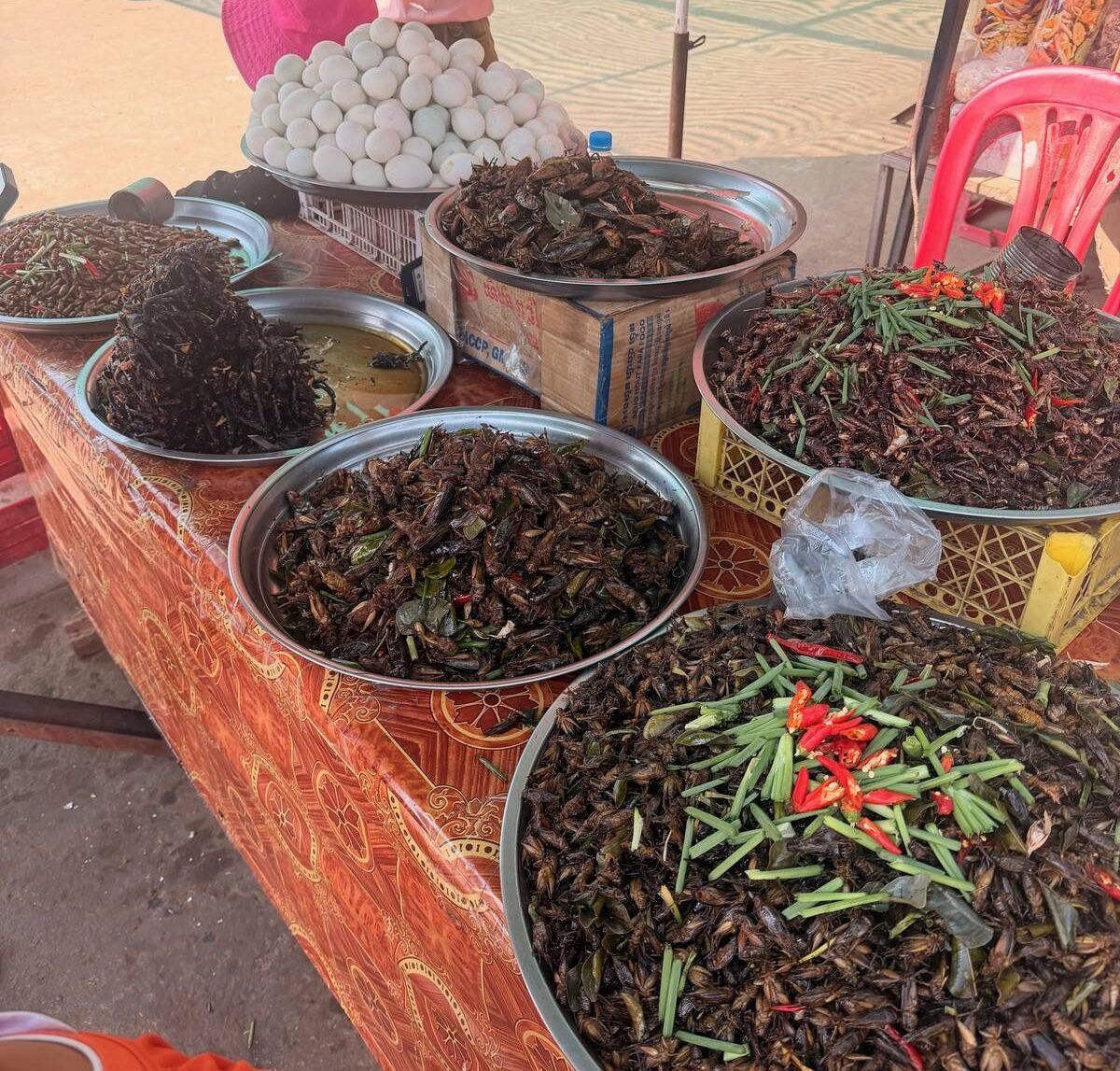
Roasted insects are a popular, high-protein snack commonly enjoyed from street vendors. Ranging from crickets and tarantulas to silkworm pupae, they are often fried with seasonings such as chili, garlic or soy sauce. Photo: AALP
Farming and food facts from Cambodia and Vietnam
In Cambodia, about 50 per cent of the population are farmers and about 75 per cent of these are small-scale farmers. Their main crops are rice, cassava, rubber, maize (corn), mango, bananas, Kampot pepper, coconuts and citrus fruits. Many farmers also have a few cattle, pigs and chickens for their own use.
Vietnamese people are known to eat all creatures — bugs, snakes, birds, dogs, cats, rats, mice, anything. This is still practiced among older people who have experienced famine, but much less by the younger generations.
Cashews are ripe and ready to harvest when the nut protrudes from the bottom of the “apple” and the fruit falls to the ground. The fruit is then gathered, the nut is separated from the apple, and sun-dried for a minimum of two days before storage in jute bags as they await final processing.
Vietnam’s saltwater pearl production is a significant industry, particularly centred around coastal areas like Phu Quoc Island and Halong Bay. Pearl farming is considered sustainable, as oyster beds help to clean the surrounding water. The process blends traditional techniques with modern, eco-friendly farming practices to cultivate high-quality pearls. Non-jewelry-grade pearls are often crushed and repurposed for products such as cosmetic pearl cream.
Vietnam is the world’s second-largest coffee producer and exporter (after Brazil), producing over 40 per cent of the global Robusta supply. Concentrated in the Central Highlands, production focuses on high-yield Robusta (95-97 per cent of output), generating over $5 billion in export revenue.
The post Leadership program alumni study farms, food of Vietnam and Cambodia appeared first on Farmtario.


