
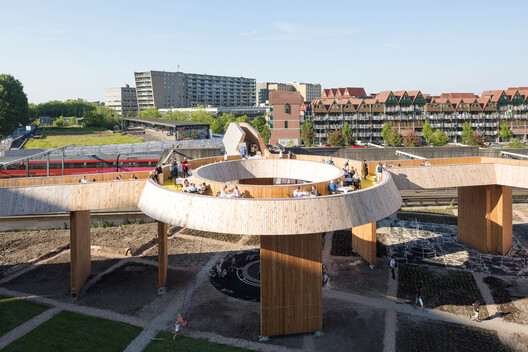
The Luchtsingel / ZUS . Image © Ossip van Duivenbode
Leisure spaces are often where different generations cross paths. Without formal programs or assigned roles, they allow people to move, pause, and remain together, each engaging space in their own way. In a built environment increasingly shaped by specialization and separation, these shared spatial grounds have become less common, giving leisure-oriented architecture a renewed relevance.
Discussions around public space have repeatedly pointed to the value of openness and flexibility in supporting collective life. As architect Herman Hertzberger has noted, “the more a space can be interpreted in different ways, the more people it can accommodate.” Rather than attempting to create interaction, architecture shapes the conditions that make togetherness possible.


