
Disseminated on behalf of Surge Battery Metals Inc.
Lithium prices have jumped sharply overnight, catching the attention of investors, automakers, and battery makers. In China, lithium carbonate futures on the Guangzhou Futures Exchange hit about 95,200 yuan (≈$13,400 USD) per metric ton. This marks a rebound from earlier lows caused by oversupply.
Historically, lithium prices have been volatile. Peak prices reached around 150,000 yuan per ton in 2022, followed by a slump during the oversupply period in 2023–2024.
The recent spike followed comments from the chairman of Ganfeng Lithium, Li Liangbin, who projected a 30–40% rise in global demand by 2026. He suggested prices could reach between 150,000 and 200,000 yuan per ton if this growth materializes.
The surge highlights lithium’s critical role in powering electric vehicles (EVs) and large-scale energy storage.
Growing Demand for Lithium: What Drives the Boom?
Electric vehicles remain the largest driver of lithium demand. Around 16 million EVs were on the road globally in 2024, up from 10 million in 2022. Sales are forecast to exceed 25 million units by 2026 and reach over 50 million by 2030. Longer-range vehicles require larger batteries, which increases lithium use.
Energy storage systems are another fast-growing source of demand. Utilities expanding solar and wind energy need lithium-based batteries to store surplus electricity. Heavy-duty electric trucks and buses have larger batteries. This means they use more lithium per vehicle compared to passenger EVs.
Long-term trends toward decarbonization and renewable energy growth further support lithium demand. Analysts say that EV batteries make up about 70% of lithium demand. Grid storage accounts for 15%. Electric trucks use 10%, and other uses, like electronics and specialty chemicals, are around 5%.
Supply Challenges Keep Prices Elevated
Lithium carbonate prices in China have climbed dramatically, moving from $8,259/tonne on June 23, 2025, to $12,791/tonne on November 19, 2025 – a rise of about 55% over five months.
This recent rally is primarily attributed to tight supply conditions, with major Chinese mines, including those operated by CATL, pausing operations due to falling prices earlier in the year. As output was reduced or shut in, inventories were gradually drawn down, tightening available supply.

Moreover, lithium production is highly concentrated. Australia leads with around 60,000 tonnes LCE annually, followed by Chile (35,000 tonnes), China (25,000 tonnes), Argentina (18,000 tonnes), and the U.S. (≈5,000 tonnes). Geographic concentration adds risk: environmental regulations, political tensions, or operational issues could tighten supply.
Restarting idled mines or opening new projects takes 2–5 years. Inventories from the oversupply period act as a buffer. Current estimates show global lithium stocks at about 350,000 tonnes LCE. This amount can help with short-term supply issues, but it’s not enough for long-term growth.
- SEE live prices here: Live Lithium Prices Today
The factors that keep pushing lithium demand higher include:
- Electric vehicles,
- Energy storage systems,
- Electric trucks and buses, and
- Long-term climate trends.
Lithium makes up about 20–25% of total EV battery costs. So, price changes can greatly impact EV production costs. Also, battery chemistry trends show that sodium-ion and solid-state batteries might take a small share of the market by 2030. However, lithium-ion will remain the leader for now.
Lithium carbonate prices in China have climbed sharply, as shown in the chart. Prices rose more than 17% this month as investors bet on accelerating demand from the energy storage sector.
- MORE on LITHIUM:
What Analysts Say: Forecasts and Future Trends
Fastmarkets predicts a small surplus in 2025, shifting to a deficit of 1,500 tonnes LCE by 2026. A few years ago, the market had a surplus of about 175,000 tonnes in 2023 and 154,000 tonnes in 2024. Cuts in production at high-cost or marginal mines and rising demand from EVs and storage systems are driving this rebalancing.
Arcane Capital forecasts global demand could hit 4.6 million tonnes LCE by 2030, led by EVs, grid storage, and heavy-duty transport.
Benchmark Mineral Intelligence expects lithium carbonate prices to stay between $15,000 and $17,000 USD per ton in 2025, but prices may be lower in 2026 if supply increases faster than demand.
Still, the chart from Katusa Research highlights a growing deficit in lithium supply and demand. This supply deficit will likely underpin upward pressure on lithium prices moving toward 2030.

Production in Australia, China, and South America should grow by about 10% each year, per industry estimates. However, delays or cost overruns might slow this growth.
Risks to the Price Recovery
Lithium prices face several risks. EV adoption could slow if subsidies or incentives drop. Battery makers might adopt sodium-ion or other chemistries if costs rise. Rapid restarts of idled mines or new production could oversupply the market.
Regulatory hurdles, environmental restrictions, and trade tensions could also disrupt supply. Recent price spikes were partly due to speculative trading, highlighting the market’s sensitivity to sentiment.
Who Wins and Who Loses?
Higher lithium prices may hurt automakers and battery makers, pushing them to secure contracts or invest in recycling. Mining companies benefit from higher prices but must manage timelines and costs.
Meanwhile, investors have opportunities, though volatility is high. Policymakers consider lithium a strategic resource and are encouraging domestic production, recycling, and robust supply chains.
With global supply growth uncertain, focus is turning to projects that provide steady, long-term output. This is especially true in areas aiming to boost domestic supply chains, where Surge Battery Metals comes in.
Spotlight: Surge Battery Metals – US Lithium Hero
Surge Battery Metals (TSX-V: NILI | OTCQX: NILIF) is emerging as a key U.S. lithium developer. Its Nevada North Lithium Project (NNLP) hosts the highest-grade lithium clay resource currently reported in the United States, with an Inferred Resource of 11.24 million tonnes of lithium carbonate equivalent (LCE) grading 3,010 ppm lithium (NI 43-101, September 24, 2024).
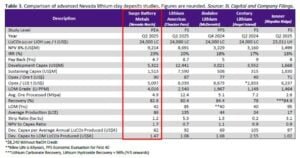
A Preliminary Economic Assessment (PEA) on the project outlines robust economics, including:
- After-tax NPV₈%: US$9.21 billion
- After-tax IRR: 22.8%
- Low operating costs: US$5,243 per tonne LCE
NNLP benefits from access to regional infrastructure, including established roads and nearby power, supporting future development.
Surge’s leadership team includes veterans from Millennial Lithium, a company acquired for US$490 million in 2022. The company has also secured a staged C$10 million JV funding agreement with Evolution Mining to advance NNLP toward Pre-Feasibility while maintaining majority ownership.
How Nevada North Fits into the Global Picture
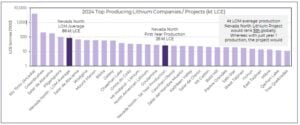
The Nevada North Lithium Project demonstrates the potential to become a globally significant lithium operation. According to comparative analysis from 3L Capital and S&P Global, NNLP’s Life-of-Mine (LOM) average production of 86 kt LCE per year—as outlined in the PEA—would rank the project as the 5th largest lithium-producing project in the world compared with 2024 producers and developers.

Even in its first year, NNLP is projected to produce 26 kt LCE, placing it among the top 16 lithium projects globally on a 2024 comparative basis. This combination of scale, grade, and location underscores NNLP’s potential as a strategic U.S. supply source in a market seeking domestic, high-quality lithium to reduce dependence on overseas imports.
If advanced through feasibility, permitting, and construction decisions, NNLP has the potential to become a competitive, American-based lithium operation—supporting both EV manufacturing and large-scale energy storage with “American-made” battery-grade feedstock.
Lithium Surges, Supply Matters, and America Prepares
Prices are shaped by several key factors. These include updates on production from major mines, trends in EV adoption, grid storage deployment, new battery technologies, and changes in policy. Inventory levels and market speculation will continue to influence short-term volatility.
Lithium prices have jumped, signaling a possible market turning point after past oversupply. High demand from EVs, grid storage, and heavy-duty transport, along with limited production and geographic concentration, is pushing prices up.
Industry stakeholders, investors, and policymakers have to monitor developments closely as lithium continues to play a central role in the global energy transition. Surge Battery Metals shows the type of domestic production needed to meet rising demand and strengthen supply chains in a rapidly evolving market.
DISCLAIMER
New Era Publishing Inc. and/or CarbonCredits.com (“We” or “Us”) are not securities dealers or brokers, investment advisers, or financial advisers, and you should not rely on the information herein as investment advice. Surge Battery Metals Inc. (“Company”) made a one-time payment of $50,000 to provide marketing services for a term of two months. None of the owners, members, directors, or employees of New Era Publishing Inc. and/or CarbonCredits.com currently hold, or have any beneficial ownership in, any shares, stocks, or options of the companies mentioned.
This article is informational only and is solely for use by prospective investors in determining whether to seek additional information. It does not constitute an offer to sell or a solicitation of an offer to buy any securities. Examples that we provide of share price increases pertaining to a particular issuer from one referenced date to another represent arbitrarily chosen time periods and are no indication whatsoever of future stock prices for that issuer and are of no predictive value.
Our stock profiles are intended to highlight certain companies for your further investigation; they are not stock recommendations or an offer or sale of the referenced securities. The securities issued by the companies we profile should be considered high-risk; if you do invest despite these warnings, you may lose your entire investment. Please do your own research before investing, including reviewing the companies’ SEDAR+ and SEC filings, press releases, and risk disclosures.
It is our policy that the information contained in this profile was provided by the company, extracted from SEDAR+ and SEC filings, company websites, and other publicly available sources. We believe the sources and information are accurate and reliable but we cannot guarantee them.
CAUTIONARY STATEMENT AND FORWARD-LOOKING INFORMATION
Certain statements contained in this news release may constitute “forward-looking information” within the meaning of applicable securities laws. Forward-looking information generally can be identified by words such as “anticipate,” “expect,” “estimate,” “forecast,” “plan,” and similar expressions suggesting future outcomes or events. Forward-looking information is based on current expectations of management; however, it is subject to known and unknown risks, uncertainties, and other factors that may cause actual results to differ materially from those anticipated.
These factors include, without limitation, statements relating to the Company’s exploration and development plans, the potential of its mineral projects, financing activities, regulatory approvals, market conditions, and future objectives. Forward-looking information involves numerous risks and uncertainties and actual results might differ materially from results suggested in any forward-looking information. These risks and uncertainties include, among other things, market volatility, the state of financial markets for the Company’s securities, fluctuations in commodity prices, operational challenges, and changes in business plans.
Forward-looking information is based on several key expectations and assumptions, including, without limitation, that the Company will continue with its stated business objectives and will be able to raise additional capital as required. Although management of the Company has attempted to identify important factors that could cause actual results to differ materially, there may be other factors that cause results not to be as anticipated, estimated, or intended.
There can be no assurance that such forward-looking information will prove to be accurate, as actual results and future events could differ materially. Accordingly, readers should not place undue reliance on forward-looking information. Additional information about risks and uncertainties is contained in the Company’s management’s discussion and analysis and annual information form for the year ended December 31, 2024, copies of which are available on SEDAR+ at www.sedarplus.ca.
The forward-looking information contained herein is expressly qualified in its entirety by this cautionary statement. Forward-looking information reflects management’s current beliefs and is based on information currently available to the Company. The forward-looking information is made as of the date of this news release, and the Company assumes no obligation to update or revise such information to reflect new events or circumstances except as may be required by applicable law.
Disclosure: Owners, members, directors, and employees of carboncredits.com have/may have stock or option positions in any of the companies mentioned: None.
Carboncredits.com receives compensation for this publication and has a business relationship with any company whose stock(s) is/are mentioned in this article.
Additional disclosure: This communication serves the sole purpose of adding value to the research process and is for information only. Please do your own due diligence. Every investment in securities mentioned in publications of carboncredits.com involves risks that could lead to a total loss of the invested capital.
Please read our Full RISKS and DISCLOSURE here.
The post Lithium Prices Surge Amid Strong Demand Forecasts, Could Reach Up to $28,000/Ton by 2026 appeared first on Carbon Credits.


