
Genomics and functional genomics, assessed by computational and machine learning-based tools, are helping overcome the limitations of conventional phenotype-based breeding for resistance to white mould in soybeans.
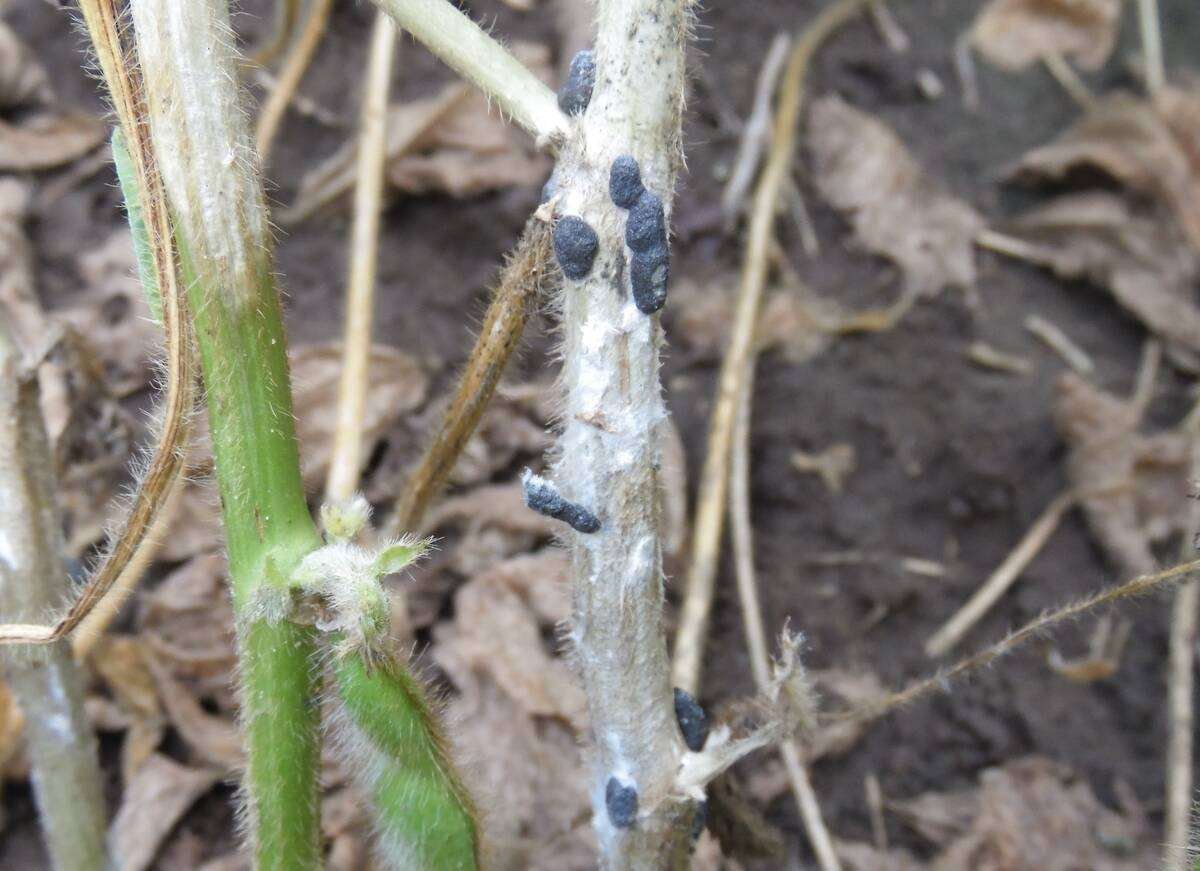
Caused by the fungus sclerotinia sclerotiorum, white mould can infect soybean plants during flowering and reduce yields by damaging stems, pods and vascular tissue.
Bahram Samanfar, a research scientist with Agriculture and Agri-Food Canada and a research professor at Carleton University’s Department of Biology, Science and Technology Branch, has been exploring a computational and machine learning approach to identify novel genes involved in host-pathogen interactions between soybeans and white mould.
Samanfar said the pathogen produces long-lived survival structures called sclerotia, which can remain viable in soil for several years and serve as a source of infection in subsequent soybean crops.
He says management with fungicides is highly dependent on accurate disease forecasting and application timing, and even well-timed applications may provide inconsistent control because the pathogen can infect tissues that are difficult for fungicides to reach.
“Cultural practices such as wider row spacing and lower planting rates to reduce canopy density can reduce disease pressure, but these strategies may conflict with agronomic practices designed to maximize soybean yield,” Samanfar said.
He said breeding for white mould resistance has also been challenging because resistance in soybeans is primarily quantitative and polygenic, where protection comes from many genes with small effects.
Samanfar added that multiple genes and biological mechanisms contribute small effects to the plant’s ability to restrict pathogen penetration, slow lesion development, limit fungal colonization or tolerate infection.
“Moreover, disease severity is strongly affected by genotype × environment interactions, making it difficult to distinguish true genetic resistance from disease escape,” he said.
In addition, S. sclerotiorum has considerable genetic and pathogenic diversity, further complicating the identification of broadly effective resistance mechanisms. These limitations make conventional phenotype-based breeding slow and difficult.
Using machine learning to find resistance
Samanfar said machine learning and computational biology allow researchers to examine soybean-Sclerotinia sclerotiorum interactions at a much deeper level than traditional breeding alone.
He said conventional breeding largely depends on observing disease symptoms and identifying soybean lines that show lower disease severity.
“While this approach is valuable, it does not necessarily tell us why a plant is more resistant or which genes are responsible. In our project, we integrate large-scale genomic, transcriptomic, protein–protein interaction, and regulatory datasets and use machine-learning approaches to identify complex patterns that are difficult to detect through conventional analysis,” he said.
Part of an integrated approach
Samanfar said the resistance his team has been studying has the potential to reduce growers’ reliance on fungicides, eventually being integrated into a disease management strategy rather than serving as a complete replacement for fungicides.
“White mould is a complex disease, and even a soybean variety with strong genetic resistance may experience disease under extremely favourable conditions for the pathogen. However, increasing the genetic resistance of soybean could substantially reduce disease severity and, consequently, the need for repeated or routine fungicide applications,” he said.
As research continues, Samanfar added, if his team can identify and deploy multiple resistance mechanisms through breeding, then they can develop soybean varieties that are inherently less susceptible to white mould while maintaining yield and adaptation.
“We are not looking for a single solution that replaces fungicides; we are looking to stack genetic resistance with existing management practices so that growers can use fungicides more strategically and only when they are truly needed,” he said.
Protecting yield in high-pressure years
Samanfar believes this research could lead to varieties that perform more consistently during high-pressure disease years.
“The key is to identify resistance mechanisms that remain effective across different environments and pathogen pressures. By combining disease phenotyping with genomics, transcriptomics, and machine learning, we can identify resistance genes and molecular markers that can be incorporated into breeding programs,” he said, adding that these genes could then be combined, or “stacked,” to provide more durable and consistent resistance.
He added that the objective of the research is not just to increase the average yield potential of a soybean variety, but to reduce the yield penalty associated with severe disease years and make yield more stable and predictable.
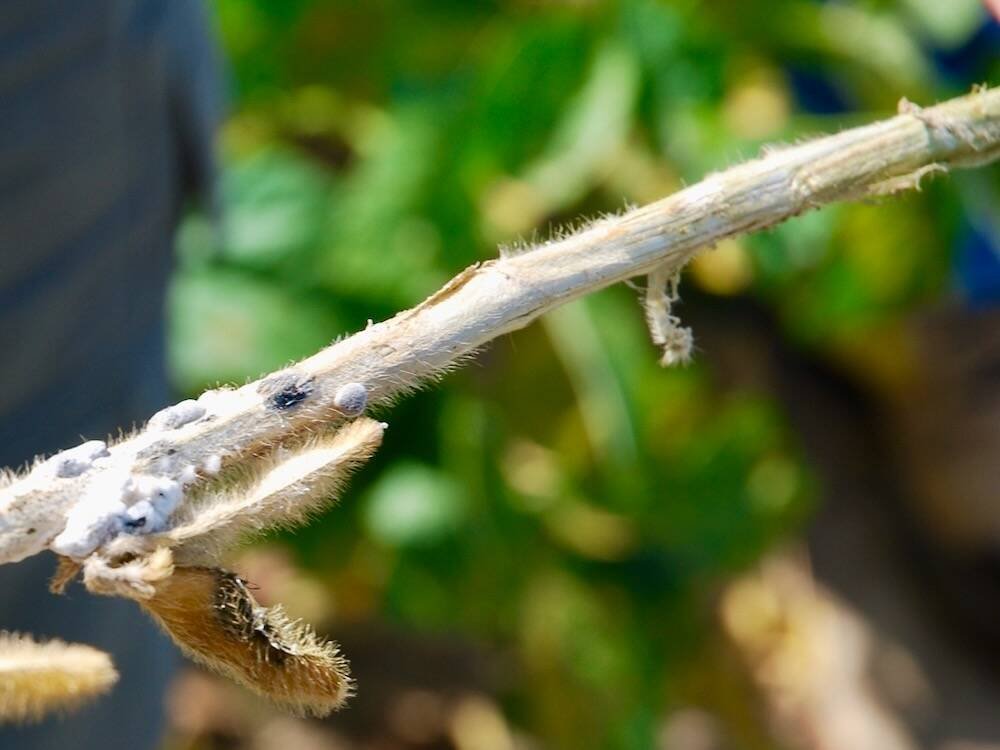
Under high disease pressure, Samanfar believes even a moderate reduction in disease severity can translate into meaningful yield protection because the plant is able to maintain healthier stems, pods and seed development.
He said the real value of this research may therefore be measured not simply as “X per cent higher yield,” but as the ability to prevent substantial yield losses during high-pressure years.
“If we can develop varieties that consistently maintain yield under conditions where susceptible varieties experience significant losses, while also reducing the need for fungicide applications, that would provide growers with both greater yield stability and a more sustainable production system,” Samanfar said.
Broader application
As a better understanding of white mould takes shape, Samanfar said the broader significance of this research will be the development of a general genomic discovery framework, rather than a method that is limited to white mould.
This means the same principle — integrating genomic variation, gene expression, protein–protein interactions, miRNA regulation and other biological information with machine learning — can be applied to other complex traits where resistance is controlled by many genes, each with relatively small effects.
“Once we identify the molecular signatures associated with resistance, we can develop diagnostic markers and provide breeders with tools to select for those traits much earlier and more efficiently,” he said, adding that the approach could also be extended well beyond white mould and soybeans.
Samanfar said that the underlying challenge is often similar: resistance is complex, environmental conditions influence disease expression, and it can be difficult to identify the most important genes from phenotype data alone.
“In the longer term, I see this developing into a transferable platform for discovering and deploying genetic resistance across multiple crops and diseases, helping breeders respond more rapidly to emerging disease threats and changing environmental conditions,” he said.
The team includes Samanfar and AAFC researchers, including researchers at the Ottawa Research and Development Centre: Elroy Cober and students Mohamad Elian, Jakob Bruggink and Jeff Pepin. The research team from Carleton University includes James Green and students Amirali Moein and Francois Charih.
Some of this research is funded by Grain Farmers of Ontario.
The post Machine learning seeks new angles against white mould in soy crops appeared first on Farmtario.


