
It’s a good time to be a cow-calf producer.
Prices are soaring and the weather has been good for growing pasture and hay.
It hasn’t hurt that consumers are continuing their love affair with beef, but the main driver has been the small size of the cow herd in both Canada and the United States.
Herd size is a cyclical business, but the low end of this particular cycle has been reluctant to take a holiday.
There are several reasons for this, including drought, retirements and the high prices themselves, which make it expensive to retain heifers.
These reasons seem to be lost on U.S. President Donald Trump, who has been desperately trying to be seen to address the high cost of living in his country.
For reasons known only to him, the U.S. president has locked in on high beef prices as one of the key culprits in the United States’ affordability crisis.
The president has thrown out all sorts of ideas on how to make this particular meat cheaper for Americans.
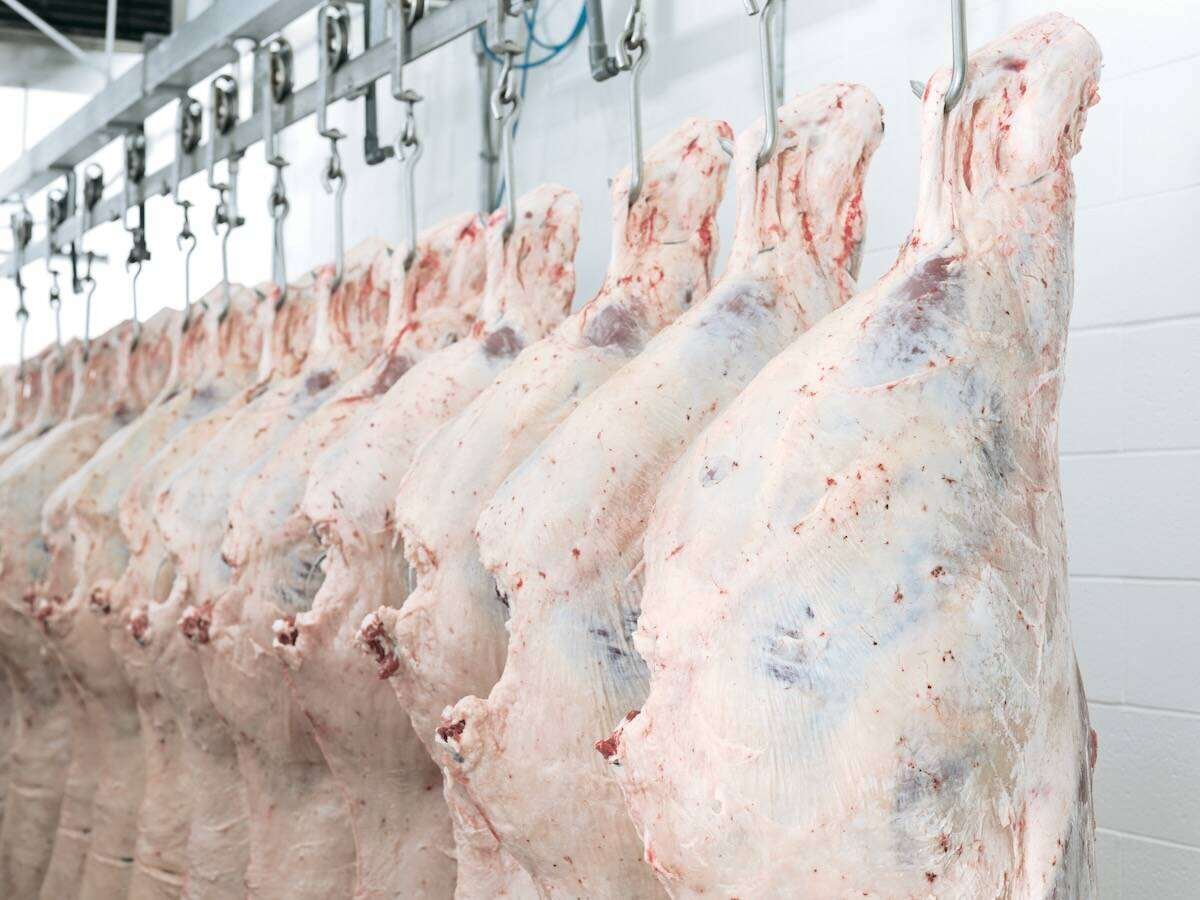
Beef demand has remained strong even in the face of record-high beef prices. Photo: Canada Beef Inc.
He has accused the meatpacking industry of price fixing and has harangued ranchers to produce more beef so the price will come down.
He has also proposed allowing more beef imports into the country as a way to lower prices.
All of this has angered American cattle producers, who are a key pillar in his political base, and done nothing to lower beef prices.
However, U.S. agriculture secretary Brooke Rollins recently announced a package of actions to address the smaller cattle herd that doesn’t include threats and intimidation.
Its main component contains tools designed to help cattle producers manage financial risk.
A new program called Beef Retention and National Development will reduce the price risk of keeping a heifer in the herd by ensuring the “economic value of retaining a heifer for a two-year period.”
“(This) would establish a protected value based on the expected slaughter value of the heifer at the time of enrolment,” the U.S. Department of Agriculture said.
Risk mitigation
Many Canadian producers think this is a good idea, although they caution that the government shouldn’t be focused only on cattle numbers.
Rather, the objective should be levelling the playing field and reducing the financial risk of expansion.
“The end goal isn’t a bigger cow herd,” said Ryan Beierbach, vice-president of the Canadian Cattle Association.
“The end goal is to make the business environment right … (so) producers want to grow.”
Producers assume a price risk when they retain heifers, making it harder to build the herd.
“That’s what that (program) is going to do for U.S. producers,” Beierbach said.
“That would make it less risky for someone like me to grow my herd.”
Most of us would agree that the decision to either stay in cattle production, leave cattle production or increase cattle production needs to remain with the cattle producer.
If it makes sense to do so, they will. If it doesn’t, they won’t.
If the long-term trend appears to point to a flat or smaller cattle herd, then we’d better get used to higher beef prices.
However, if there’s something the government can do to make herd rebuilding easier for producers, then it deserves serious consideration.


