Mapped: Where It Costs the Most to Own a Car in America
See visuals like this from many other data creators on our Voronoi app. Download it for free on iOS or Android and discover incredible data-driven charts from a variety of trusted sources.
Key Takeaways
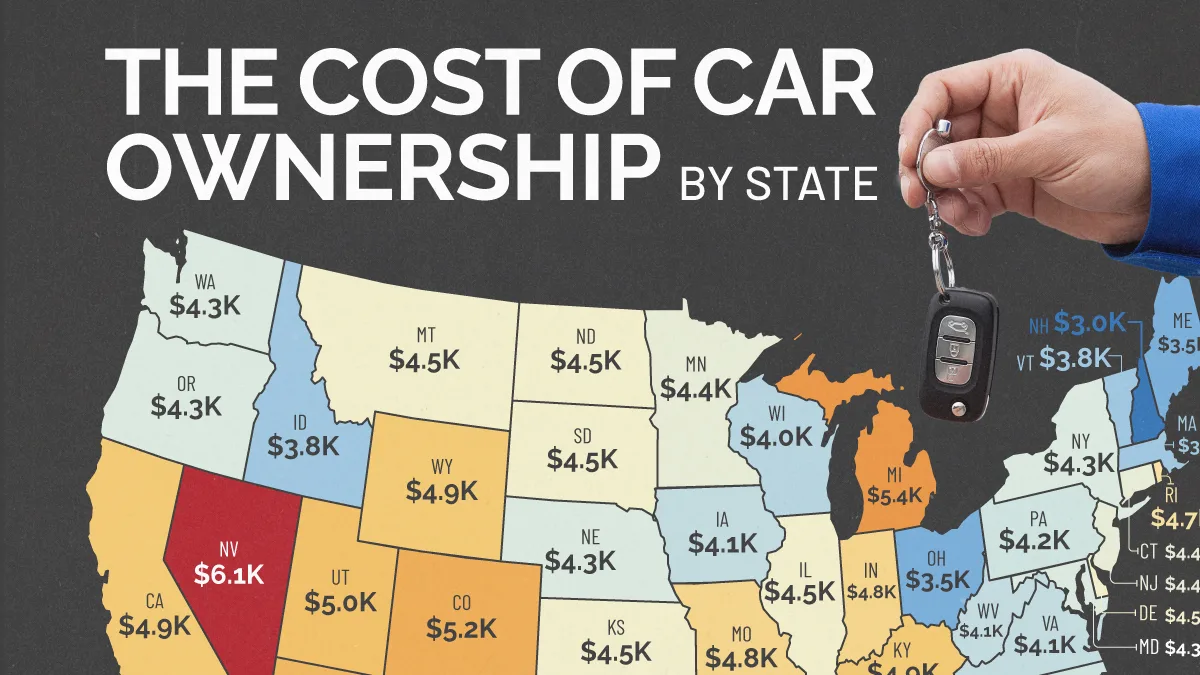
- Nevada has the nation’s highest annual car ownership costs at $6,119, while New Hampshire has the lowest at $3,030.
- Excluding car payments, recurring costs like insurance, fuel, repairs, and taxes can vary by more than $3,000 per year depending on where you live.
- Insurance is the biggest driver of these differences, accounting for at least half of ownership costs in 13 states.
Buying a car is only the beginning. Every year afterward, drivers face a steady stream of expenses—from insurance and fuel to repairs and taxes—that can add up to thousands of dollars.
Using data from LendingTree, this map compares average annual car ownership costs across every U.S. state and Washington D.C., excluding car payments, revealing where those ongoing expenses place the biggest burden on drivers.
The Annual Car Ownership Costs by State
Here’s how annual ownership costs compare across the country.
| Rank | State or District | Average Annual Cost of Car Ownership 2025 |
|---|---|---|
| 1 | Nevada | $6,119 |
| 2 | Florida | $5,682 |
| 3 | Louisiana | $5,663 |
| 4 | Michigan | $5,350 |
| 5 | Colorado | $5,151 |
| 6 | Alabama | $5,099 |
| 7 | Arizona | $5,060 |
| 8 | Oklahoma | $5,021 |
| 9 | Georgia | $5,014 |
| 10 | Utah | $4,977 |
| 11 | Arkansas | $4,947 |
| 12 | California | $4,900 |
| 13 | Kentucky | $4,862 |
| 14 | Wyoming | $4,859 |
| 15 | New Mexico | $4,855 |
| 16 | Missouri | $4,819 |
| 17 | Mississippi | $4,792 |
| 18 | Indiana | $4,787 |
| 19 | Rhode Island | $4,711 |
| 20 | Texas | $4,636 |
| 21 | Montana | $4,548 |
| 22 | Kansas | $4,542 |
| 23 | North Dakota | $4,540 |
| 24 | Delaware | $4,538 |
| 25 | Tennessee | $4,532 |
| 26 | Illinois | $4,521 |
| 27 | South Dakota | $4,493 |
| 28 | Minnesota | $4,435 |
| 29 | Connecticut | $4,419 |
| 30 | New Jersey | $4,413 |
| 31 | Oregon | $4,340 |
| 32 | Nebraska | $4,307 |
| 33 | Washington | $4,306 |
| 34 | Maryland | $4,302 |
| 35 | New York | $4,253 |
| 36 | Pennsylvania | $4,181 |
| 37 | South Carolina | $4,176 |
| 38 | North Carolina | $4,157 |
| 39 | Iowa | $4,146 |
| 40 | Hawaii | $4,114 |
| 41 | West Virginia | $4,102 |
| 42 | Virginia | $4,061 |
| 43 | Wisconsin | $3,963 |
| 44 | District of Columbia | $3,925 |
| 45 | Massachusetts | $3,834 |
| 46 | Vermont | $3,829 |
| 47 | Idaho | $3,781 |
| 48 | Alaska | $3,682 |
| 49 | Ohio | $3,544 |
| 50 | Maine | $3,543 |
| 51 | New Hampshire | $3,030 |
| — |  U.S. Average U.S. Average |
$4,507 |
Costs do not include car payments. Sales taxes combine state and local taxes, annualized over 6.5 years based on an average used car price of $27,177.
Annual ownership costs range from roughly $3,000 in New Hampshire to more than $6,100 in Nevada, meaning two drivers with the same vehicle could face a difference of more than $3,000 every year based solely on where they live.
Seven of the 15 most expensive states are in the South, largely because of elevated insurance premiums. Florida and Louisiana rank near the top for insurance costs, while California stands out for high fuel prices and repair expenses rather than insurance alone.
Why Some States Cost Thousands More Than Others
The price of a vehicle may be similar nationwide, but the cost of keeping it on the road can change significantly by state.
Insurance is often the biggest source of variation, ranging from over $3,400 annually in Nevada to around $1,200 in Maine. Premiums reflect everything from accident frequency and vehicle theft to repair costs, weather-related claims, and state insurance regulations. In 13 states, insurance alone accounts for at least half of total ownership costs.
Fuel prices, registration fees, and sales taxes add another layer. Drivers in states with longer average commutes or higher gasoline prices typically spend more each year, while repair costs can also differ depending on labor rates and vehicle demand.
Driving Is One of America’s Biggest Household Expenses
Transportation is one of the largest household expenses after housing, making recurring vehicle costs an important part of overall affordability. While consumers often focus on a car’s purchase price or monthly payment, insurance, fuel, repairs, and taxes can add thousands of dollars each year, and those costs depend heavily on where they live.
That burden is especially significant in communities where driving is a necessity rather than a choice. Beyond commuting, vehicles are essential for work, school, childcare, and everyday errands, making recurring ownership costs difficult to avoid.
As insurance premiums, repair bills, and maintenance costs continue to rise, the cost of keeping a car on the road remains a core part of the broader cost-of-living conversation alongside housing, healthcare, and utilities.
Learn More on the Voronoi App 
To learn more about this topic, check out this graphic on America’s slowest depreciating cars.