

Marks & Spencer and Schneider Electric have launched a new partnership to help reduce carbon emissions in global supply chains. The initiative, called RE:Spark, aims to increase the use of renewable electricity by suppliers across M&S’s network. It combines software, clean energy purchases, and advisory support.
Schneider Electric provides technology and services. Marks & Spencer (M&S) brings its large supplier base and sustainability goals. The effort reflects a growing corporate focus on cutting emissions deep in the value chain.
The partnership builds on broader work by both companies to cut greenhouse gas emissions. These efforts aim to support their long-term climate targets and influence industry change.
Katharine Beacham, Marks & Spencer’s head of sustainability and materials in fashion, home and beauty, remarked:
“By acting as a facilitator, we can help our suppliers build networks and resilience for the long term — sparking a movement of change across the industry and beyond.”
RE:Spark in Action: Empowering Suppliers to Go Green
RE:Spark is designed to help suppliers adopt renewable energy and reduce emissions. It uses Schneider Electric’s Zeigo Hub, a digital tracking platform. Suppliers can submit emissions data, track progress, and access resources. The initiative also offers:
- Clean energy guidance and advisory services to help suppliers switch to wind, solar, or other low-carbon power.
- Regional engagement events to educate suppliers in markets such as Vietnam, Turkey, India, China, and Bangladesh.
- Aggregated power purchase agreements (PPAs) help smaller firms buy renewable energy together.
These steps aim to lower costs and increase access to clean electricity for suppliers that normally cannot secure renewable contracts on their own.
The program is planned to roll out over a three-year period. It initially focuses on high-impact regions of M&S’s fashion and food supply chains.
M&S Net Zero Targets: Tackling Scope 3 Emissions
Marks & Spencer is a major British retailer with long-standing sustainability commitments. Its Plan A strategy targets net zero emissions across its full value chain by 2040. This includes Scope 1, 2, and 3 emissions — meaning emissions from operations, energy use, and suppliers.
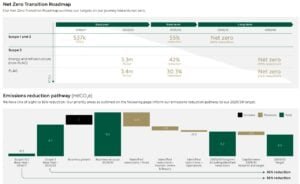
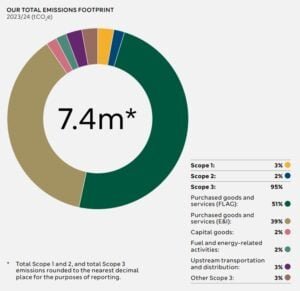
According to M&S’s own reports, around 95% of its carbon footprint comes from indirect Scope 3 emissions — mostly linked to products and supplier activity.
M&S reported total emissions of around 7.4 million tonnes of CO₂ in a recent baseline year. Most of this came from sourcing and manufacturing. The company has set medium- and long-term targets, including a 55% reduction in emissions by 2030 from a 2017 baseline.
M&S has begun taking action across its supply chain and logistics. It added 85 lower-emission vehicles to its fleet. This includes five zero-emission electric heavy goods vehicles and compressed natural gas trucks.
These trucks can cut CO₂ emissions by up to 85% compared to diesel in some cases. About 10% of its transport fleet now runs on zero or lower-emission technology.
Despite business growth in recent years, M&S also reported a rise in emissions. In one period, the company said its emissions increased by 6% even as revenue grew by 9%. Most retailers face the challenge of balancing growth with climate targets.
Schneider Electric Leads Supplier Decarbonization
Schneider Electric is a global leader in energy management and automation. It has set its own climate goals, including a plan to reach net zero emissions across its entire value chain by 2050.
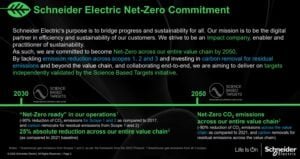
The company aims for a 25% cut in value-chain emissions by 2030. This includes its own emissions and those from its suppliers. Schneider calls this its “Zero Carbon Project.”
A major part of Schneider Electric’s strategy is helping suppliers decarbonize. Under its Zero Carbon Project, the company has worked with its top 1,000 suppliers to reduce emissions. They represent a large part of its Scope 3 footprint.
Schneider reported a 42% average cut in emissions from participating suppliers. They also helped about 700 suppliers measure and define their carbon footprints. Its near-term 2025 net-zero targets are as follows:
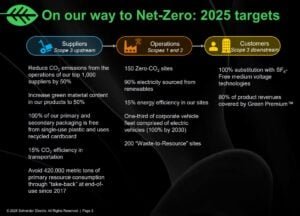
The electric company plans to balance residual emissions through high‑quality carbon removal credits. Its strategy includes investing in nature‑based and engineered removals, such as direct air capture, to match residual operational emissions by 2030 and support full value‑chain net zero by 2050.
Schneider’s approach combines data analytics, ambition setting, and direct support. It focuses on helping suppliers grasp emissions and take action, avoiding strict top-down rules.
Scope 3 Emissions: The Hidden Climate Challenge
Many companies now focus on emissions beyond their own factories and offices. These outside emissions are called Scope 3 emissions. Scope 3 includes all the carbon produced by suppliers and partners. It also covers emissions from the production of raw materials, transport, and other steps before a product reaches the customer.
Scope 3 emissions are often much larger than a company’s direct emissions. In 2023, corporate disclosures showed that Scope 3 supply chain emissions were about 26x greater than emissions from a company’s own operations (Scopes 1 and 2). This means that most of a company’s climate impact comes from its value chain, not from its own buildings or vehicles.
Because Scope 3 emissions are so large, reducing them is critical for companies to meet net-zero goals. Yet many companies do not fully measure or control these emissions. Only a small share of firms that report emissions actually set specific targets to cut Scope 3 emissions. This means that most corporate climate plans are missing the biggest piece of their carbon footprint.
For retailers and manufacturers, this problem is especially strong. Industry analysts note that for many firms, 70% to 90% of total emissions come from Scope 3 activities rather than direct operations. Take, for instance, the case of Nike’s Scope 3 emissions below, which represent over 90% of its total carbon footprint.
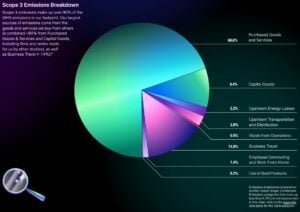
These high shares occur because raw materials, supplier processes, packaging, and transport often require much more energy and carbon than company‑owned facilities. Suppliers also often lack the tools and financing to switch quickly to clean power.
Decarbonizing supply chains can also reduce business risk. If companies do not address Scope 3 emissions, they may face higher costs in the future. Many countries are now requiring reports on indirect emissions. They also aim to reduce these emissions.
Investors and customers are also more likely to choose companies with stronger climate action plans. Companies that engage suppliers and track performance with digital tools can accelerate progress and make climate work more transparent. These steps make it easier for both large brands and smaller suppliers to reduce emissions together.
RE:Spark and the Global Push for Corporate Climate Action
Marks & Spencer and Schneider Electric are part of a larger trend of corporate climate action. Many companies now set science-based targets to align with global climate goals.
However, Scope 3 remains a major challenge across sectors. New reporting guidelines and frameworks are now available. They help companies measure better and set goals more effectively.
Tools like Schneider’s Zeigo Hub reflect trends toward digital solutions for emissions tracking and supplier engagement. More research shows that collaborative programs help companies expand climate action beyond their own operations.
Early adopters often inspire peers and suppliers to take action as well. Efforts like RE:Spark aim to make supply chain decarbonization more practical and accessible, especially for smaller suppliers.
M&S and Schneider Electric plan to expand the program over the next three years. The initiative will initially focus on key regions and high‑impact supply chain segments. As suppliers engage with renewable power procurement and emissions tracking, the partners expect to accelerate progress toward the companies’ net-zero goals.
The success of this model may inspire other brands to launch similar programs. Analysts and sustainability advocates will watch whether RE:Spark leads to measurable emissions cuts across global supply chains. If it does, this approach could become a broader template for corporate climate action.
The post Marks & Spencer and Schneider Electric Partner to Cut Supply Chain or Scope 3 Emissions appeared first on Carbon Credits.


