

Meta Platforms, the parent company of Facebook, Instagram, and WhatsApp, has announced a series of major nuclear energy agreements. The deals will secure up to 6.6 gigawatts (GW) of power. This will support the fast growth of its artificial intelligence (AI) operations and data centers. This amount of capacity could power the equivalent of about 5 million homes by 2035.
The agreements involve partnerships with established and emerging nuclear energy companies, including Vistra, TerraPower, and Oklo. These moves show a major corporate push for nuclear energy in U.S. history. They highlight how tech giants like Meta want reliable, clean power for future growth.
According to Joel Kaplan, Chief Global Affairs Officer, Meta, these agreements make the company:
“…one of the most significant corporate purchasers of nuclear energy in American history. State-of-the-art data centers and AI infrastructure are essential to securing America’s position as a global leader in AI. Nuclear energy will help power our AI future, strengthen our country’s energy infrastructure, and provide clean, reliable electricity for everyone.”
Why Meta Needs Round-the-Clock Power for AI
Meta’s data centers, especially those focused on AI workloads, consume large amounts of electricity. Traditional renewable sources such as wind and solar can be variable and may not always provide electricity around the clock.
Nuclear power, by contrast, offers reliable, 24/7 clean energy that can help meet consistent demand. Meta’s new agreements will help secure a steady electricity supply. This aligns with its sustainability goals and boosts its growing computing infrastructure.
According to Meta’s own statements, the company’s carbon footprint rose 20% to 8.2 million tCO2e as AI data centers demanded more power. Scope 1+2 emissions dropped 15% through energy efficiency gains. However, Scope 3 grew from supply chain activity.
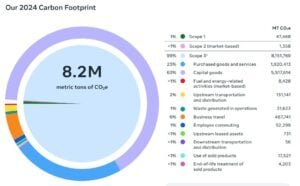
Still, Meta matched 100% renewable energy and cut water use by 25%, keeping its 2030 net-zero target on track, with nuclear power part of its strategy.
Nuclear energy helps cut fossil fuel use. It adds carbon-free power to electrical grids. This provides a stable source of baseload energy and also supports the company’s environmental strategy.
The Nuclear Agreements: Three Key Partners
Meta’s nuclear energy strategy centers on three major partners:
Vistra: Power From Existing Plants
Meta signed a 20-year power purchase agreement (PPA) with Vistra Corporation. Through this deal:
- Meta will buy more than 2,176 megawatts (MW) of nuclear energy from the Perry and Davis-Besse plants in Ohio.
- The deal includes 433 MW of additional capacity from uprates (increased output) at these plants and Beaver Valley in Pennsylvania.
- These plants will continue to supply power to the PJM grid, which serves tens of millions of people across the U.S. Midwest and Mid-Atlantic region.
The Vistra agreement gives Meta immediate access to operating nuclear generation, helping bridge the gap while new reactors are built. This type of long-term purchase also helps extend the operational life of existing nuclear plants.
TerraPower: Advanced Natrium Reactors
Meta has teamed up with TerraPower, co-founded by Bill Gates. This partnership aims to develop advanced nuclear reactors called Natrium units.
- The deal initially covers two Natrium reactors capable of generating 690 MW, with delivery as early as 2032.
- Meta also holds rights to energy from as many as six additional Natrium units, which could produce a further 2.1 GW by 2035.
- At full deployment, up to eight Natrium units can provide around 2.8 GW of baseload energy. They also have energy storage to balance power output.
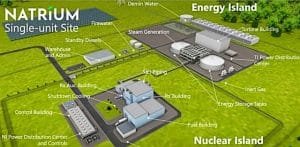
This agreement is Meta’s largest support for advanced nuclear technology to date. Natrium reactors are safer and more flexible than older designs. Their built-in storage helps adapt to grid conditions.
Oklo: New Nuclear Campus in Ohio
Under the deal with Oklo, a nuclear start-up with ties to major tech investors, Meta will help advance the development of a new nuclear energy campus:
- The project in Pike County, Ohio, could deliver up to 1.2 GW of electricity.
- Oklo expects the first phase of this nuclear campus to be operational as soon as 2030, with full capacity by about 2034.
- Meta’s funding will support early steps such as fuel procurement and site development for Oklo’s advanced reactor designs.
Oklo uses new reactor designs that build on current technology. Their goal is to make construction simpler and cheaper. However, these designs require regulatory approvals and remain in early stages of commercialization.
AI’s Energy Appetite Is Reshaping Power Markets
Meta’s nuclear energy push comes amid a wider tech industry effort to secure reliable, low-carbon power. Large data centers that run AI systems demand significant electricity.
If grid supply cannot keep up, it can lead to higher energy costs, reliability challenges, and increased emissions. For this reason, companies like Meta are investing in long-term energy contracts and exploring new energy technologies.
Meta’s nuclear agreements build on earlier deals, including a long-term purchase agreement signed with Constellation Energy in 2025. The deal aimed to keep the Clinton nuclear plant in Illinois running. This also helps expand Meta’s nuclear energy reach.
Supporters of nuclear energy say it gives steady, carbon-free power. This can help balance out the ups and downs of renewable sources like solar and wind. Supporters also highlight possible economic gains. These include local jobs and improved energy infrastructure.
However, nuclear projects face regulatory hurdles and long development timelines, especially for advanced designs. Still, analysts see strong demand for this clean power for the energy transition to materialize.
The Nuclear Revival Gains Momentum
Nuclear power is gaining renewed interest worldwide as countries and companies seek reliable, low-carbon energy. In 2024, nuclear reactors produced a record 2,667 terawatt-hours (TWh) of electricity, the highest amount on record.
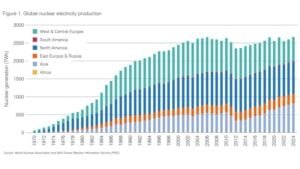
Reactors also ran at an average capacity factor of 83%, meaning they produced power most of the time. This shows nuclear energy is a stable source of electricity compared with intermittent sources like solar and wind.
Global nuclear capacity has been rising slowly. At the end of 2024, the world had about 398 gigawatts (GW) of nuclear power capacity. This total includes both older reactors and new ones that are in operation.
Industry forecasts point to growth ahead. A recent report projects nuclear capacity could reach 494 GW by 2035 as new plants are built and small modular reactors (SMRs) are deployed. SMRs are smaller, factory-built reactors that may be easier to construct and add to grids.
Long-range projections are even larger. According to the International Atomic Energy Agency (IAEA), global nuclear capacity could expand to 992 GW by 2050 in a high-growth scenario, more than double today’s level. SMRs could make up a growing share of this capacity.
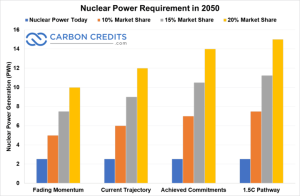
These trends reflect a broader industry shift toward clean, firm power that can support both grid stability and growing demands from industries like data centers.
What This Means for Meta’s Future
Meta’s nuclear energy strategy reflects a long-term approach to meeting the power demands of AI computing. By securing a diverse mix of clean energy sources — including nuclear — the company aims to ensure that energy supply keeps pace with its growth plans.
In Meta’s view, nuclear energy can help provide stable, carbon-free power to fuel data centers without interruption. It also positions the company as a major corporate purchaser of nuclear capacity, potentially encouraging further investment in U.S. nuclear infrastructure.
Whether the planned reactors reach full operation on schedule remains to be seen. But Meta’s agreements have already influenced markets, supported early-stage nuclear ventures, and drawn attention to the role of clean energy in powering the next generation of computing.
- READ MORE: 2026: The Year Nuclear Power Reclaims Relevance With 15 Reactors, AI Demand, and China’s Expansion
The post Meta Signs Three Nuclear Deals of Up to 6.6 GW to Fuel AI Data Center Growth appeared first on Carbon Credits.


