

Artificial intelligence is fueling Microsoft’s next phase of growth, but it is also increasing the company’s carbon footprint. Microsoft’s 2026 Environmental Sustainability Report reveals that its total greenhouse gas (GHG) emissions hit almost 20.3 million metric tons of CO₂ equivalent (MtCO₂e) in fiscal year 2025. This is an increase from 16.2 MtCO₂e in 2024. That is a 25% increase in just one year.
The company says the increase shows how quickly AI and cloud infrastructure are growing. This is especially true with the building of new data centers. Microsoft still aims to be carbon negative by 2030. It also plans to remove all the carbon it has emitted since 1975 by 2050.
AI Infrastructure Is Driving Microsoft’s Emissions
Microsoft’s report shows that Scope 3 emissions remain its biggest climate challenge. These indirect emissions made up 85.82% of the company’s total carbon footprint in 2025.
The largest source was capital goods, which accounted for 44.57% of total emissions. This includes the steel, cement, servers, semiconductors, cooling systems, and other equipment needed to build AI data centers.
Purchased goods and services contributed 25.28%. Fuel and energy activities added 5.30%. Upstream transportation accounted for 3.66%.
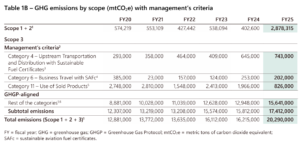
The company says demand for AI services such as Azure and Copilot is driving a wave of global infrastructure investment. Building these facilities causes a lot of emissions even before they start. This is because making cement, steel, and computer chips uses a lot of carbon.
Another change came from Microsoft’s electricity strategy. Scope 2 emissions increased to about 13% of total emissions, compared with around 2% a year earlier.
The tech giant said this reflects a shift away from buying renewable energy certificates that do not add new clean power to the grid. Instead, Microsoft is investing in new carbon-free electricity projects that deliver a greater long-term climate benefit.
The Increase Is Part of a Long-Term Transition
Microsoft argues that today’s higher emissions are linked to building tomorrow’s lower-carbon economy. The company stated:
“Our results reflect both progress and pressure. As we scale the physical infrastructure required to power the AI economy, our emissions are shaped by the impact of that growth and the actions we are taking to manage it.”
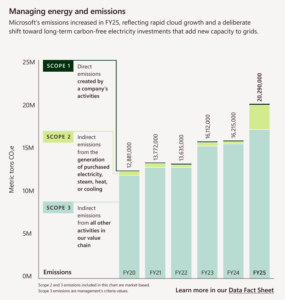
The company expects emissions from construction and supply chains to decrease over time. This will happen as suppliers use cleaner manufacturing, low-carbon materials become more available, and electricity grids add more renewable power.
The wider industry faces the same challenge. The International Energy Agency (IEA) says that electricity demand from data centers will more than double by 2030. This surge is due to the faster adoption of AI. Manufacturing steel, cement, and electronic equipment for these facilities also causes a lot of global industrial emissions.
Microsoft says it is working directly with suppliers to lower those emissions. The company is testing green steel, lower-carbon concrete, and hybrid mass timber. These materials can cut the embodied carbon in some data centers by up to 35%. It is also using new steel products that can cut emissions by as much as 95% compared with conventional steel production.
Microsoft Doubles Down on Climate Action
Even as its emissions rise, Microsoft continues to expand one of the world’s largest corporate climate programs.
The company remains committed to becoming carbon negative by 2030. In fiscal year 2025, it contracted projects to remove over 45 million metric tons of carbon. This includes 29 projects across five continents and 10 carbon removal pathways. These include:
- direct air capture (DAC),
- biochar,
- enhanced rock weathering,
- reforestation, and
- bioenergy with carbon capture and storage (BECCS).
Microsoft also reported progress beyond carbon. It achieved a 92% reuse and recycling rate for cloud servers and components for the second year in a row, exceeding its 90% target. The company also became water positive during the year by replenishing more water than it consumed.
- SEE MORE: Microsoft Becomes Water Positive Ahead of 2030 Goal With AI-Powered Data Center Innovation
These results highlight the challenge many technology companies now face. AI is increasing emissions in the short term because of massive infrastructure investments. Companies are putting billions into clean energy, carbon removal, and lower-carbon supply chains. This investment helps them meet their long-term climate goals.
Renewables and Carbon Removal Expand at Record Pace
Microsoft is backing its climate goals with large investments.
The company now has more than 40 gigawatts (GW) of contracted renewable energy across 26 countries. This portfolio includes solar, wind, and other clean power projects that help reduce emissions from its operations while supporting cleaner electricity grids.

Carbon removal is another key part of its strategy. According to CDR.fyi, Microsoft remains the world’s largest corporate buyer of carbon removal. Its growing portfolio features nature-based projects and engineered solutions. These include direct DAC and BECCS.
The company says it is also working with suppliers to cut emissions before products reach its data centers. Microsoft encourages manufacturers to use renewable electricity through its Supplier Code of Conduct and sustainability programs. They also promote better energy efficiency and lower-carbon materials.
Can AI Help Cut Future Emissions?
Although AI is increasing emissions today, Microsoft believes the technology can also help reduce emissions across the global economy.
The company is creating AI tools for various purposes. These tools will improve energy management, optimize power grids, and monitor forests. They will also reduce industrial waste and help businesses track their carbon footprints. These applications could lower emissions in sectors such as manufacturing, agriculture, transportation, and buildings.
The IEA shares a similar view. It says AI can improve the efficiency of electricity systems, speed up renewable energy integration, and support better energy planning. These benefits depend on how fast electricity grids clean up and how well future data centers run.
This means the climate impact of AI will depend not only on better software, but also on cleaner power, stronger supply chains, and continued investment in low-carbon infrastructure.
Investors Focus on Growth Amid Emissions Increase
The sustainability report received attention, but it did not become the main driver of Microsoft’s (MSFT) share or stock price movement.
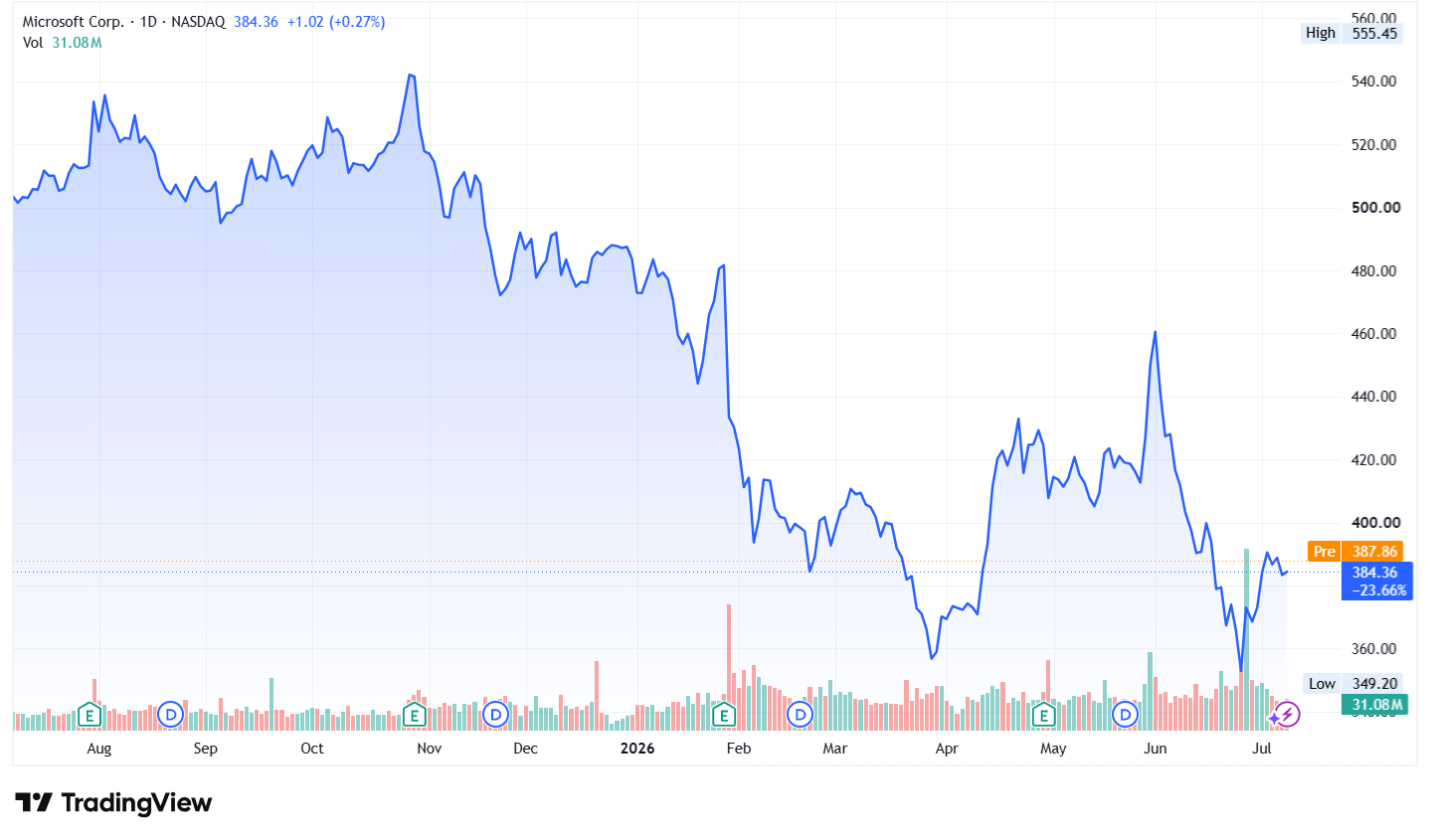
Instead, investors remained focused on the company’s AI business. Microsoft continues to expand Azure, Copilot, and its broader AI ecosystem, which many analysts see as major sources of future revenue.
The report showed that the company is investing significantly to reduce its environmental impact. It is not backing away from its climate commitments. For many investors, the main question is whether Microsoft can keep growing AI and lower emissions over the next decade.
That balance will likely become an increasingly important measure of long-term corporate performance.
AI Is Reshaping the Net-Zero Journey
Microsoft’s latest report highlights a challenge facing the entire technology sector.
Building AI infrastructure creates emissions today because it requires large amounts of steel, cement, semiconductors, and electricity. Those emissions may continue to rise in the near term as companies expand their data center networks.
At the same time, technology companies are investing at record levels in renewable energy, cleaner supply chains, and carbon removal. The goal is to reduce the carbon intensity of future growth rather than slow innovation.
Microsoft’s results show that reaching net zero is unlikely to follow a straight path. Short-term emissions may increase as companies build the infrastructure needed for an AI-powered economy.
The long-term success of those climate strategies will depend on whether investments in clean electricity, low-carbon materials, and carbon removal can outpace that growth.
For now, Microsoft’s report offers one of the clearest examples yet of the trade-offs between rapid AI expansion and corporate climate goals. It also shows why transparency will be just as important as ambition as companies work toward a net-zero future.
The post Microsoft’s Emissions Rise 25% in 2025 as AI Expansion Tests Its Net-Zero Goals appeared first on Carbon Credits.


