Farmers sampling corn harvests this year should be vigilant after an annual corn ear mould and mycotoxin survey found levels slightly higher than the province’s 10-year average.
Mycotoxins, particularly deoxynivalenol (DON, also known as vomitoxin), are mainly produced by the ear moulds gibberella and fusarium and can be harmful when fed to livestock, especially hogs and other young or lactating animals.
WHY IT MATTERS: Corn with higher mycotoxin levels fed to livestock can result in reproductive and other health problems.
The annual crop survey by corn specialist Ben Rosser from the Ontario Ministry of Agriculture, Food and Agribusiness found 77 per cent of samples tested low for mycotoxins (under two parts per million), which was lower than the 10-year average of 86 per cent.
“Even though 77 per cent of the 2026 survey samples tested below two ppm, growers should still be vigilant, as they may have individual fields with elevated DON,” Rosser wrote in his survey summary, published last month.
Contributing factors
The elevated DON samples this year came as a surprise for Marty Vermey, manager of agronomy with Grain Farmers of Ontario.
“This year we thought it was so dry during pollination and with the forecast models that people were using, people were saying, ‘Oh, it’s going to be a low DON year,’” Vermey said. “But down along Lake Erie where maybe corn planting was a bit later and the pollination occurred a little bit later and then we got some wet weather into September, that really made a big difference.”
The majority of the samples with DON levels measuring two ppm or higher were clustered around Middlesex County, Chatham-Kent and parts of Lambton County. Other samples showed up west of Ottawa.
Sampling results
Rosser urges farmers to take a representative sample of their corn loads to test for infection and not just skim kernels off the top of the storage bin, combine or truck. That means taking as many as four probes to sample the full depth of wagons and trucks, or using a diverter or randomly collecting cups of grain from moving grain streams.
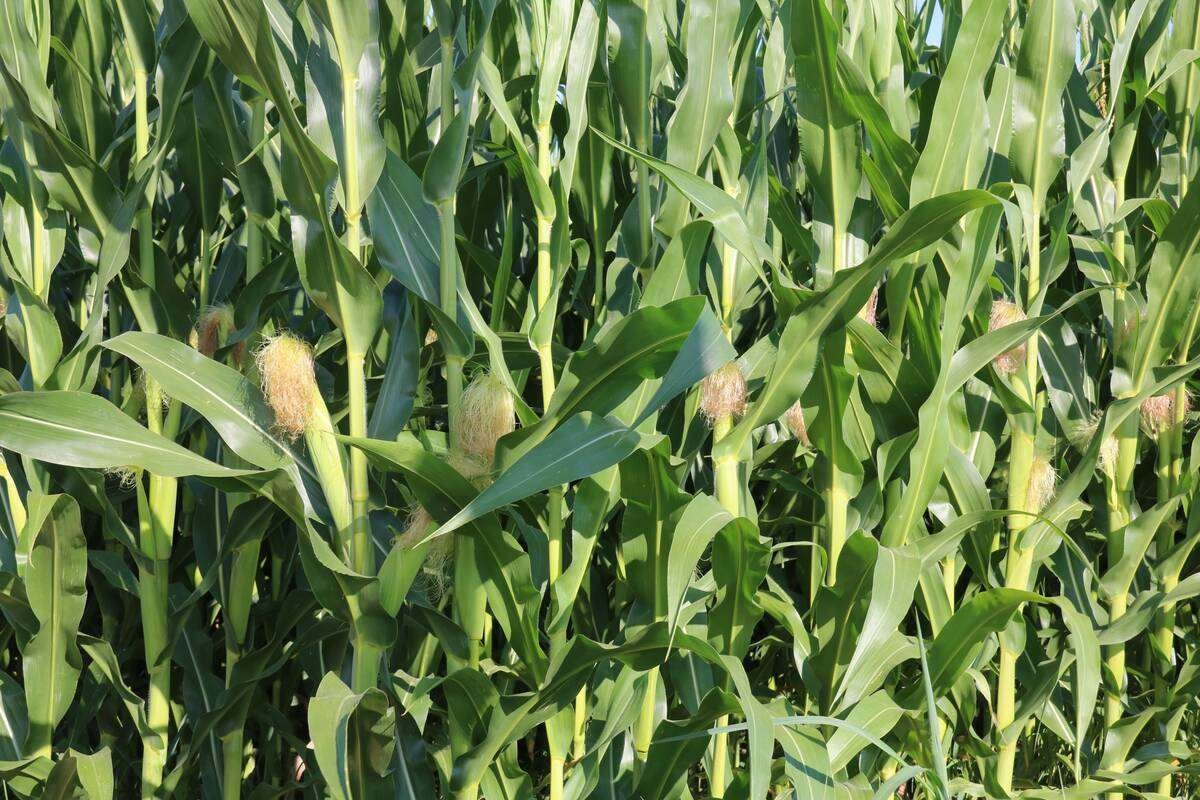
Moisture around pollination can be a risk factor for DON, but there wasn’t much of it in 2026.
Photo: John Greig
Of the 272 corn ears sampled between Sept. 23 and Oct. 9 from fields across the province, 147 (54 per cent) had readings below 0.5 ppm, while 63 had between 0.5 and two ppm. The remaining 62 samples, or about 23 per cent, had readings above two ppm.
It’s a big change from 2024 and 2025, when the survey found 94 and 98 per cent of samples had DON concentrations below two ppm. Yet it’s also a far cry from the difficult 2018 corn season when the survey found about 40 per cent of samples had concentrations above two ppm.
AAFC guidelines
Agriculture and Agri-Food Canada guidelines for DON in animal feed are one ppm or less for pigs, calves, lambs, lactating cows and lactating ewes, and up to five ppm for adult cattle, adult sheep and poultry. Mycotoxin contamination also isn’t obvious just by looking at the grain.
Wet and humid conditions while corn is silking are key drivers for fungal infection, Rosser writes in his report, but other factors like late-emerging “straggler” crops and secondary ears that silk later in the season can extend the window of infection, while other stresses like soil compaction and restricted root growth — and the genetics of the crop itself — can also impact infection rates.
Livestock feeding risk
Livestock find mouldy feeds less palatable and may reduce their intake, which can reduce weight gains or milk production in dairy cattle. The toxins can impair performance and change normal metabolism, mainly targeting an animal’s immune function.
Agricorp, the provincial government agency tasked with delivering crop insurance and other agricultural business risk management programs to farmers, said in a statement to Farmtario that they have received “some questions related to DON, particularly in areas highlighted by the survey,” but added that it’s still too early to draw any broad conclusions about the corn harvest this year and that, to this point, “the volume of inquiries is not unusual for harvest season.”
The agency encourages farmers to submit their final yields as soon as harvest is complete to meet the Dec. 15 reporting deadline.
There are tools farmers can use to help lower their risk of DON and other mycotoxins, and growing hybrid corn varieties developed to be more tolerant of the infection is one of the best ways growers can try to avoid DON, Rosser said in a follow-up with Farmtario. Other factors such as crop rotation and tillage can help, but weather remains the biggest factor, and “we can’t control weather,” Rosser said.
Vermey agrees.
“It’s a tricky disease. DON is a hard one in corn to try to understand and control,” he said. “We have some tools, but sometimes [DON] breaks through those tools.”