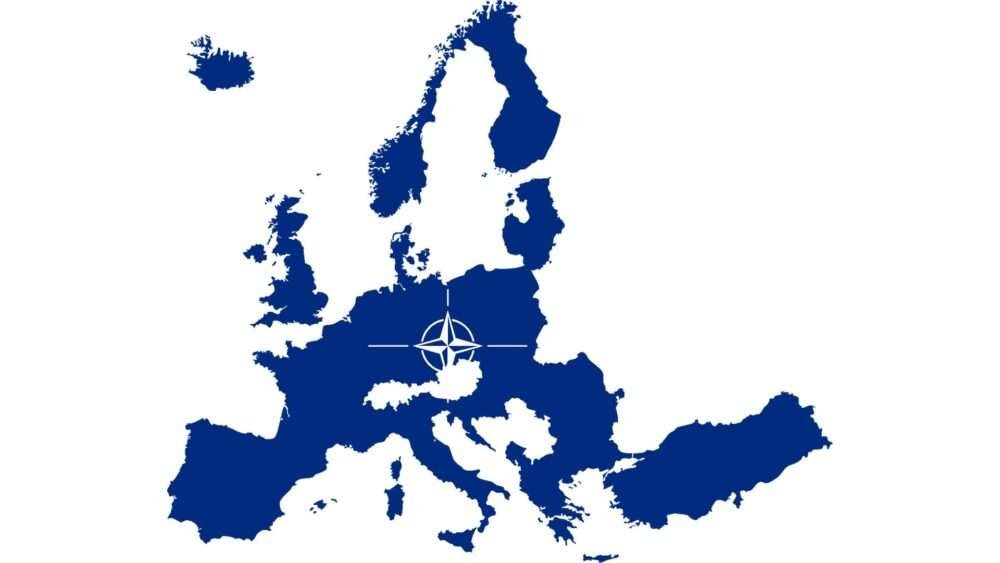
NATO invests in dual-use biotech as Europe rearms
Biotech is now a defence priority for NATO, according to the alliance’s Secretary General, Mark Rutte.
Speaking at the first ever NATO Biotechnology Conference in October 2025, Rutte urged the security alliance to match China and the US on their readiness in the sector.
This interest from the defence establishment reflects how quickly the policy landscape has changed for Europe’s biobased industries in recent years.
Member state defence spending is now at the highest level since the fall of communism in Europe, rising 62.8% between 2021 and 2024. The EU’s Defence White Paper, Readiness 2030, underlines biotech as a critical tech for maintaining military edge.
We look at how the EU’s defence pivot is shaping investment in biotech and biomanufacturing.
NATO’s tech accelerator
NATO has already been supporting defence-relevant biotech companies through its DIANA network. Founded in 2021, it works with 200 accelerator sites and test centres across alliance member states to develop dual-use technologies.
Support from DIANA can take the form of training, networking, testing opportunities, and funding. Between 2024 and 2025, DIANA funded a total of 28 early biotech companies.
Its first accelerator will start on 19 January 2026, running for 6 months. The open call listed 10 problem categories, including energy, advanced communication, human resilience, and biotech.
A key criterion for candidate selection is whether a startup’s IP holds both civilian and defence uses. Investors are attracted by mass market viability. Targeting the defense market alone is less likely to bring profitability.
Biotech and biobased companies in this year’s DIANA cohort reflect this dual-use emphasis. They include California’s Helicoid Industries Inc. The company makes high-performance materials that mimic ultra-strong, ultra-light structures in certain living organisms. Use cases include light-weight biobased composites and protective enclosures for EV batteries.
Another is Lux Bio, which uses natural enzymes to generate light, inspired by the functionalities of bioluminescent fish. This biodegradable alternative to glowsticks have uses in emergency rescue and music festivals.
Microbium, included under DIANA’s extreme environments problem area, have developed microbe-based sensors that can quickly detect dangerous toxins in the environment, an example of an environmental clean-up technology with defence applications.
Selected companies will get €100,000 in contractual funding. Top performers will be eligible for up to an additional €300,000 in the next phase.
The defence uses of biotech
Far more biobased and biotech companies could get NATO support given the range of defence-relevant use cases the sector offers.
Biotech’s most obvious defence application is in health, offering remote medical treatment, medical sensors, and trauma and infection diagnostics.
In a recent paper on how biotech can support fighting power, researchers identified small-scale sensors for administering medicines and tailor-made microbes to fend off ‘food’ travel-related illness or antibiotic-resistant infections as key use cases.
Biotech also offers value for the military in human enhancement, which refers to factors that help humans operate at their physical limits. Here, biotech offers a diverse toolkit for emergency scenarios and combat, including optimised nutrition, durable food preservation, and modified biofuels to sharpen military logistics.
Biotech associated with environmental clean-up also holds uses in defence. For example, certain modified microorganisms that remove pollutants from air or water can be useful against biological and chemical threats.
Lighter, stronger
Industrial biomaterials also offer advantages in combat equipment and military infrastructure.
These include lower toxicity compared to synthetics, inherent lightness combined with strength, and even self-healing properties that improve durability and cut maintenance costs.
One biomaterial with emerging military uses is nanocellulose, which can be processed out of low value agricultural and forestry waste.
Nanocellulose is prized for an unusual mixture of lightness, strength, biodegradability, low toxicity, and electric conductivity, particularly as the material can be modified into diverse forms with different functionalities. Researchers are exploring its potential for bulletproof vests, explosives, and new undersea propulsion systems.
Another unexpected biomaterial with defence applications is silk, a fibre made from protein that is stronger than steel. The biotech world has already gone beyond the functionalities of natural spider silk too, with bioengineered versions that have unnatural powers fit for specific tasks.
In 2018, for example, researchers combined silkworm and spider genes to create a silk six times tougher than Kevlar, a material used in making bulletproof vests. This new material had high strength (in technical terms, how much stress the material can take without deforming) and toughness (how much energy it can absorb through stretching before tearing).
Silk’s softer side has a place in combat too. Indian biomedical startup Fibroheal Woundcare has demonstrated a silk-chitosan-silica dressing that prevents bleeding and supports clot formation. The silk layer allows easy removal, reducing the risk of reopening wounds.
These lab-grown silks show how genetic engineering can fine-tune the basic properties of natural materials. This bioengineering can also produce ‘smart’ fabrics incorporating living microorganisms such as bacteria, fungi, algae, and biofilms. The living elements confer self-healing properties to the fabric, as well as sensitivity and responsiveness to environmental change. Lightweight and multi-functional fabrics like this hold immense value in combat and defence.
Self-healing materials
Self-healing construction materials could hold valuable military uses too. One instance of these came out of the Worcester Polytechnic Institute, where researchers developed a carbon-negative construction material that self-heals using enzymes.
An enzyme, carbonic anhydrase, is mixed into water, sand, and a polymer, creating a composite building material that repairs its own cracks once they form, up to six times.
Self-reparing materials can borrow from nature in more ways than one. In 2020, researchers at Penn State University and Max Planck Institute for Intelligent Systems, Germany developed a self-healing biopolymer that was biodegradable and recyclable.
Not only was the material made from renewable inputs, the self-healing protein it contained was inspired by a naturally self-healing compound found in squid teeth. The work was funded by the US Army.
More industry-defence integration
The EU is aligned with NATO when it comes to bolstering defence-ready biotech.
For the first time in four decades, the EU has proposed that its €175 billion 2028 Horizon Europe research budget can be for both civilian and military R&D. Before, this budget went exclusively on civilian-oriented research.
The EU is also starting to back defence-ready biotech specifically. By December 2025, €191 million had already been allocated from the European Defence Fund to biotech R&D.
The proposed EU Biotech Act could unlock more support for dual-use biotech and biomanufacturing. Now entering its public consultation phase, the act aims to remove bottlenecks for startups making the leap to scale-up.
Yet industry bodies say the proposed act needs more provisions designed to help biotech contribute to regional security. In particular, industry is calling on the EU to break down the barriers between civilian and defence-related biotech.
Europe’s largest biotech industry group EuropaBio recommended the act more explicitly to support biotech’s defence role. The group also called for a new dedicated EU Biosecurity and Defence Coordination platform that would invest in dual-use tech and critical supply chains for the biotech industries.
The Centre for Future Generations agreed with EuropaBio that the EU needs to do more to coordinate civilian and defence biotech capacity. It also argued that Europe must rapidly scale its biomanufacturing in order for biotech to fulfil its promise for EU defence strategy.
Security in peace and war
Biotech and biomaterials do not just hold combat applications. By offering a way of producing tech and materials locally and using local feedstock, biotech and biomanufacturing also offers economic security.
Economic security is a goal the EU is emphasising, even in peacetime. This is the ability to reliably source critical materials and goods either by manufacturing at home or having access to diverse external suppliers. The goal is to reduce dependence on a few external suppliers.
The biobased industries offer economic security by building redundancy into critical supply chains. This means that if a key supply chain based around conventional feedstocks, like petroleum were to fail, renewable supply chains can pick up the slack. Diverse supply chains and feedstock can mitigate the risk of shortages.
A key example is industrial biotech – biological manufacturing tools like enzymes and microorganisms that can manufacture food, materials, and drugs. These can allow the EU to produce food, medicine, and critical minerals locally even if conflict strains trade and depletes conventional resources.
From climate to defence
All the advantages that biotech and biomanufacturing offer in peacetime also make them valuable military assets.
Much of the tech now being touted as dual-use was originally developed to decarbonise industry. Now, the EU is foregrounding their value in building industrial self-sufficiency and rearmament – key priorities for the bloc.
Most dual-use biotech is relatively mature thanks to the steady flow of investment over the last decade, primarily for clean-tech applications.
The EU has not dropped its climate policy and decarbonisation commitments entirely. However, the major sources of investment and demand for biobased products in the EU are shifting.
Biobased IP is more likely to attract scaling support if it has demonstrable uses for both peace and war, climate and security. Expect defence to become a growing source of biobased industries over the next decade.
The post NATO promotes defence biotech appeared first on World Bio Market Insights.