
Ten European countries, 24 academic institutions and private companies, millions of Euros’ worth of investment, countless hours of hard work from hundreds of experts and all the intangible contributions made: these are the main ingredients of the ground-breaking ManuREfinery initiative, which reaches its halfway mark this summer.
Started in September 2024 and projected to end in August 2028, the ManuREfinery project is being led by technology development consortium based in Spain.
It’s supported by the EU government through funding from the ‘Circular Bio-based Europe Joint Undertaking and its members (Grant Agreement No. 101157679) under Horizon Europe, a program that aims to accelerate zero-waste circular solutions for rural areas
The aim of the project, as explained by one of the consortium leaders Denis de Wilde, CEO at Belgium-based DETRICON, is to “valorize nutrients from wastewater streams into high-value, reusable end-products, contributing to a circular and sustainable nutrient economy.”
Specifically, ManuREfinery consortium members are developing cutting-edge, on-farm technology: modular, mobile small-scale biorefineries that can be used on farms to convert manure into bio-based goods – think feed, fertilizer and more.
This will relieve management pressures on European farmers, with many of their respective countries’ manure regulations being much stricter than those in North America.
Use of these biorefineries will also reduce logistics costs associated with manure handling and the environment will benefit from the added circularity of nutrients on farms.
In addition, farmers will gain a new, ongoing revenue stream, helping diversify their incomes and boost their financial stability. Indeed, the technologies in this project will create seven new value chains in the livestock sector, with the aim of producing seven bioingredients from any type of manure. This will contribute “generational renewal in rural areas,” states the ManuREfinery summary, “with the potential for a multiplier effect when replicated across the EU.” Rural areas will see new skilled job opportunities and investments in the bio-based manufacturing sector, “particularly in regions with underdeveloped capacities.”
Outside of technology development and new products from manure, the ManuREfinery initiative will also include the creation of an associated assessment framework for measuring economic, social, environmental sustainability and circularity benefits. Lastly, consortium project leaders are also working on strategies to boost interest in the project’s outcomes among farmers and rural community members.
Coordination among partners
Speaking of building public support, the project has been dedicated to strongly connecting applied psychology and engineering from the start. The first ManuREfinery consortium meeting in early 2025 highlighted the role of social acceptance and human behavior in attaining sustainable development, and in June 2025 at the second meeting, discussion of the social and technological aspects of the project continued. This second gathering had a global focus, with participants from across Europe, Africa, Asia and North America.
In late 2025 at the third gathering, there were discussions on the project structure and progress attained so far in technology testing and other fronts. Participants continued to reinforce the importance of integrating environmental, social and psychological dimensions to ensure project success.
The fourth ManuREfinery Consortium meeting was just held, in May 2026. All 24 project partners shared technical updates from the four pilot farm sites. “Over the past months, the project has successfully completed the detailed engineering and design of its main technologies across the three valorisation lines: solid, liquid and gas,” says spokesperson Mary Tsinou, who is also a project manager at consortium member Bioeast Hub in Czechia. “This includes systems to convert manure into bio-based products such as fertilisers, bioenergy and sustainable protein ingredients. Key equipment, including digesters, gasification systems, fermenters and nutrient recovery units, has been constructed and is being installed or prepared for commissioning.”
Progress updates: May 2026
One of two ManuREfinery pilot pig farm sites is located in Romania. Here the focus is on recovering ammonia from pig manure emissions and turning it into fertiliser. At the May meeting, pertinent consortium members shared updates on their analysis of designs and testing protocols.
At the pilot pig farm in Spain, biogas is being generated and nutrients recovered from liquid pig manure. Detailed updates were provided from these activities, covering active testing protocols for anaerobic digestors, biogas fermentation units and specialized stripping systems for the capture of nitrogen and phosphorus.
Those systems involve the use of specialized ammonia ‘mining units’ being refined by ManuREfinery member DETRICON.
These units “recover ammonia from the liquid fraction of manure,” says de Wilde, “And will produce an ammonium hydroxide (25 percent) or an ammonium bicarbonate solid without the need for chemicals.”
That is, DETRICON’s standard, EU-patented ammonia mining units use an acid such as sulfuric acid to bind the ammonia in the stripping and scrubbing process.
While de Wilde explains that “this works very well, the next-generation [mining units for the ManuREfinery project] we believe will operate without the need of any acid, as we will demonstrate by the end of this year in Spain.”
The biggest challenges ahead for DETRICON are translating lab-scale results into reliable and robust pilot-scale performance, while maintaining efficiency and process stability.
“Also, maximizing nutrient recovery (nitrogen and phosphorus) will be a challenge,” says de Wilde, “while ensuring energy efficiency and consistent output quality.”
At the third pilot site, a dairy farm in Slovenia, solid manure residues are being converted into energy.
At the May 2026 meeting, teams reviewed progress with materials handling, sensor-integrated dryers, gasification mechanics and the biological conversion of syngas into microbial proteins.
“Installation of the drying and gasification system is nearly complete,” says Tsinou, “and commissioning is expected shortly.”
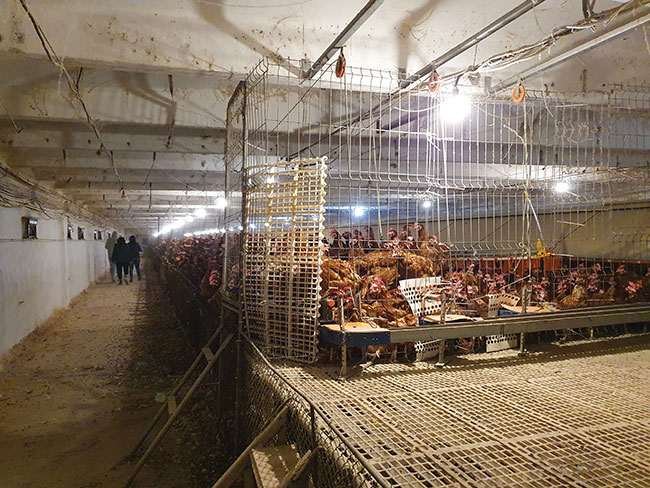
At the fourth pilot site, a poultry farm in Romania, technologies are being trialed to reduce emissions from poultry manure through gas-based nutrient recovery.
Strengthening collaborative frameworks
As stated by the consortium in May, “as the ManuREfinery project enters a more mature stage, operations are shifting from early design to field execution.”
Beyond sharing technology milestones at this meeting, consortium members therefore worked together on synchronization of data models and deployment roadmaps for upcoming field implementations.
These collaborations ensure that the technology at the pilot sites can seamlessly scale while meeting the notoriously stringent European safety standards.
Let’s look at an example of moving to field implementation – one that uses nutrients from manure in a more unexpected way than one might traditionally think up:
“The idea centers around grass as one of the key streams in farms,” explains Pieter Naert, general manager at Hydrohm in Belgium.
Just as manure can be separated into solids and liquids to reap the most benefits, so too can the grass. Naert goes on to explain: “The ammonia recovered from manure is used as fertilizer for grassland. The grass is separated into solids for protein production towards feed, and the grass juice is fermented in a two-step process to caproic acid, a feed additive.”
Hydrohm is working on the design and construction of the pilot system for the extraction and purification of this acid.
“We use a three-step approach with three consecutive extractions to end up with a purified caproic acid oil above 900 g/L, while starting from a very dilute fermentation effluent (up to 3 g/L),” says Naert.
“We have worked closely with Ghent University to develop the process at lab scale and to determine the parameters to design the pilot system. We are currently finalizing the design and plan to test it over summer, to install it in September.”
So far, there has been very limited lab testing on fermented juice because it has not been available in sufficient quantity and quality.
“Hence,” says Naert, “the most exciting and most challenging thing will be to run the pilot for a longer period of time on the real fermentor stream, and seeing the acid being produced.”
Overcoming challenges
As with any ground-breaking and large demonstration project, not everything has been smooth sailing so far – and there will still be some challenges on the horizon.
Specifically, much work still lies ahead to be able to transition ManuREfinery systems from design and prototype to real-world conditions.
“Challenges include delays in the delivery of some critical components (e.g. reactor materials and centrifuges), affecting installation timelines,” Tsinou reports.
“There have also been challenges relating to the complexity of integrating multiple technologies (biological, thermochemical and digital) into a single, fully operational system.”
Issues have also cropped up related to adapting some processes to real-world operating conditions. For example, optimising feedstocks or redesigning process steps to ensure feasibility at pilot scale.
However, Tsinou says “despite these challenges, mitigation measures have been implemented, and no major impact on the overall project objectives is expected.”
Looking forward
By the end of year, the project aims to:
- Complete the installation and commissioning of all pilot plants across the demonstration sites.
- Continue a joint video campaign with sister project Rural BioReFarmeries.
- Create a training lab for several stakeholders such as farmers and industry.
- Begin integrated operation of the valorisation lines under real farm conditions.
- Start generating experimental data to validate the technologies and the digital twin.
- Demonstrate the production of key outputs, including recovered nutrients, bio-based fertilisers, and protein-rich bioingredients.
Look for an update on ManuREfinery in a future issue of Manure Manager in 2027.
Disclaimer: While ManuREfinery is funded by the European Union, views and opinions expressed in this article do not necessarily reflect those of the European Union or Circular Bio-based Europe Joint Undertaking (CBE JU). Neither the European Union nor the CBE JU can be held responsible for them.
ManuREfinery technology partners
- Spain: The Institute of Technology of Aragon (project leader), Guascor Energy R&D, Agrovallfarm, Fertinagro Biotech, Universidad De Valladolid, Universidad De Zaragoza, Compras Agropecuarias, Syspro Automation
- Belgium: Wagralim Gosselies, Ghent University, Detricon, Hydrohm
- France: Union Europeenne Du Commerce Du Betail Et De La Viande
- Italy: Enco, University of Florence
- Greece: Technologies Vio – Energeias Idiotiki
- Netherlands: Colsen, Adviesburo Voor Milieutechniek
- Czechia: Bioeast Hub
- Romania: Institutul National De Cercetari Economice, Denver Com, Interprod Invest
- Ireland: Celignis
- Slovenia: Agricultural Institute of Slovenia


