

Nissan has selected a larger petrol engine for its Australian-bound Navara Pro plug-in hybrid ute after testing two powertrains against local towing, load-carrying and long-distance driving requirements.
The China-built dual-cab, previously revealed internationally as the Frontier Pro, will arrive in Australia in 2027 with a 2.0-litre turbo-petrol engine rather than the 1.5-litre unit announced for the global model.
Nissan says the decision followed an Australian development program that has also assessed different rear suspension systems, differential-lock configurations, tyres and driver-assistance settings.
READ MORE: Frontier Pro becomes Navara Pro: Nissan confirms China-built PHEV ute for Australia with 300kW and 3.5-tonne towing
READ MORE: Nissan Pixo revealed: Here’s another cool European EV that looks set to bypass Australia
READ MORE: Nissan unveils two PHEV concepts in Beijing, including a 4×4 Toyota Prado rival already under study for Australia
The result will be an Oceania-specific version of Nissan’s first plug-in hybrid ute, entering a growing field of competitors including the BYD Shark 6, Ford Ranger PHEV, GWM Cannon and Cannon Alpha PHEVs, JAC Hunter and forthcoming Chery Stockman.
The local powertrain pairs the 2.0-litre turbo-petrol engine with an electric motor integrated into an eight-speed automatic transmission. Preliminary combined outputs are 300kW and 800Nm, subject to final homologation.
Nissan is also targeting up to 1000kg of payload and a 3500kg braked towing capacity, although both figures remain subject to final approval.
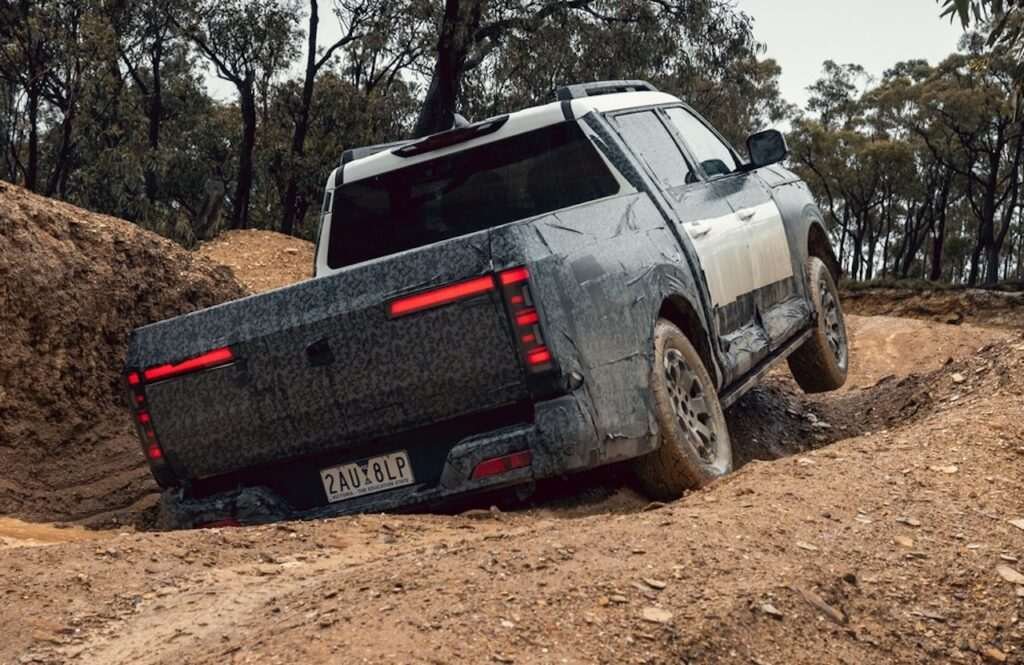
According to the company, towing, payload and sustained performance were central to the decision to choose the larger engine after evaluating both PHEV systems.
However, Nissan has not released comparative test results for the two powertrains, so the announcement does not establish how much the 2.0-litre system improves performance under load.
“Australia wasn’t simply where we tested Navara Pro PHEV. It was one of the markets helping shape it,” Nissan Oceania managing director Steve Milette said.
“The depth of local evaluation and the collaboration between our teams in Australia, Japan and China reflect the importance of Oceania to the development of this vehicle.”
The first prototypes arrived in Australia in 2025. Five development and prototype vehicles have since been brought here, collectively covering more than 20,000km, with testing continuing.
Nissan Australia has worked with teams from Japan and Zhengzhou Nissan in China, feeding local findings into the vehicle’s development.
The program extends beyond the engine choice. Nissan says it has evaluated and refined suspension, driver-assistance calibration, terrain and drive modes, tyres, towing and load performance.
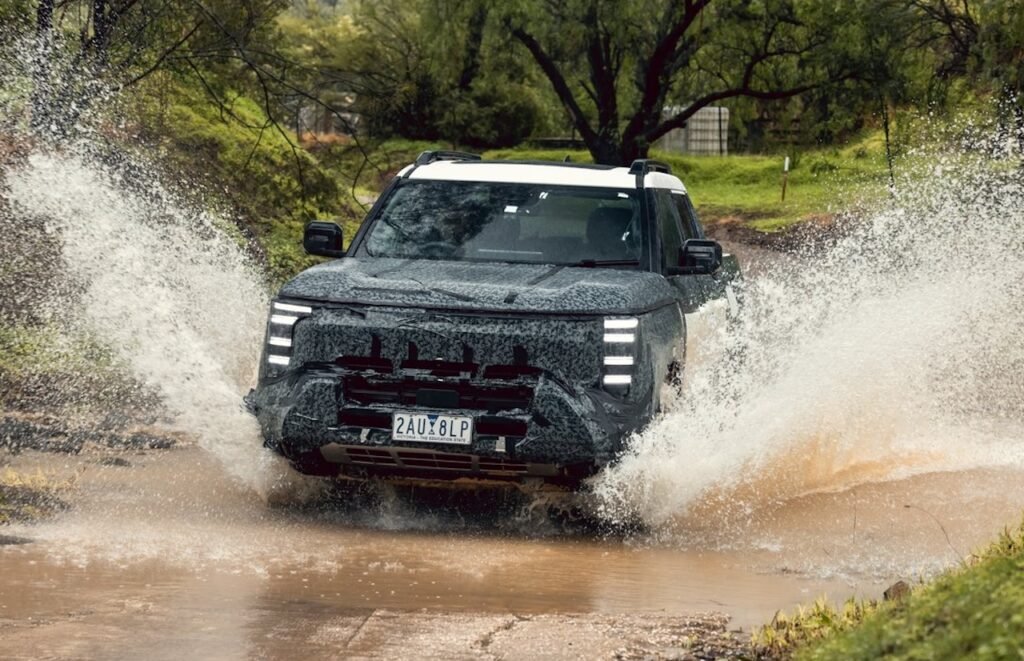
One significant decision remains unresolved: whether Australian buyers will get leaf springs or a multi-link coil-spring rear suspension.
Nissan has assessed both configurations and says the final Australian suspension specification will be announced closer to the start of sales.
That choice will be relevant to buyers weighing ride comfort against load-carrying requirements, although spring type alone does not determine either.
The Navara Pro will use a mechanical four-wheel-drive system, with low-range capability and mechanical differential locks.
Nissan says its local program has tested front, rear and combined differential-lock configurations. It has not yet confirmed which arrangement will reach Australian showrooms.
Four drive modes — Eco, Standard, Sport and Slippery — and seven terrain modes are listed. The latter comprise Standard, Deep Snow, Mud, Sand, Rock, Wading and Expert.
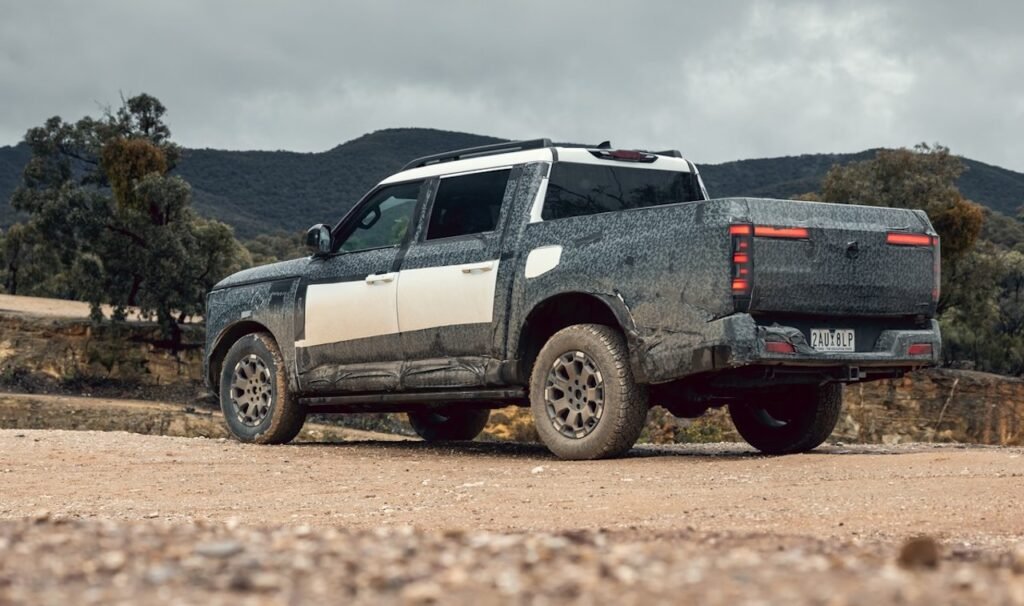
Nissan says the modes adjust powertrain, steering and traction-control settings, with the systems evaluated and tuned for Australian and New Zealand conditions.
Vehicle-to-load functionality will also be available, allowing the ute to supply electrical power for work or recreational use. Its maximum output has not been announced.
The larger engine and targeted towing and payload figures address key Australian ute requirements, but important details about the plug-in system remain outstanding.
Nissan has yet to disclose the local battery capacity, electric-only driving range, charging rates or fuel consumption. The overseas Frontier Pro’s previously announced range figures therefore should not be assumed to apply to the Australian version.
For buyers planning regular towing or remote touring, fuel use after the battery’s initial charge has been depleted will also be relevant. Nissan has not supplied that figure or published loaded towing results.
Australia and New Zealand will be the first right-hand-drive markets to receive the Navara Pro PHEV. Pricing, final equipment and a precise Australian launch date will be announced closer to its arrival in 2027.
The post Nissan Navara Pro deep dive: How Aussie towing and touring needs prompted an upgrade to Nissan’s first PHEV ute appeared first on EV Central.


