
Ontario’s potato planting wrapped up in early June, but late blight disease scouting is firing up.
Late blight plagued Ontario potato fields in 2023 and 2024, but a dry summer and multi-tactic proactive management protocols adopted in 2025 controlled the disease’s spread.
“Late blight is a community disease. The management practices of a single grower may affect a whole potato-production area,” Eugenia Banks, potato specialist for the Ontario Potato Board, wrote in a late blight newsletter.
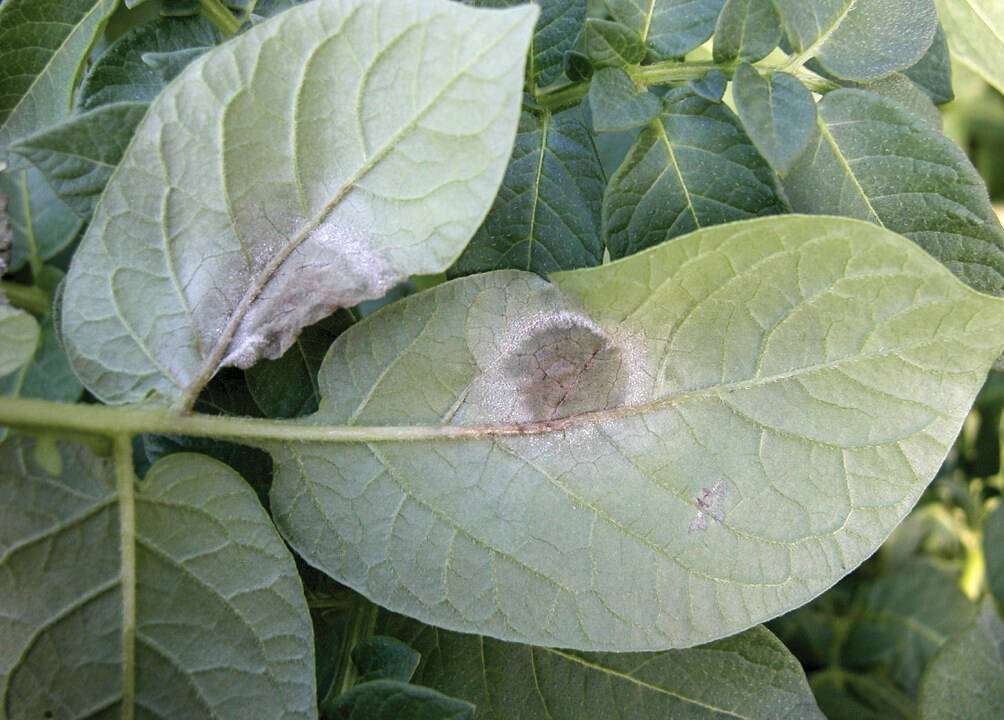
Early intervention could be key to limiting late blight
The Canadian Food Inspection Agency allows for up to one per cent of late blight infection in certified potato seed, so growers should consider double-checking seeds before planting, frequently disinfecting cutting equipment and grading out suspicious tubers.
“If there is any indication of blight in the seed, or that the seed may have been stored where there were blighted seed, then start the first fungicide application with Curzate at 75 per cent emergence,” Banks advised.
Fields should be scouted twice a week before the crop emerges to locate low spots susceptible to moisture retention following rainfall.
Changes in soil texture, such as compacted tramways, pivot centre points and wheel tracks, which may remain wet longer than areas further out under the boom, can also indicate areas of concern.
Monitoring last year’s potato fields and grain crops for volunteers, eliminating cull piles on the farm and maintaining good field drainage and irrigation are additional tools to limit late blight.
“Use labelled broadleaf herbicides where possible to suppress the growth of volunteer potatoes in cereal crops,” she said.
Farmers should watch home garden tomatoes, peppers, eggplants and petunias for signs of infection and destroy hairy nightshade, a known late blight host, which is becoming more common along field edges.
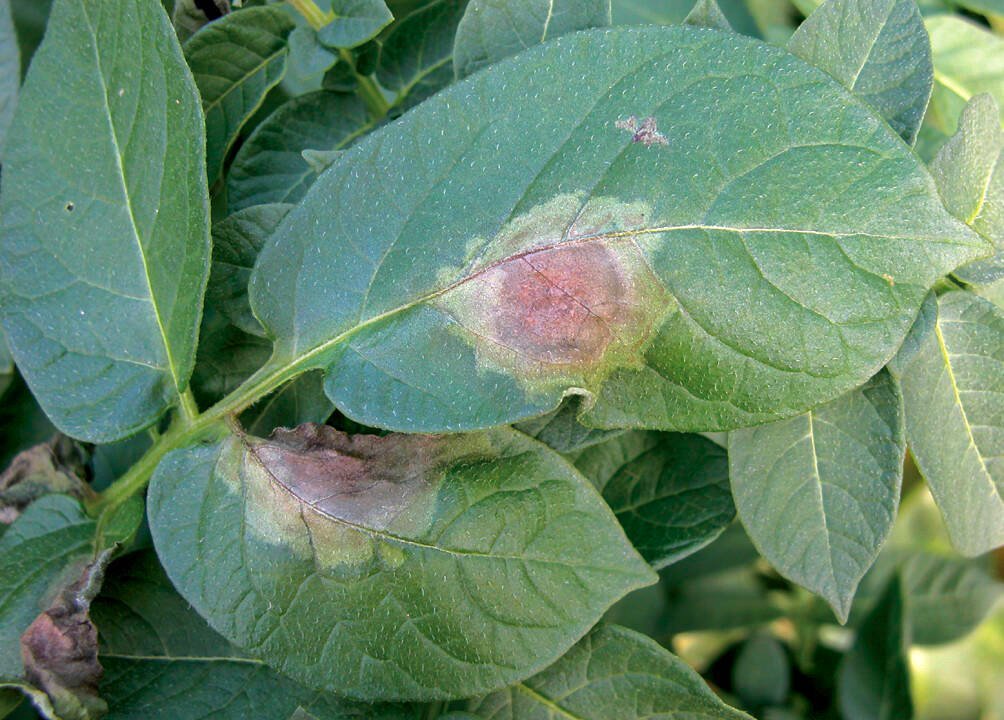
Proactive, responsible fungicide use
Fungicide programs should be initiated early, when plants are 10 to 15 cm tall, with Curzate, which has a 48-hour kick-back effect.
Banks said two applications five days apart is ideal, along with rotation of a late blight-targeted protectant fungicide from a different chemical group to delay resistance development.
For the last several years, US 23 has been the prevalent strain in Ontario and is susceptible to metalaxyl-M (Ridomil Gold), which should be applied only once during the season.
“A second application will not provide effective control and might lead to the development of resistance,” Banks said. “The pathogen develops resistance to fungicides rapidly. This is a concern for potato growers as new aggressive strains develop.”
Multi-site fungicides, such as Bravo and Mancozeb, can be used, but restrictions outlined in the Pesticides Regulatory Directorate must be followed.
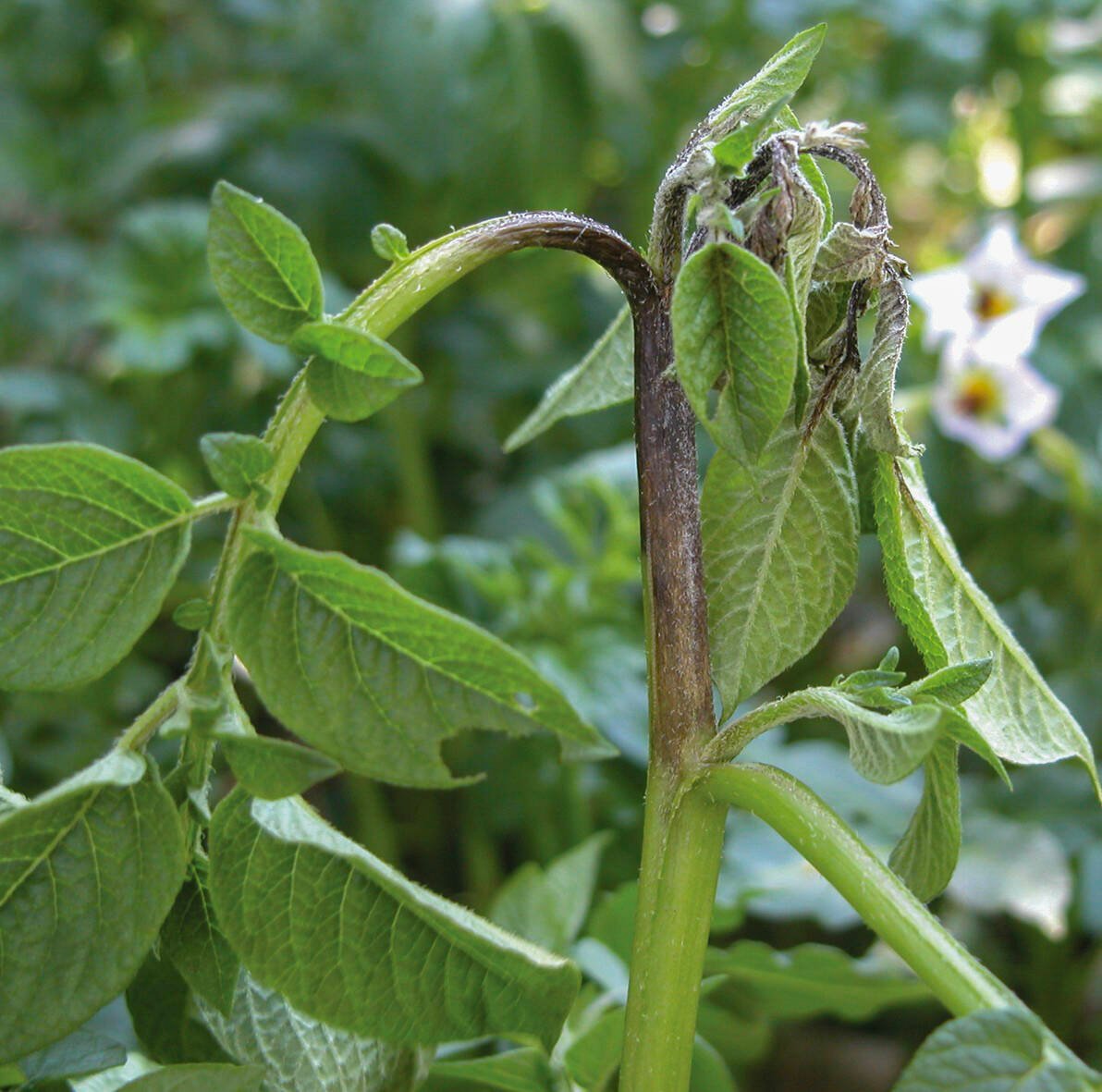
She cautioned that growers should reduce the spray interval when the weather is favourable for late blight, which is generally temperatures between 17 and 21 C and a relative humidity of 90 per cent. Infection requires seven to 10 hours of leaf wetness caused by dew, fog or rain, with symptoms appearing three to five days later.
U.K. fungicide program explored
“A few Ontario growers have evaluated a strategy for managing late blight that is based on a program developed in the U.K.,” Banks said.
The program’s cornerstone is immediate preventive fungicide application to foliage and plant stems before infection occurs, which is more effective than reactive fungicides.
Fungicides should be adapted to the crop stage, with Orondis Ultra, Revus, Ridomil and Cruzate having the highest control rates for late blight. Phostrol is highly rated for foliar application and may be used for post-harvest treatments of tubers.
Phostrol provides effective and flexible preventive control of late blight, and its neutral pH allows for integration with many other fungicides, making it useful for blight management programs.
“Research in Idaho indicates that development of resistance to phosphites can occur, but at a rate slower than those of chemical fungicides,” explained Banks. “In addition, foliar applications of Phostrol mitigate late blight infection by boosting the concentration of compounds that sustain photosynthetic performance during infection.”
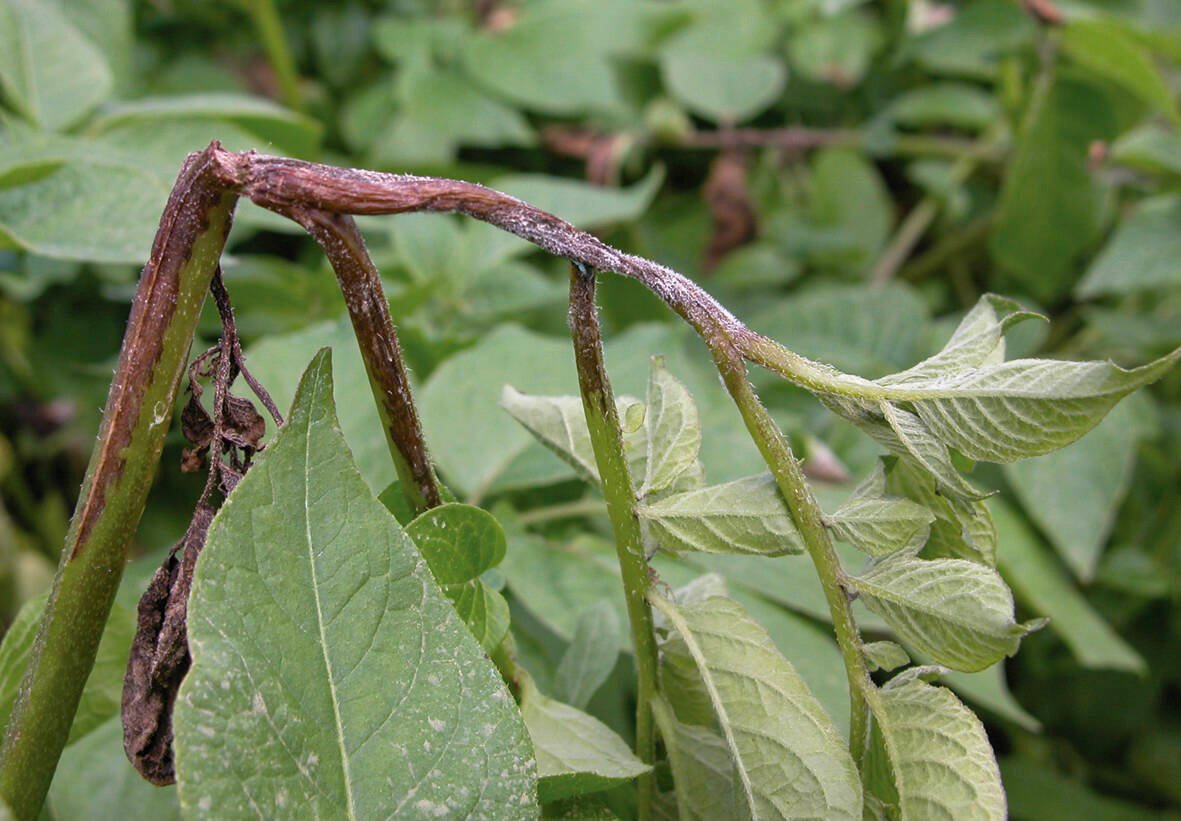
Orondis can be applied early in the season while potatoes are actively growing to protect new foliage, with the spray schedule adjusted to address any local outbreaks.
Curative fungicides applied after late blight detection have little effect in eradicating the disease, she said.
Banks reinforced that early, responsible preventive management through scouting, equipment sanitation, cull pile removal, volunteer control and harvest planning are best practices to mitigate the disease.
The post Ontario potato growers urged to scout early for late blight appeared first on Farmtario.


