
Ontario’s soils are a living archive of the last Ice Age, layered with glacial deposits laid down 6,500 to 13,000 years ago, that still shape how the land performs today. From loams to sandy loams and silts, this geological legacy is now guiding modern science as researchers turn to the past to refine soil management across the Greater Golden Horseshoe.
In partnership with the Ontario Ministry of Agriculture, Food and Agribusiness (OMAFA), and the Greenbelt Foundation, the Soil Health Institute is digging deeper to identify region-specific soil care practices tailored to these ancient foundations.
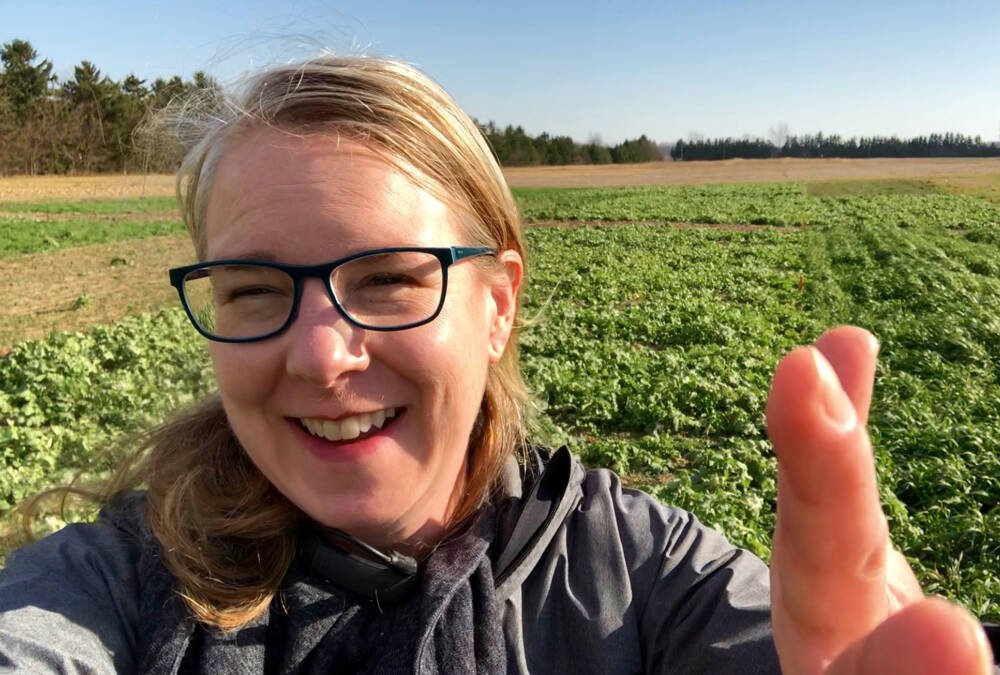
“The team soil-sampled in commercial grain fields in the Golden Horseshoe region of Ontario. It is applicable to other Ontario soils, too, since heavy clay to sandy soil types were sampled. I would argue that small-plot research is real-world, too, just on a smaller scale,” said Laura L. Van Eerd, co-director of Soils at Guelph and a professor at the School of Environmental Sciences at the University of Guelph, Ridgetown Campus.
She said the study did not directly compare individual practices, which, she added, is valuable in itself. Instead, the approach was to assess fields using a suite of soil care practices — no-till, cover crops and manure — in different combinations.
Based on the samples, the research team is evaluating which indicators are most useful in Ontario. From there, researchers will explore the relationship between soil health and crop yields. Van Eerd added she hopes the research will also support the development of economic indicators.
“Farmers can use this information to make decisions this spring. The soil care practices evaluated in this study and others, such as including perennials or winter wheat in the rotation, compaction reduction and keeping the soil surface covered, can increase soil health and, over time, carbon storage. The first step is to protect your soil and pick the right practice for your farm,” she said.
On-farm application
Megan Sipos, senior manager of research and policy at the Greenbelt Foundation, said the findings reinforce that farmland in the Greenbelt is a highly productive and strategic resource delivering environmental, economic and social benefits.
“Healthy soils store water and carbon, cycle nutrients, support biodiversity and sustain food production and rural communities across Ontario. The results show the positive impact of farmers’ soil health practices while highlighting opportunities to keep improving, which strengthens long-term food security for Ontarians,” she said.
READ MORE: ONFARM launches new data dashboard for Ontario soils
She said the research is an important step in developing policy frameworks that reflect the inherent variability in soils and what each soil type can achieve through management practices. She pointed to organic carbon levels, which are typically higher in clay soils than sandy soils, regardless of management.
“This is why apples-to-apples comparisons within similar soil types are important. Policy frameworks can emphasize practices that improve soil health across all systems, such as reduced tillage, cover cropping and organic amendments. Benchmarking tools tailored to soil type can also help set realistic, meaningful goals and support farmers in tracking progress on their own land and comparable soils,” she said.
Looking ahead, Sipos said climate initiatives must address both mitigation and resilience, with soil health contributing to both. Healthy soils improve farm resilience to climate impacts by increasing water retention, improving infiltration and supporting more stable yields during extreme weather.
READ MORE: Ontario Soils GeoHub allows farmers to harness soil data
“This project provides farmers with up-to-date information on the carbon levels in their soils, helping them better understand soil function and structure,” she said. “Higher soil carbon generally supports healthier, more resilient soils. While climate initiatives often focus on soil carbon sequestration, it is important to recognize that soil carbon is dynamic and continuously exchanges with the atmosphere, which is why modeling is often used to estimate changes over time.”
She noted that farmers actively improving soil health can access programs that help offset the costs of adopting new practices, including those offered by the Ontario Soil and Crop Improvement Association, conservation authorities and Farmers for Climate Solutions.
Separating inherent soil properties from management effects was a key focus of the study. In practice, farmers often find it difficult to distinguish between what they can control and what they cannot.
“Our approach does that work for the farmer. We compared each soil to similar soils (same texture, drainage) in this study, so the benchmarks are realistic. Just as humans have different fitness potential (I can run a slow marathon but will never run a sub two-hour marathon), we wouldn’t expect a sandy soil to be able to build as much organic matter as a clayey soil. What farmers can control is management (tillage, cover crops, rotations, amendments), and our study shows those practices make a difference within each soil type.”
Jenny Bower, a research soil scientist with the Soil Health Institute, said the study measured multiple soil health indicators. Among them, aggregate stability stood out as a sensitive, low-cost option for tracking improvements from reduced tillage and increased living roots.
“Beyond that, we’d recommend soil organic carbon, which is related to organic matter, and potentially mineralizable carbon. Soil organic carbon has an advantage because it’s a more direct and precise measurement. Potentially mineralizable carbon, sometimes called soil respiration, reflects microbial activity and nutrient cycling potential,” she said.
Developing regional benchmarks
Glaciated soils differ in their baseline productivity potential, making region-specific benchmarking essential. Bower noted that glaciated landscapes produce a wide mix of soil types in relatively small areas, from sandy soils deposited by glacial meltwater to heavy clays formed in glacial lakebeds. These soils have different starting points for organic matter, structure and water-holding capacity.
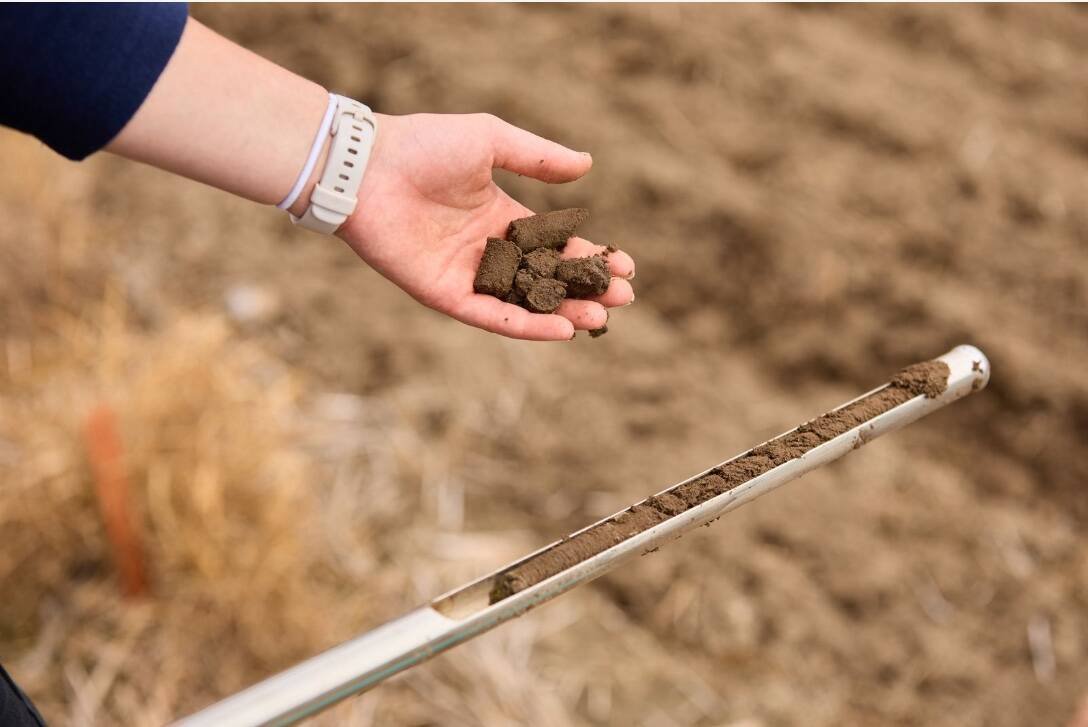
“That’s why we believe soil health data is most useful when it’s regionally relevant. Benchmarking within a region, against soils with similar texture and drainage, gives farmers a fair comparison,” she said. “A benchmark developed in Iowa or the U.K. wouldn’t necessarily apply to the soils in the Greater Golden Horseshoe. This is the first study of its kind to benchmark soil health in Ontario.”
When interpreting results, Bower said farmers should remember that soil health is multidimensional, with no single “good” or “bad” score.
“Our study measured multiple different indicators, and they responded to different practices. That means there are multiple pathways to improvement regardless of soil type. A farmer on sandy soil might not match the organic carbon levels of clay soil, but they can still make meaningful gains in aggregate stability or potentially mineralizable carbon,” she said, adding that the goal is not to reach a perfect score but to understand where you are relative to your soil’s potential and track progress over time.
When applying the research in the field, Bower said the strongest impact was seen in continuous no-till systems, followed by winter wheat and cover crops. These scenarios had the greatest effect on aggregate stability. Meanwhile, organic amendments had the strongest impact on carbon-related indicators, followed by winter wheat and cover crops.
Bower recommends that farmers assess their specific challenges, such as fertility, rotations and tillage, when applying the findings to day-to-day decision-making. She also advises working with a trusted adviser to identify which soil health indicators best track those issues and to set realistic goals based on soil type.
“Then choose beneficial management practices that target that indicator, and our results can help guide which practices move the needle for which indicators. Test every year to track your progress and, if possible, compare your fields to nearby fields on similar soils with different management,” she said.
The post Ontario soil study highlights real-world gains from better management appeared first on Farmtario.


