
Parrish and Heimbecker’s new $50-million bulk agricultural marine terminal in Picton cuts grain-hauling time and gives eastern Ontario farmers faster access to export markets.
The location will reduce trucking distances, handling time and pressure on the grain supply chain.
“This is something that really matters to our local farmers, when you think about market access, supply chain resiliency, you know, lost time spent transporting grain around the province,” said Tyler Allsop, Bay of Quinte MPP.
“Reynolds Trucking Services is here, and they used to have to truck grain about two and a half hours to get it to a terminal. Now they’re 10 minutes down the road.”
The automated terminal can move 300,000 to 350,000 tonnes of local grain each year from roughly one million acres of wheat, corn and soybean fields between eastern Toronto and the Ottawa Valley.
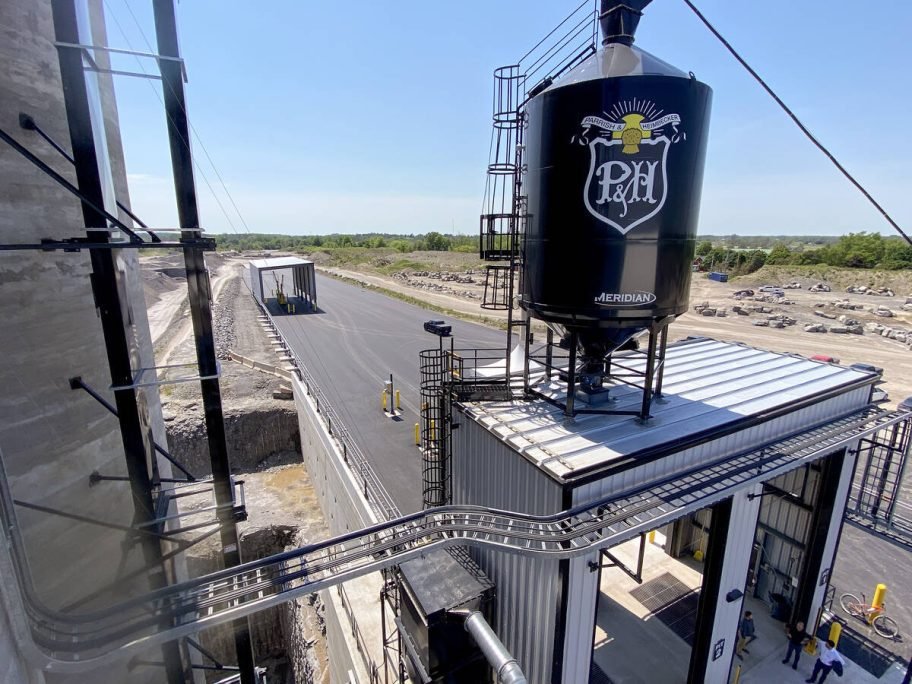
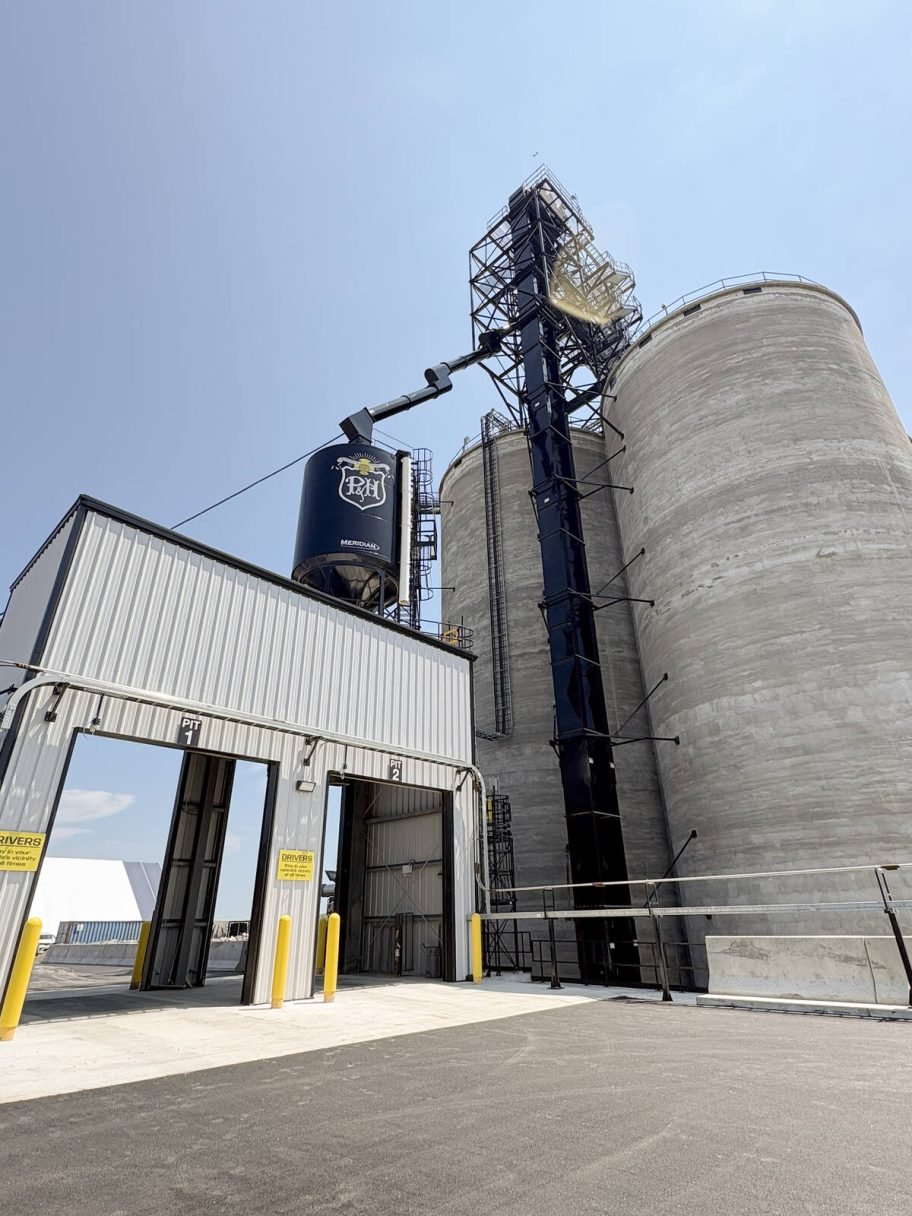
Trucks punch in their number at the weigh station to get a ticket to scan at the two-bay probe building, where a small sample is taken to be weighed, tested for moisture, test weight, dockage and graded with the information electronically relayed back to the kiosk.
Drivers then select one of the two available pits, scan again to unload the crop where it’s routed to a silo or potentially directly to a waiting ship.
Continuous pour technology
The site’s eight, 130-foot-tall silos were 90 per cent constructed within a week using a single-pour method, which reduces the schedule and cost by continuously pouring wet concrete at about a foot an hour into a moving form.
Jason Coreau, vice president of FWS Group, who constructed the silos, said reinforcing, openings and well plates were installed along the way, and the roof was raised with the silo.
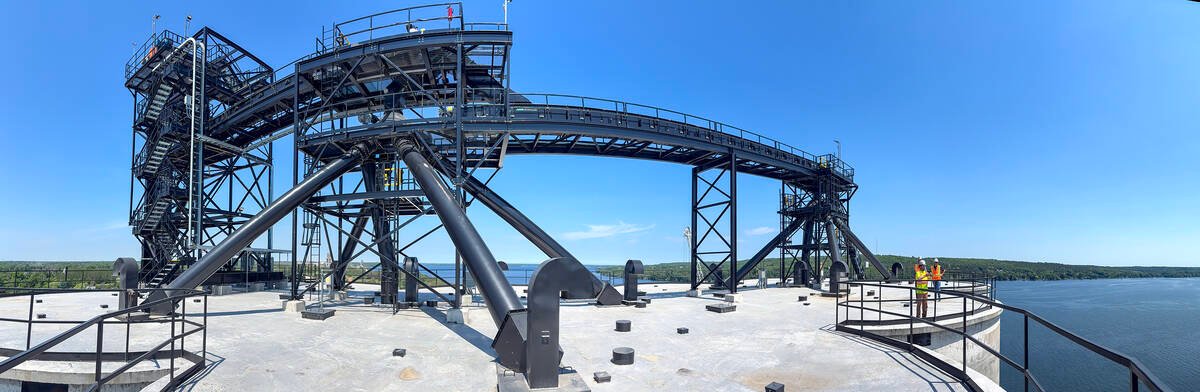
“While we’re up there, we pin off the pour, we set the roof in place, pour the concrete roof and you’re done,” he said, adding afterwards the equipment, roof towers, conveyors inside and the ship loader down on the water are built around the main slip from port.
The terminal’s future expansion potential was teased during the grand opening, and Coreau said that the site equipment is designed to upsize to handle increased bushels without significant disrupt
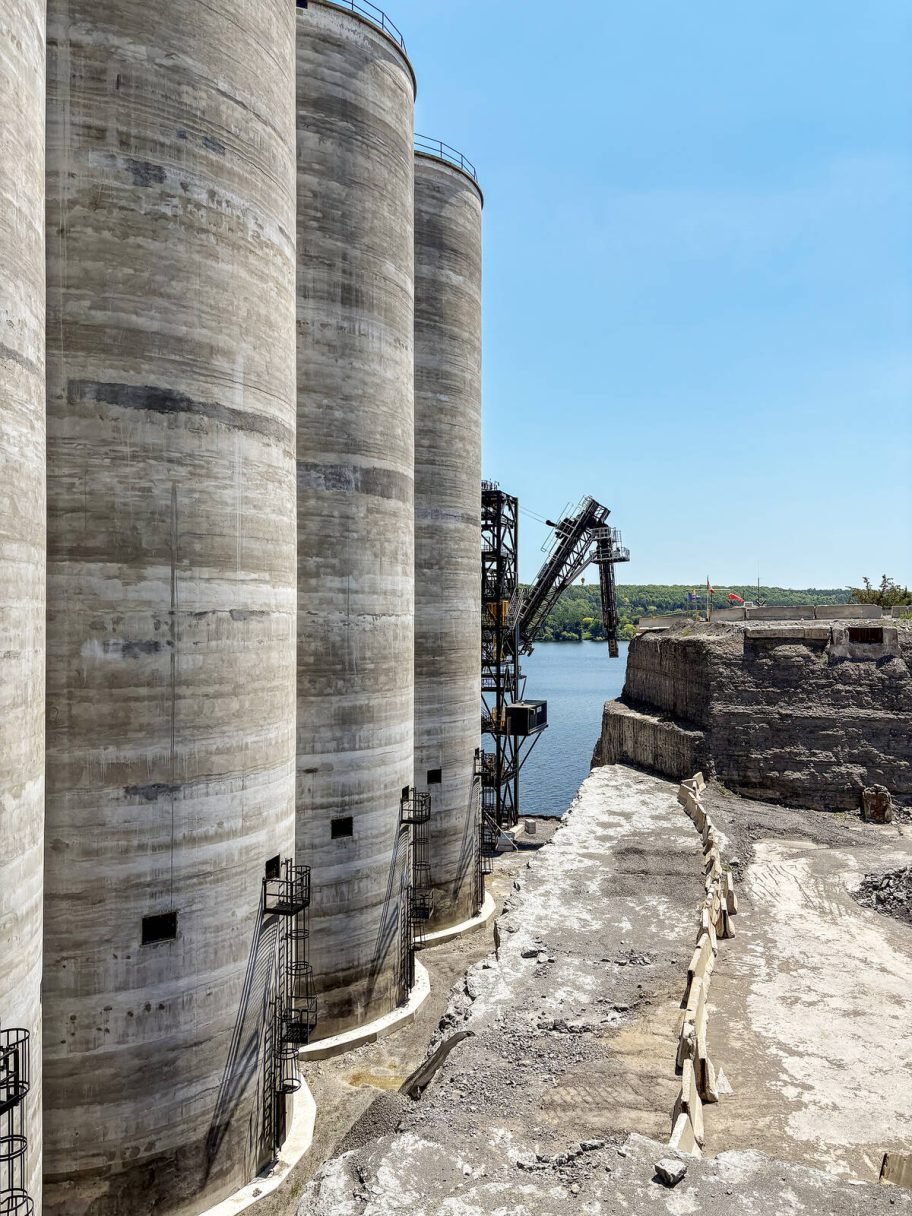
The eight main silos have a holding capacity of 4,000 tonnes each, explained Jay Fretz, Parrish and Heimbecker’s regional manager of terminals, and the three star-bins, created in the space between the larger silos, each hold 1,000 tonnes.
Picton Terminal elevation an advantage
A key advantage of the Picton Terminal is the 80-foot elevation drop from the truck-unloading area to the ship loader, which allows grain to move more directly to storage or vessels, reducing the risk of damage to the grain or beans.
“We can go up the elevator or right across the top (scale) into the ship order, and straight out,” he explained, which saves time and energy costs. “In Hamilton, I have to re-elevate because everything is down low.”
There are cameras throughout the site, allowing operators to monitor each stage of terminal activity, from probing to unloading to ship loading.
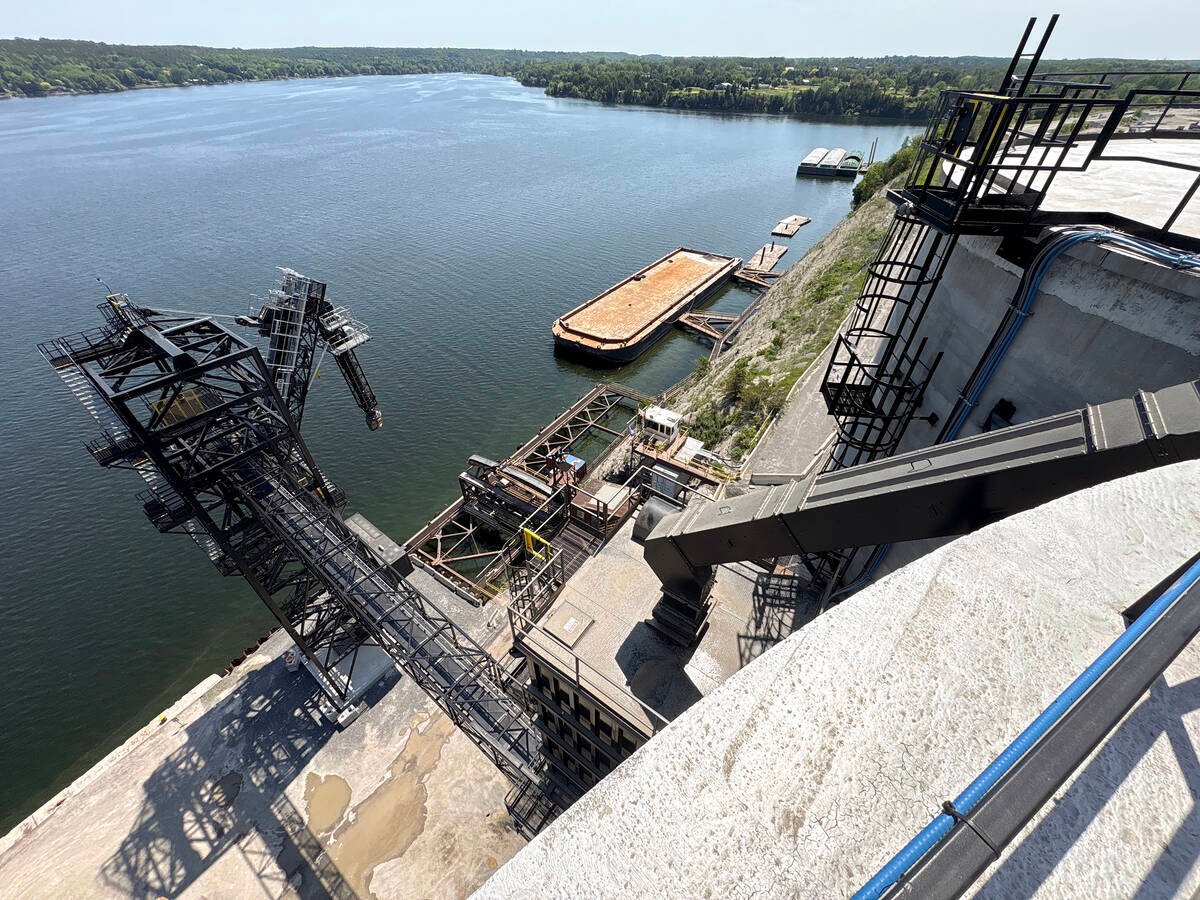
At peak season, Fretz anticipates they’ll accommodate about 15 trucks an hour through the pits for 15 to 18 hours, receiving upwards of 6,000 tonnes a day to load 30,000-tonne capacity lakers with corn, wheat and crushing beans.
“Every five days, we’ll have enough to load a full-size Laker out here. So if we can do that, you know, once a week for nine months straight, we could do a whole lot more than 350,000 tonnes,” he said. “But that’s kind of the starting point just in terms of the efficiency.”
The post Parrish and Heimbecker’s new deep-water terminal improves eastern Ontario’s shipping access appeared first on Farmtario.


