
Disease incidence and average daily gain are relatively easy metrics to track among calves and there’s usually room for improvement.
Researchers gathered recently at the University of Guelph for an international symposium about colostrum, and, at a day for producers, addressed areas to look at for better calf-raising success.
During the producer day, a panel of Ontario farmers offered their versions of calf-raising success, with disease resistance as a key.
Ashley Pfister of Ulmar Holsteins near Mitchell aims for fewer than two per cent contracting pneumonia and fewer than five per cent contracting diarrhea by weaning — at which time she likes to see them consuming 2.6 kg of calf starter per day.
Chris McLaren of Larenwood Farms near Drumbo follows an extensive vaccination protocol starting at birth, and says much of what he does in the calf barn is geared toward building immunity and disease resistance. He hopes to eliminate antibiotic use in calves and, when he walks through the door, he wants to see the calves walking, running or playing, with nobody lying in a corner with its head down “feeling sorry for itself.”
Hannah McCarthy of the Oxford Cattle Company — not a dairy farm but currently receiving approximately 800 male and cross-bred female calves from Ontario dairy farms per week — said they want to see one kilogram of gain per day and less than two per cent mortality by the time their calves leave their outdoor hutches at six months old.
“We’re dealing with very expensive calves,” McCarthy said, hinting at the unprecedentedly high price currently being paid in Ontario for week-old calves. She added the farm is more concerned about mortality rate than about how often a calf must be treated with electrolytes, antibiotics or other products to get them back on a healthy road.
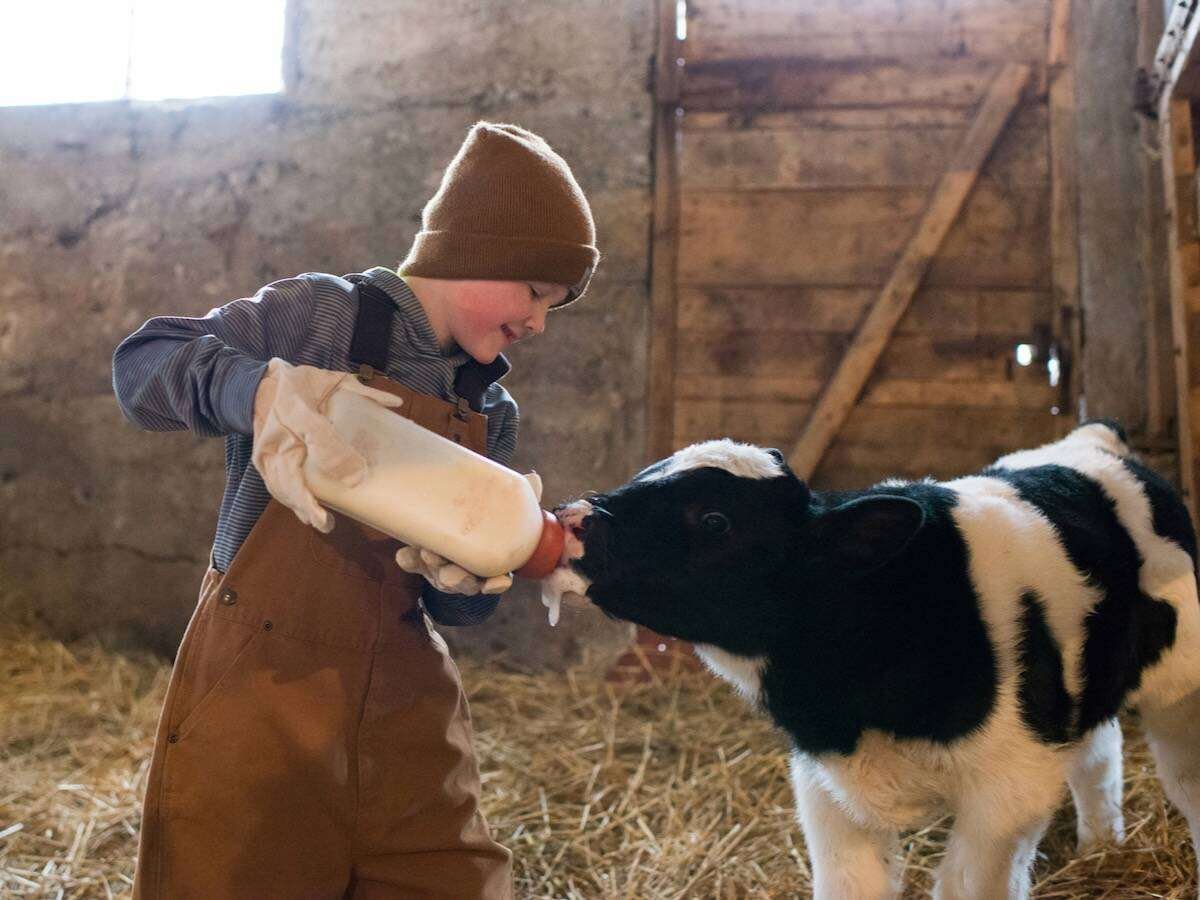
All three participants in the producer panel acknowledged the importance of colostrum.
Larenwood’s milking herd moved into a freestall barn about 15 years ago and the old barn was renovated for calves. McLaren weighs calves routinely and they’re weaned based on daily weight gain.
Milk is hauled from the milking barn to the calf barn and put in one of two cooling tanks — with yesterday’s milk fed out of one cooler to the calves while the other cooler is filled with today’s milk.
Newborns only receive colostrum that measures 24 or higher on a Brix refractometer. For between two to three weeks afterward, they get 70 grams of colostrum powder with their whole milk.
There are well-known immunity-building effects of extended colostrum feeding, McLaren said, and “I want to try and harness that.”
Fresh cows giving high-quality colostrum aren’t milked in the robot until the fifth day. Colostrum is stickier than regular milk, said McLaren, adding that a lot can be lost in the lines, which is then washed away with the cleaning cycle. He’s trying to limit how much pipe the colostrum needs to travel, so fresh cows are milked in a separate stall into a bucket.
Pfister, whose family milks about 120 Holsteins in a recently constructed barn, said she wanted a stall design that allows her to separate a cow quickly from the close-up dry cow pen into a calving pen. Once calving happens, she doesn’t rush to separate the dam from calf, typically leaving them together until at least the next milking.
She had been aiming for 22 on the Brix scale for the colostrum she feeds and admitted she was a little perturbed when the academic recommendation moved to 24 Brix. But she has learned that even if there’s not sufficient colostrum on hand that meets the 24 Brix threshold, it is quite easy to supplement using a colostrum replacer.
With a recent renovation of a barn for a calf barn, Pfister was concerned about inadequate ventilation leading to the spread of respiratory ailments as they switched away from hutches. But she has been testing the ammonia levels regularly and there has been little to no difference from the outdoor hutch environment.
Once the calves move to milk replacer, she’s feeding the equivalent of nine litres of whole milk per day. They wean at nine weeks following a two-week weaning protocol. They aim to move the calves in groups of four. Their hair gets clipped at the time of movement from the weaning pen and she believes this provides a good opportunity to closely assess each one’s health.
They start feeding dry hay early in the calf’s life.
Beef-on-dairy protocols
McCarthy, a master’s student studying under Steele, served on the producer panel for her Norwich-based employer. Cross-bred beef-on-dairy bull calves are the preferred option for Oxford Cattle Company but they’re also getting a good number of cross-bred heifers and Holstein bulls, with the youngest coming in at seven days old.
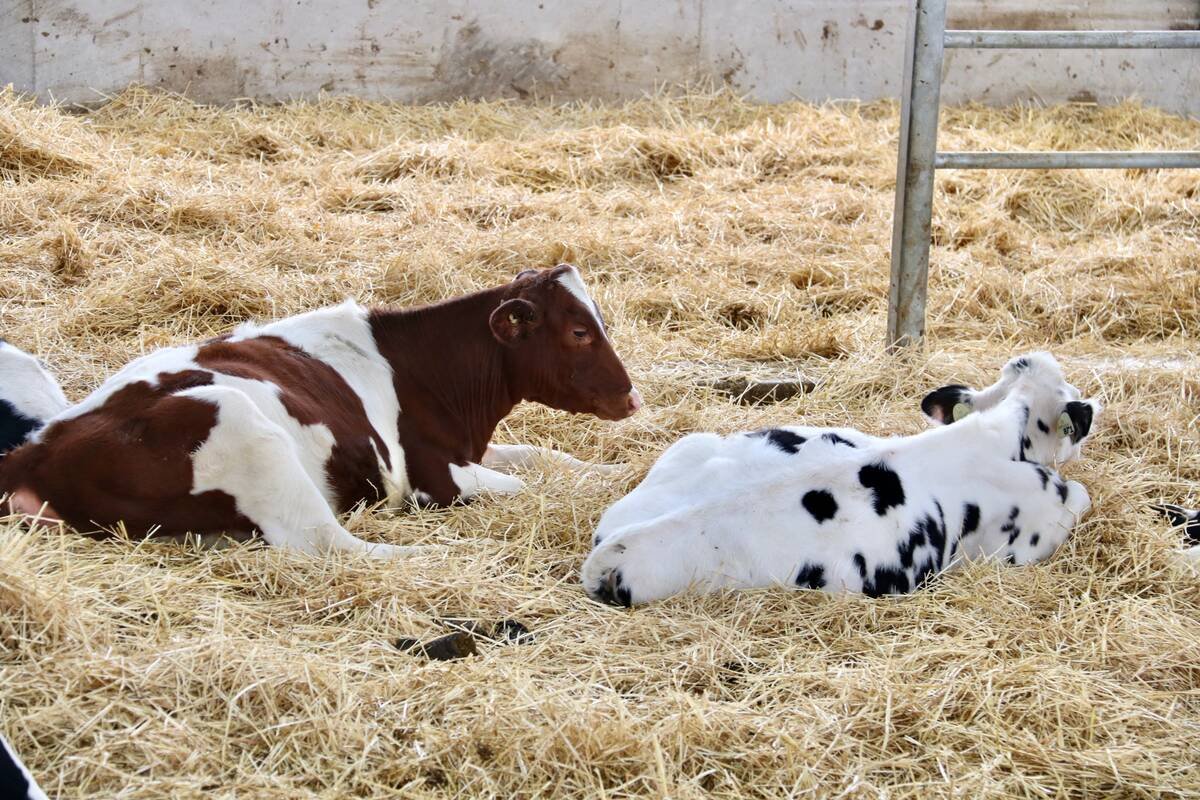
Between 20-30 per cent arrive with an infected navel and are treated immediately. McCarthy said the cross-bred calves typically outperform the Holstein bulls in every metric.
They’re reared for six months in an outdoor hutch yard. About 10 per cent are then finished on the farm in barns; the rest are sold to feedlots either in Ontario or sometimes in Western Canada.
Calves get milk until week seven. There’s no milk production on the farm so everything is brought in. But they don’t use conventional milk replacer; instead, they use a protocol McCarthy referred to as “component feeding.”
Ingredients are purchased in bulk. The ingredient mix is tweaked depending on calf gain, the time of year and what the calves need for energy and fat. But changes in that mix are also sometimes required because there are changes in what ingredients are available at a reasonable price.
At week five, half of the milk ration is replaced with “crush milk” — discarded milk from processing plants and grocery stores that hasn’t gone off but would otherwise be discarded. Dr. Sabine Mann had cited a study advising against using crush milk during the morning session due to the unpredictability of its nutritional makeup, but McCarthy said Oxford Cattle Company is cautious in its crush milk protocol.
And from a cost containment perspective, it’s hard to argue against it.
“They don’t give you a big load and say it’s skimmed milk,” she explained. “They just give you what they have.” So the farm tries to assess it for protein and fat value and adjust their recipe based on these parameters.
The International Scientific Meeting on Colostrum was a follow-up to an inaugural event held in the Canary Islands in 2022. The first three days featured academic presentations, followed by the May 23 producer day.
The post Producers get creative with colostrum to build calves’ resistance appeared first on Farmtario.


