
In gardening and farming, knowing soil moisture, soil pH, light levels, and nutrients can mean the difference between healthy plants and poor growth. The Raintrip 4-in-1 Soil Moisture Meter promises all these insights in one instrument — without needing batteries, making it easy and eco-friendly.
In this review, I’ll share everything you need to know — from scientific facts and trends to my own experience using the product in different soils and conditions.
What Is Raintrip 4 in 1 Soil Moisture Meter?
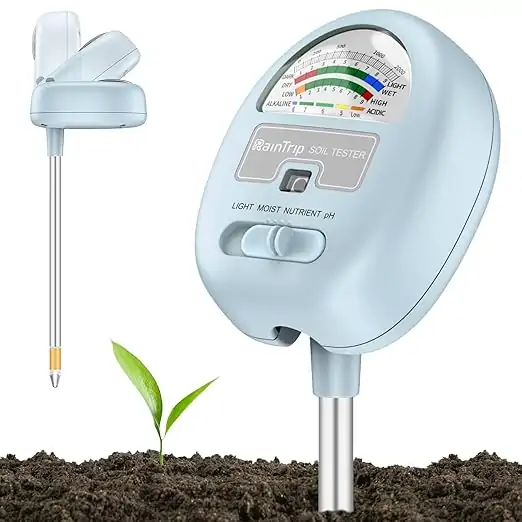
The Raintrip 4-in-1 Soil Moisture Meter is a handheld gardening tool designed to measure four key factors for plant health:
- Soil Moisture – Helps know if soil is dry, moist, or wet.
- Soil pH Level – Tells you if soil is acidic or alkaline.
- Light Intensity – Helps understand if plants are getting enough light.
- Soil Nutrients – A basic indicator for nutrient presence.
It doesn’t use batteries — the reader works directly when placed in soil. This makes it simple and always ready to use.
- Brand: Raintrip
- Color: Blue
- Dimensions: 1.3″ W x 10.4″ H
- Weight: 0.12 kg
- Power: No batt;eries required
- Measurements: Soil Moisture, pH, Light, Nutrients
- Special Feature: 90° Rotating Head
Key Features
- 4-in-1 Measurements — Moisture, pH, light, and nutrient levels all in one device.
- Patented Rotating Head — The 90° swivel design lets you read results without bending or straining your back.
- Quick Results — Just insert 4 inches into the soil and get readings in seconds.
- Eco-Friendly — No batteries needed — a major plus for sustainable gardeners and farmers.
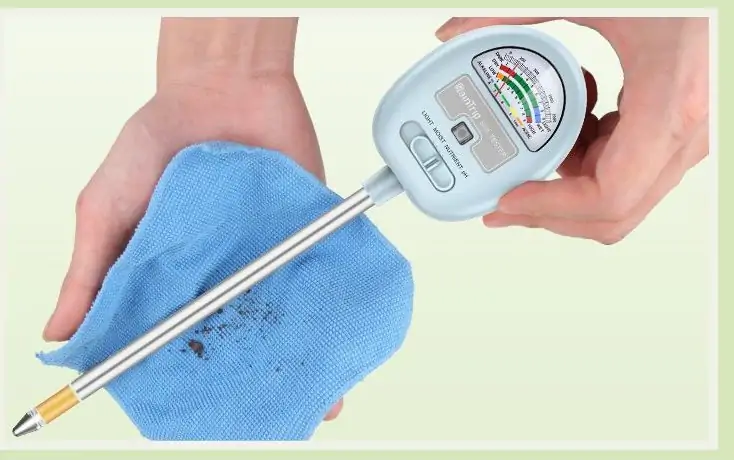
- Free Guide & Sandpaper — Raintrip includes a growing guide and sandpaper for probe maintenance.
Pros & Cons of Raintrip Soil Moisture Meter
| Pros | Cons |
|---|---|
 No batteries needed No batteries needed |
 Some functions (like pH) can be hard to read Some functions (like pH) can be hard to read |
| Moisture readings seem useful |
pH reading may be rough estimate |
| Swivel head makes reading easier |
Probe may be delicate |
| Multi-function in one tool |
Not laboratory-grade accuracy |
| Light and easy to use anywhere |
Needs careful storage |
Why Soil Moisture Meter Matters?
Most home gardeners and farmers often guess when to water or when to adjust soil conditions. Without proper tools, we rely on feel or experience. But soil conditions change depending on weather, plant type, and soil mix.
i. Soil Moisture: Knowing moisture helps prevent over-watering or under-watering, which is one of the main reasons plants die.
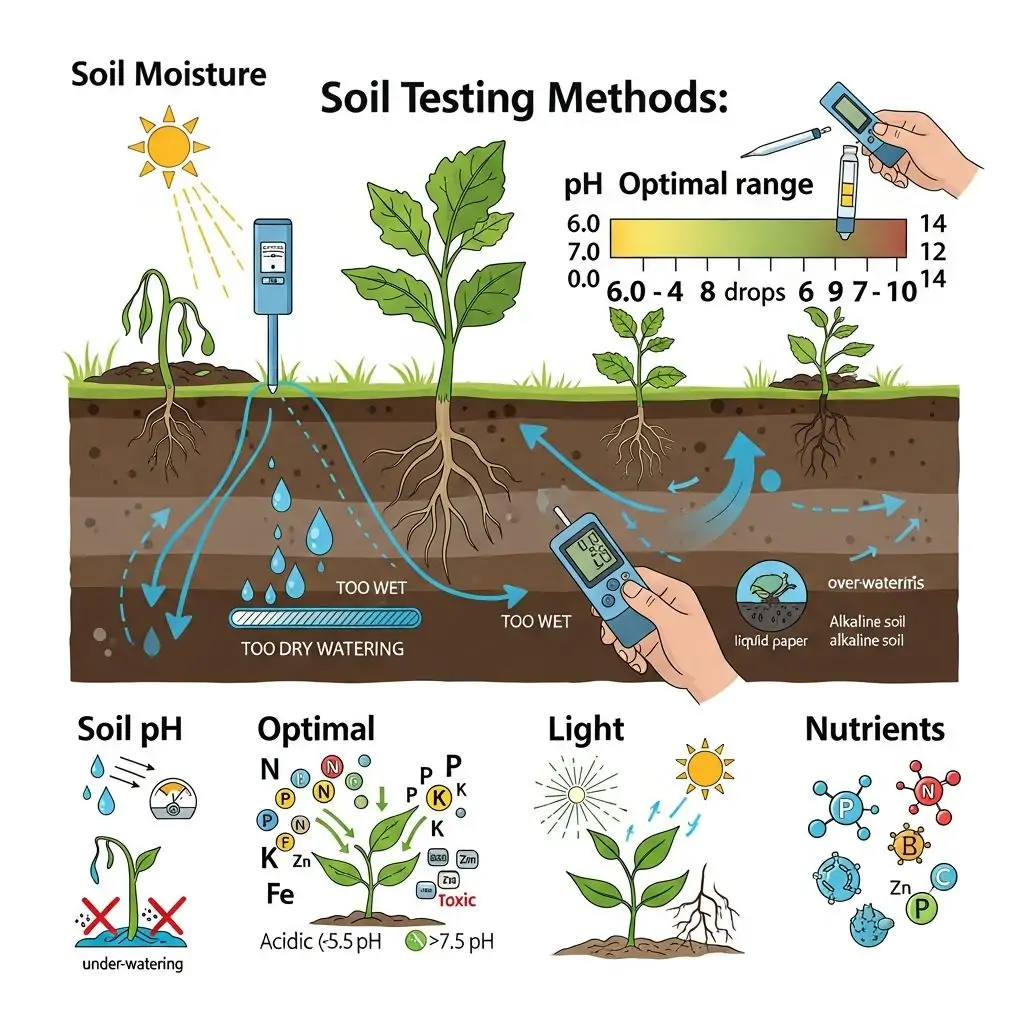
ii. Soil pH: Soil pH affects how plants absorb nutrients from the soil. Most nutrients are available when soil pH is between 6.0 and 7.5. Outside this range, important elements like nitrogen, phosphorus, potassium, and micronutrients become less available, even if you add fertilizers.
iii. Light & Nutrients: Light affects plant growth and photosynthesis, and nutrient measurement gives an idea of soil health and fertility. Understanding these four key factors helps growers make better decisions — not guesswork.
Soil pH ranges from 0 (very acidic) to 14 (very alkaline), with 7 being neutral. Most garden and crop plants prefer soil pH between 6.0 and 7.5 — a slightly acidic to neutral range — because this is where nutrients are best available to plants. For example:
- Phosphorus and potassium are less available in very acidic or very alkaline soils.
- Acidic soils (<5.5 pH) can make some elements dangerous for plants.
- Alkaline soils (>7.5 pH) reduce availability of micronutrients like iron and zinc.
Crops like rice, wheat, and maize thrive within these optimal ranges. Regular soil testing ensures plants get the right chemical environment.
iv. Soil Moisture and Plant Health: Water is essential for photosynthesis, nutrient transport, and temperature regulation inside plants. Soil moisture affects:
- Root health
- Microbial soil activity
- Nutrient uptake
- Seed germination
Moisture meters work by measuring soil electrical conductivity, which changes based on how much water is in the soil. The more water, the higher conductivity.
v. Light and Nutrient Balance: Light intensity matters especially for indoor plants and container gardens. Plants need different levels of light — full sun, partial shade, or shade — depending on their species. While light meters in multi-function tools may not be highly accurate, they still give a useful idea about how much light your plants receive overall.
Here are some practical and science-backed insights for gardeners and growers:
- Most vegetables and fruit crops show best growth in soil pH between 6.0–7.0.
- Soil moisture levels below field capacity can cause plant water stress, leading to slower growth and lower yield.
- Deficiencies of key nutrients (due to wrong soil pH) are estimated to reduce potential yields by up to 10–50% in severe cases.
These trends show that even small changes in moisture or pH can significantly affect plant health — which is why tools that help monitor these conditions are valuable.
My Experience with Raintrip Soil Moisture Meter
I have a small container garden on my deck, with herbs, vegetables, and flowering plants. Before I started using this soil tester, I would guess when to water, how much sunlight is enough, and whether soil was right for my plants.
Often, I saw plants suddenly wilt or stop growing even when I thought everything was fine. This tool promised to reduce those moments of confusion. Here’s what happened when I started using in:
- Container plants on my balcony
- Raised garden beds
- Fertilized vegetable containers
- Lawn and farm soil
I first chose it because of the swivel head design — it makes reading results easy without bending. This is especially useful when I’m checking lots of pots in a garden.
Moisture Measurement: The moisture readings on this meter tend to be accurate and responsive. I noticed that it helped me avoid over-watering my herbs and lettuces. When soil seemed dry to the touch but showed slightly moist on the meter, I chose not to water — and plants stayed healthy.
pH Measurement: This was the trickiest part. The meter shows the pH range, but it doesn’t give exact decimal numbers. In wide percentages, you can tell whether soil is broadly acidic or alkaline — but it’s not as precise as laboratory tests.
My own tests with known acidic mixes sometimes showed readings that didn’t shift much. That matches what other users have reported — these types of meters are good for general pH indication, but not precise soil chemistry analysis.
Reddit
Light & Nutrients: I found the light readings to be helpful in rough terms, especially when comparing sunny parts of my garden vs shaded corners. Nutrient readings seemed to reflect general soil health but were less detailed than a full soil lab test. Still, they give a quick idea of need for fertilization.
Performance of Raintrip 4 in 1 Soil Moisture Meter
The device performs best when
- Soil is moist and well mixed
- Probe is cleaned and lightly sanded occasionally
- Readings are taken consistently in the same location
Avoid using it in sandy soil with rocks, or in extremely dry soil where penetration is difficult. Also, remember to wipe the probe after every use — the sandpaper included helps maintain the metal surface.
Practical Tips for Raintrip Soil Moisture Sensor
Here are some useful tips for getting the most out of this tool
- Insert probe gently about 4 inches into soil.
- Always clean and dry after use.
- For pH readings, don’t sand more than the very tip of probe — too much sanding can reduce accuracy.
- Use the meter regularly — soil changes over seasons and with rain patterns.
- For more precise needs (like commercial orchards), combine this tool with soil lab analysis.
Comparisons with Alternatives Soil Moisture Meter
There are many soil meters available — from simple moisture sticks to digital models with temperature and connectivity.
| Feature | Raintrip 4-in-1 Meter | Basic Moisture Meter | Digital Soil Tester |
|---|---|---|---|
| Functions | Moisture, pH, Light, Nutrients | Moisture only | Moisture, pH, Temperature, Light |
| Power Required | No batteries needed | No batteries needed | Requires batteries |
| Ease of Use | Simple with swivel head | Very easy to use | Multiple buttons and settings |
| Accuracy | Good for general use | Reliable moisture reading | Higher precision readings |
| Price | Affordable multi-function tool | Lowest cost option | More expensive |
Final Recommendations
The Raintrip 4-in-1 Soil Moisture Meter is a helpful tool for gardeners and small-scale farmers who want to better understand their soil without expensive tools. It is not a lab machine, but it gives useful indications that help you water smarter, check soil acidity, and manage plant health.
Who Should Buy It?
Home gardeners
Container and indoor gardeners
Small farms
Beginners and hobbyists
Who Might Not Need It?
Large commercial growers (who rely on lab or digital probes)
People who want precise numeric pH or nutrient chemistry


