Ranked: Where It Costs the Most to Stay Cool in America
See visuals like this from many other data creators on our Voronoi app. Download it for free on iOS or Android and discover incredible data-driven charts from a variety of trusted sources.
Key Takeaways
- Arizona is projected to have the nation’s highest summer electricity bill at $1,060, more than double the lowest-cost states.
- The average U.S. household is expected to spend $792 on electricity between June and September, nearly 40% more than in 2020.
- Connecticut ranks second despite its milder climate, showing how high electricity prices can rival heat as a driver of summer bills.
Keeping cool is becoming significantly more expensive for American households.
Rising electricity prices and hotter summers are pushing cooling costs higher, with projected household electricity bills varying by more than twofold across the country.
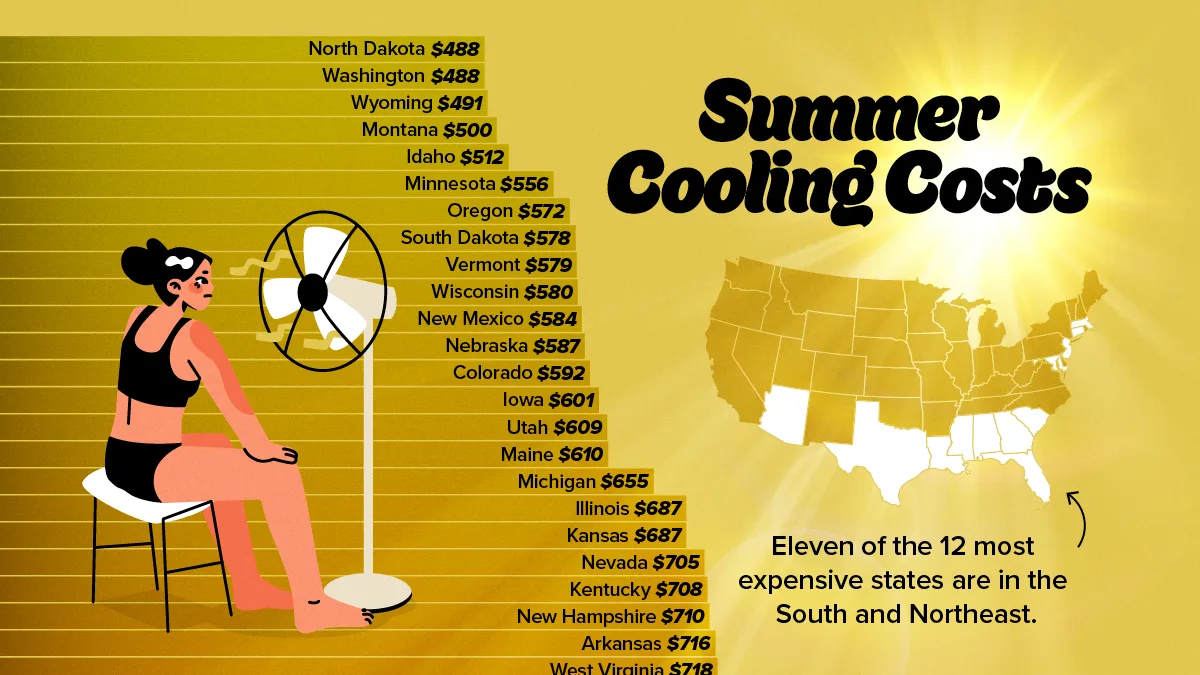
This visualization ranks projected summer electricity bills in every U.S. state using estimates from the National Energy Assistance Directors Association (NEADA), based on Energy Information Administration electricity prices and National Oceanic and Atmospheric Administration temperature forecasts.
Summer Electricity Costs by State
Projected summer electricity bills range from $488 to $1,060 across the country:
| Rank | State or District | Estimated Average Electric Bill Jun–Sep 2026 |
|---|---|---|
| 1 | Arizona | $1,060 |
| 2 | Connecticut | $994 |
| 3 | Texas | $936 |
| 4 | Florida | $935 |
| 5 | New Jersey | $915 |
| 6 | Alabama | $911 |
| 7 | Georgia | $891 |
| 8 | Maryland | $886 |
| 9 | Massachusetts | $882 |
| 10 | South Carolina | $839 |
| 11 | Mississippi | $834 |
| 12 | Louisiana | $833 |
| 13 | California | $828 |
| 14 | Missouri | $803 |
| 15 | Virginia | $798 |
| 16 | Delaware | $789 |
| 17 | Oklahoma | $786 |
| 18 | Tennessee | $779 |
| 19 | New York | $777 |
| 20 | Rhode Island | $772 |
| 21 | Indiana | $769 |
| 22 | Pennsylvania | $749 |
| 23 | Ohio | $745 |
| 24 | District of Columbia | $725 |
| 25 | North Carolina | $723 |
| 26 | West Virginia | $718 |
| 27 | Arkansas | $716 |
| 28 | New Hampshire | $710 |
| 29 | Kentucky | $708 |
| 30 | Nevada | $705 |
| 31 | Illinois | $687 |
| 32 | Kansas | $687 |
| 33 | Michigan | $655 |
| 34 | Maine | $610 |
| 35 | Utah | $609 |
| 36 | Iowa | $601 |
| 37 | Colorado | $592 |
| 38 | Nebraska | $587 |
| 39 | New Mexico | $584 |
| 40 | Wisconsin | $580 |
| 41 | Vermont | $579 |
| 42 | South Dakota | $578 |
| 43 | Oregon | $572 |
| 44 | Minnesota | $556 |
| 45 | Idaho | $512 |
| 46 | Montana | $500 |
| 47 | Wyoming | $491 |
| 48 | North Dakota | $488 |
| 49 | Washington | $488 |
| — | Alaska | n/a |
| — | Hawaii | n/a |
| — |  U.S. Average U.S. Average |
$792 |
Arizona tops the ranking due to its hotter temperatures. But Connecticut ranks a close second, at $994, despite far milder summers, making it one of the most notable outliers in the ranking.
Why Connecticut Costs Almost as Much as Arizona
Summer electricity bills depend on two factors: how much cooling households need and how much electricity costs where they live.
Arizona, Texas, and Florida rank among the most expensive states because air conditioners run for much of the summer. Connecticut, meanwhile, reaches nearly the same cost despite milder temperatures, showing how local electricity markets can be just as important as cooling demand.
At the other end of the ranking, Washington and North Dakota are projected to spend just $488 between June and September. Lower cooling demand and electricity costs help keep their summer bills less than half of Arizona’s total.
Why Summer Electricity Bills Keep Rising
Higher bills reflect both rising electricity prices and greater cooling demand.
Utilities are facing growing infrastructure costs, while hotter summers are increasing air conditioning use. Together, those trends are making cooling a larger share of household budgets.
The Growing Cost of Staying Cool
For many households, summer electricity bills are becoming a larger affordability challenge.
Today, roughly one in six U.S. households is behind on utility bills, with total utility debt projected to reach $23 billion this year. As heat waves become more frequent and electricity prices remain elevated, where Americans live increasingly shapes the cost of staying cool.
Learn More on the Voronoi App 
To learn more about this topic, check out this graphic on the annual cost of living in every state.