
Farmers should include rootworm control traits in their discussions about corn seed trait packages to help prevent the spread of Bt-resistant corn rootworm in Ontario.
“I don’t know if anybody in this room experienced rootworm in 2025, but it was a bad, bad rootworm year,” said Jocelyn Smith, an assistant professor in field crop entomology at the University of Guelph’s Ridgetown campus. She was part of a panel on corn rootworm at the 2026 SouthWest Agricultural Conference in Ridgetown.
Why it matters: Corn rootworm has been well-controlled in Ontario since the introduction of Bt traits and more diverse crop rotations, but that is changing with more resistance showing up.
The biggest problem is fields where corn is repeatedly planted, usually using the same trait packages.
“We’ve gotten maybe a little lazy with some of our rootworm management,” Smith said.
The growing season was dry in 2025, which meant more corn rootworm larvae hatched and survived.
“The weather saves us a lot of times on rootworm pressure, but in 2025, it didn’t,” she said.
Resistance is spreading, especially in areas with more livestock, where it’s more likely farmers with limited acres grow corn after corn.
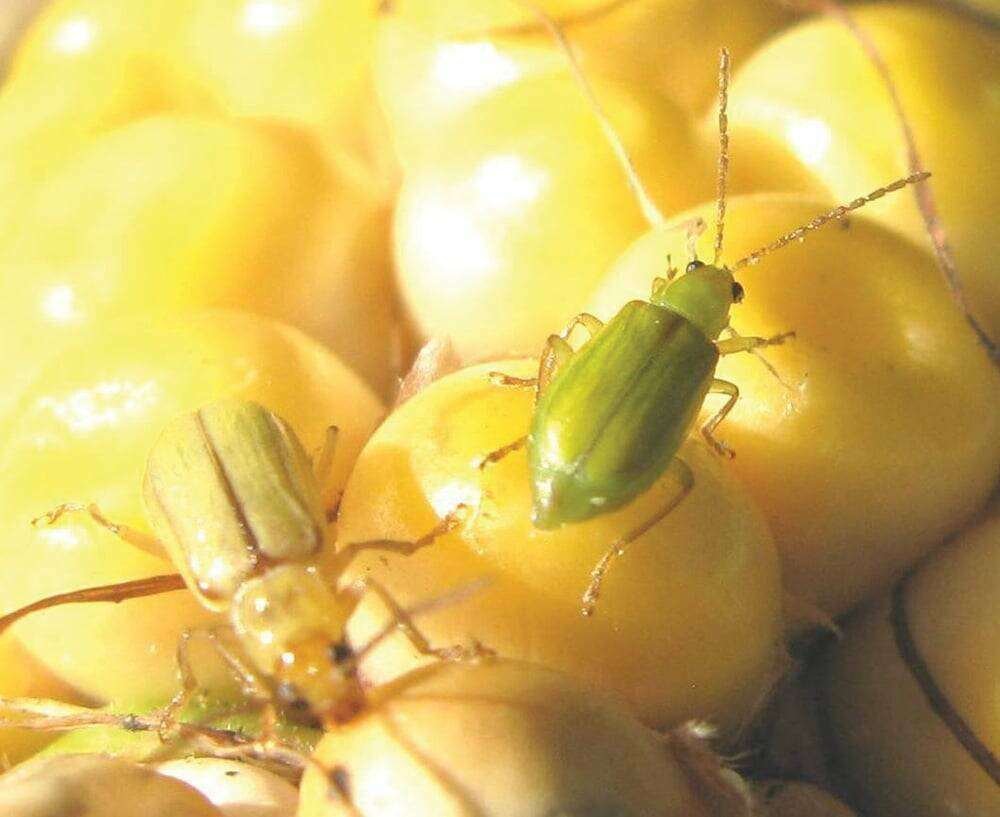
That means there are problems with resistance in Huron and Perth counties, and it’s spread to Middlesex and Lambton, Smith said, with resistance now found in eastern Ontario and Quebec.
Near-continuous corn
In the United States Midwest, a variant of rootworm has shown up that can hang around for a crop rotation out of corn. Smith said that hasn’t been confirmed yet in Ontario.
Canadian growers can feel a bit better compared to their counterparts in the U.S., where many growers only plant corn and soybeans, and corn-on-corn for grain corn is more common.
That means resistance started showing up shortly after the Bt trait arrived, said Erin Hodgson, a field crop extension entomologist at Iowa State University.
Hodgson said there are about 13 million acres of corn in Iowa, but about four million of those acres are in continuous corn, meaning at least three years of corn. Some have been in corn each year for 20 years.
The industry is used to evaluating the damage in Iowa.
For each corn root node that is pruned to within 1.5 inches of the stalk, there’s about a 15 per cent yield loss, she said. Corn rootworm feeds mostly on nodes four, five and six. There’s no rescue treatment once the damage has been done, she said, so prevention is the key.
Back to chemistry
As Bt corns have failed — and in Iowa, they’ve failed across the valuable traits, including multiple resistance to three of the traits — corn growers have been relying more again on soil-applied insecticides. That has included older chemistries such as organophosphates and pyrethroids, but also some new compounds.
Using soil-applied insecticides involves retrofitting planters to hold chemical boxes, and means farmers have to work with highly toxic chemicals.
Research in Iowa by Aaron Gassmann at Iowa State shows that there’s little value to using soil-applied insecticides if Bt traits are working.
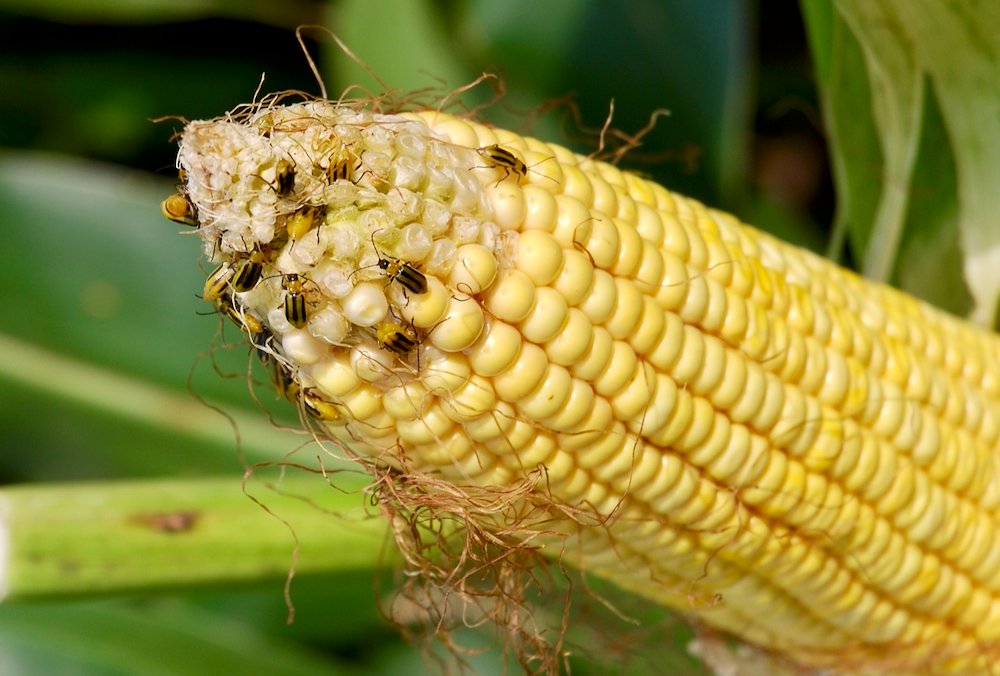
There are new RNA interference (RNAi) technologies now available, but they don’t result in immediate effect, as they shut down insect metabolism. Larvae could still feed for a week, therefore it’s difficult to tell if the technology has been effective. The risk of resistance to RNAi is also high, Hodgson said.
Crop rotation in Ontario helps a lot, she said, but encouraged farmers to question whether they need Bt traits in their corn every year, especially if they’re practicing rotations.
If corn only sees a field every three to five years, if the populations aren’t there, corn without Bt could perhaps be planted, she said.
“Rootworm is the easiest insect to control if you want to, if you just play the game right,” Smith said. “It’s got to be corn roots. If there aren’t corn roots there, they will all die.”
Could biocontrols help?
Researchers have known since the 1980s that nematodes can kill rootworm, but the distribution of nematodes to the field level has not worked.
Tuesday Schroeder, a master’s student working with Smith and Dave Hooker at Ridgetown, and a biological innovation manager with Corteva, is looking at ways to improve the application of entomopathogenic nematodes (EPNs) to the field.
The challenge is that “EPNs are really susceptible to environmental conditions. They’ll dry up and die, and they’re not really tolerant to cooler conditions,” said Schroeder.
She said they could be used in conjunction with Bt traits to help increase the longevity of the traits.
The nematodes are washed into a tote and then applied using a sprayer with streamer nozzles at 50 gallons of water per acre.
What is the lifecycle of corn rootworm
Corn rootworm beetles — both the western corn rootworm and northern corn rootworm that exist in Ontario — lay eggs from July to October.
Over the winter, the eggs are “just totally dormant,” says Smith. “They’re pretty indestructible in the soil throughout the winter.”
Tillage doesn’t affect the eggs; neither does freezing weather.
The beetles burrow as deeply as they need to so their eggs are laid into moisture, even to depths of a metre into the soil.
The eggs start hatching in southern Ontario around June 10, feed on roothairs and move through three instar development stages by the middle of July at which time they are large enough to feed on the roots of corn.
This is the point of the most damage, with goosenecking of corn plants indicating a severe infestation.
By late July or early August the rootworm pupate and emerge as adults, ready to start the process again.
The post Ready for corn rootworm resistance? appeared first on Farmtario.


