
Soybeans are susceptible to many diseases. Unfortunately for Ontario soybean growers, yet another disease might have to be added to what’s already a long list.
Specifically, red crown rot continues creeping north and eastward from the midwestern United States.
What is red crown rot?
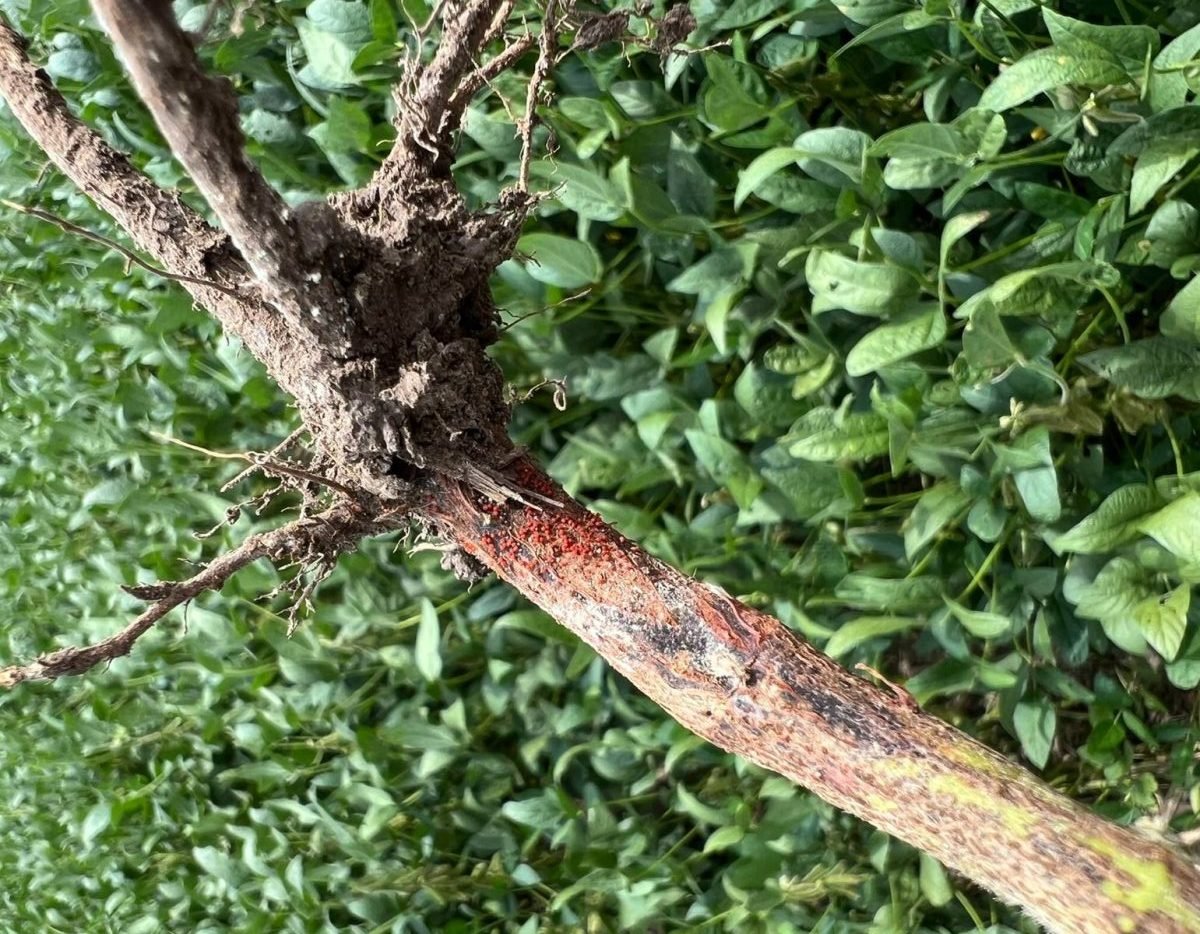
As its name implies, red crown rot is a disease characterized by the development of reddish-orange fungal structures (called perithecia) near the crown of infected plants.
Crop Protection Network resources say the disease deteriorates the roots and the stems of the plant and can significantly degrade plant health without showing many of the above-ground symptoms — leaf chlorosis, premature yellowing, et cetera — common to many other diseases.
When above-ground symptoms are present, they can also be easily mistaken for signs of other diseases.
Foliar symptoms begin with small light green to yellow blotches between leaf veins but can develop into necrosis. Leaves may die prematurely as a result. Stem symptoms start as a rusty discoloration of the lower stem. High moisture late in the growing season promotes the development of white hyphae (the long, branching fibres of a fungus) and red or rusty brown spore-bearing structures. The central pith of the lower crown may also develop grey discoloration.
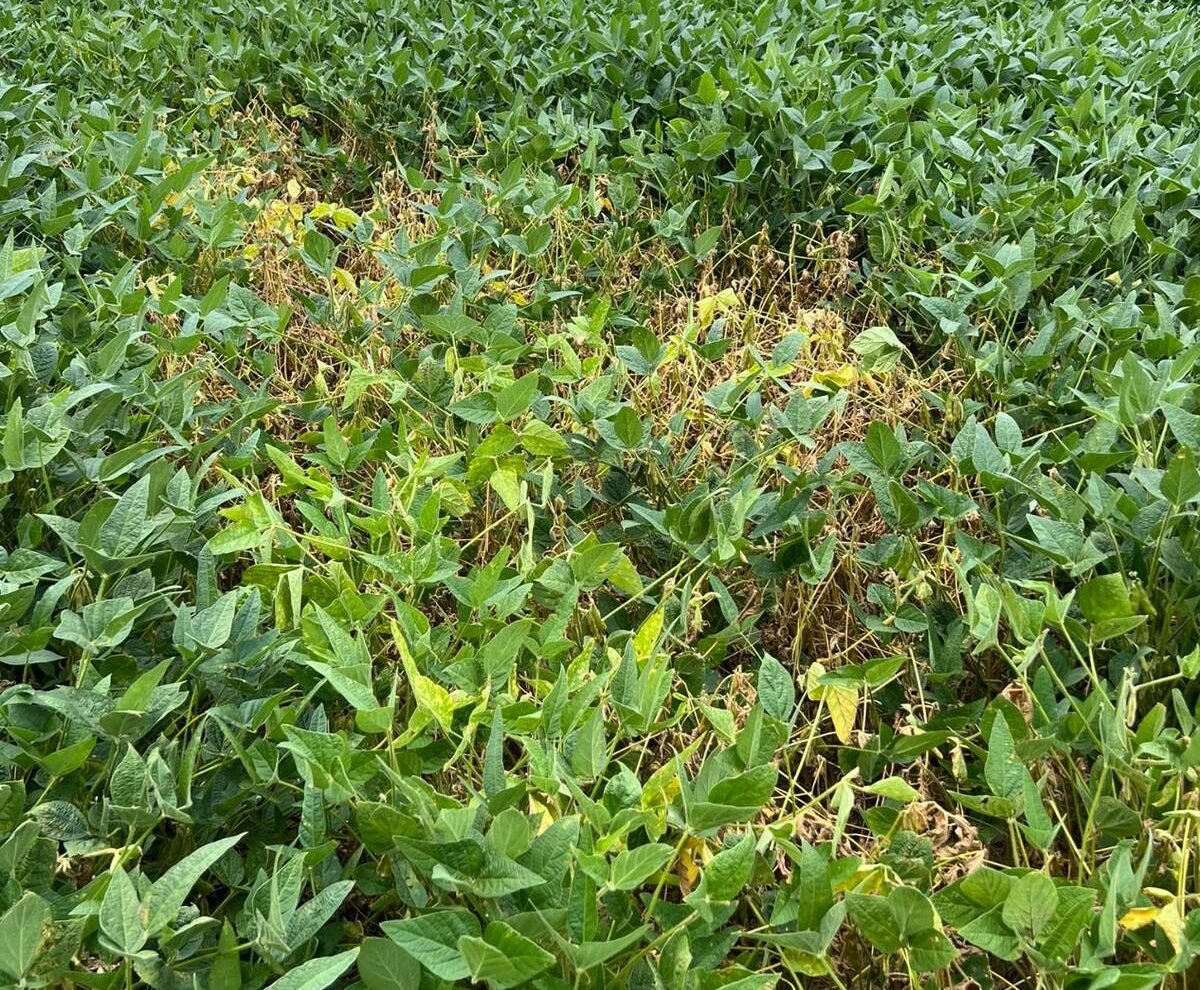
Boris Camiletti, crop science researcher and assistant professor at the University of Illinois Urbana-Champaign, says the pathogen appears in patches in the field. How significant the yield impact will be depends on the size of the patch or patches. Where the disease is significant, 60 to 70 per cent yield reductions have been documented. Where it’s confined to small areas, yield impact can be negligible.
The longevity of red crown rot is also a major problem, with it being able to survive in the soil for over seven years.
“Once you got the disease, you will have to fight it for several years. It’s very persistent,” says Camiletti.
How it spreads
Red crown rot’s distribution is wide, and getting wider as both human movement (equipment operations) and wind move inoculated soil to new fields.
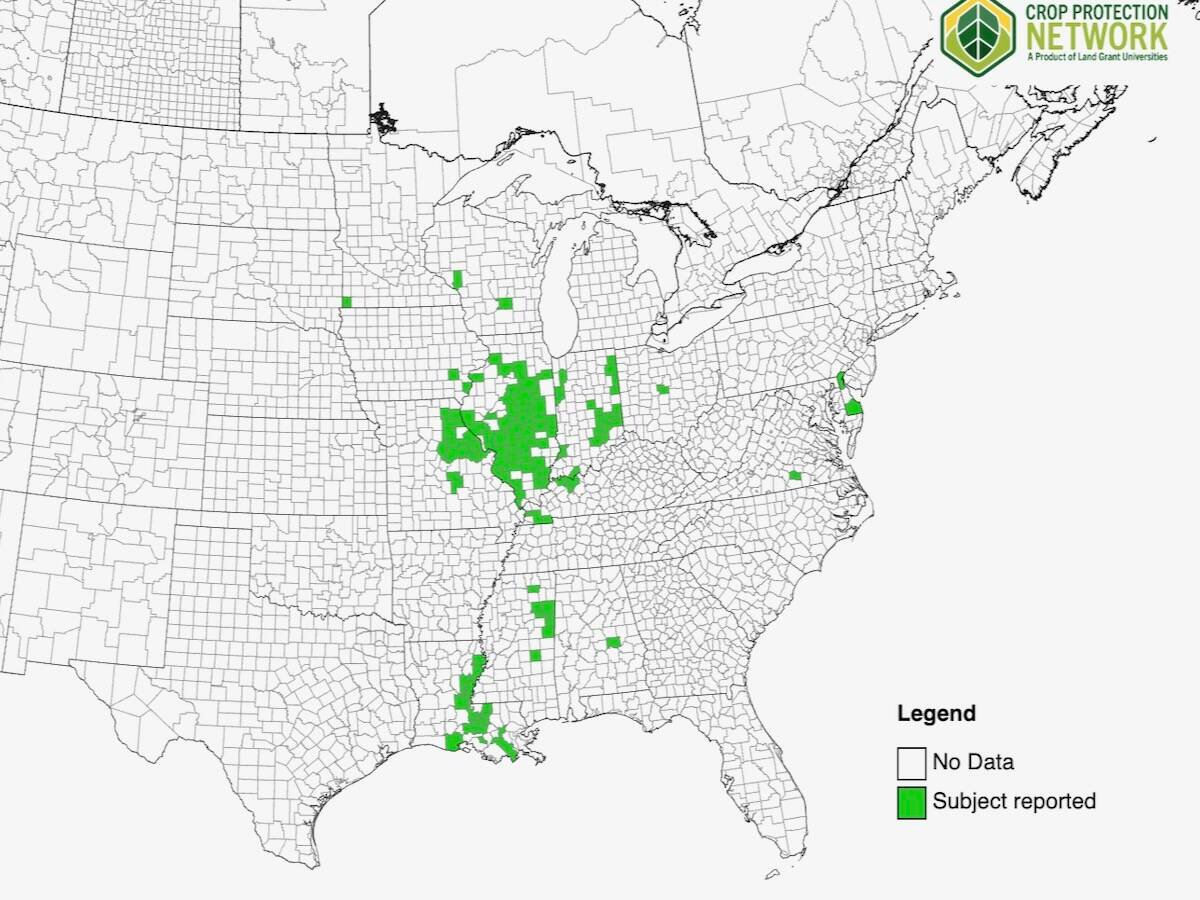
First observed in 1972 in North Carolina, it was subsequently found in additional states across the southeastern United States. Red crown rot was found in Illinois in 2018 and quickly spread to neighbouring jurisdictions. Currently, Crop Protection Network maps show sightings in Alabama, Louisiana, Virginia, Delaware, Missouri, Iowa, Minnesota, Indiana and Ohio.
Albert Tentuta, field crop pathologist for the Ontario Ministry of Agriculture, Food and Agribusiness, says its more recent identification in the Great Lakes states should be concerning for Ontario growers.
“If you’re buying equipment from Iowa or Illinois, make sure it’s clean,” Tenuta says.
Left to its own devices, Camiletti says red crown rot can spread just a few inches annually. Best practices, such as planting known infected areas last, can help mitigate its spread locally. A few fungicide seed treatments are also available in the United States, while soybean resistance screening and data collection are ongoing.
Writing in Field Crop News, Tenuta reiterates that many soybean diseases can produce “nearly identical symptoms from a distance.” This matters because management recommendations for different diseases “differ considerably.” Despite no documented cases in Ontario as of September 2026, he encourages vigilance.
“As combines begin rolling this fall, growers should take the opportunity to ask a simple but important question: why did these plants die early?” says Tenuta. “Digging roots and splitting stems can reveal clues that are not visible from the combine cab.”
The post Red crown rot not in Ontario soybean crops, yet appeared first on Farmtario.


