
For generations, aging on the farm followed a familiar path.
Farmers worked until they couldn’t. They handed over the operation when their bodies slowed down, when health forced a change, or when the next generation stepped forward to take over.
But farming in Canada looks different now.
Today, many farmers are working well into their 70s, 80s and even 90s. And while they may not be the person doing the heavy work, they remain connected to the land, the livestock and, in some cases, engaged in farm management decisions.
At the same time, a younger generation is waiting for its turn to lead. That tension sits at the centre of one of agriculture’s biggest transitions: how do farms transfer ownership, knowledge and responsibility when farm owners are living and working longer than ever before?
Chad Bouma, MSW, RSW and psychological support manager with the Canadian Centre for Agricultural Wellbeing, suggests the answer may require the agriculture industry to rethink what “old” really means on the farm.
Rethinking farm retirement
“Many of the older generation still want to be involved on the farm any way they can,” says Phyllis MacCallum, director of research and knowledge mobilization with the Canadian Agricultural Human Resource Council (CAHRC).
For many, farming isn’t simply a job, it’s an identity where purpose and family legacy roll into one. Leaving the farm entirely isn’t the goal. Instead, the challenge is finding meaningful ways to remain part of the operation while making room for the next generation.
And that balancing act has become increasingly important.
According to the 2021 Census of Agriculture, only 12 per cent of Canadian farms have a written succession plan, while another 13 per cent are working on one. Meanwhile, CAHRC forecasts a 30 per cent reduction in farm managers by 2030 as a wave of farmers retiring or exiting the industry accelerates.
The concern extends beyond who owns the land. MacCallum says the industry is facing a significant loss of knowledge as older producers retire, especially producers who don’t have a successor.
“Technology can help capture information and make expertise more accessible, but it cannot fully replace the first-hand understanding developed over decades, like the knowledge of a particular field or herd genetics,” she says. “When farmers leave without transferring that knowledge, it’s not just about the farm; the entire industry loses it, too.”
At the same time, technology is changing the way farmers work and challenging some long-held assumptions about aging. Historically, aging often meant declining physical ability, and the heavy lifting, long hours and physically demanding farm work eventually forced many producers to slow down.
Today’s farms look different. Automation, precision agriculture, robotics and advanced equipment have reduced physical demands across many sectors. For older farmers, that can mean staying involved longer, and for new entrants it can make agriculture more attractive and accessible.
MacCallum believes age itself is becoming less important than a willingness to adapt.
“You don’t need to automate the entire operation,” she says. “But you need to be willing to innovate.”
That shift is also changing relationships between generations. She notes that older farmers no longer have to disappear from daily farm life once leadership changes hands. Instead, many multi-generational farm families are finding ways to redefine roles, allowing experience and innovation to work together.
The challenge is that it isn’t always easy.
The generational squeeze
According to Bouma, the very idea of aging on the farm has changed dramatically over the past few decades. Higher land values, larger businesses and more capital tied up in farms have made succession far more complicated than simply handing over the reins to the younger generation.
“In some cases, the rising age of farmers on the farm is pushing back succession,” says Bouma, explaining that this can result in a generational squeeze. While the oldest generation remains active and the youngest generation is eager to lead, the middle generation often finds itself balancing loyalties and responsibilities to both.
Farm Management Canada executive director Heather Watson sees both possibilities. “When handled well, delayed retirement creates a tremendous opportunity for mentorship, shared decision-making and knowledge transfer,” she says. “But without a plan outlining clear intentions, timelines, roles and responsibilities, it can create bottlenecks.”
She often returns to the advice of farm management consultant Dick Wittman, who says aging farmers need help learning how to “get out of the way, without going away.” Watson believes that distinction matters.
The hard conversations
“Succession isn’t about older farmers disappearing,” explains Watson. “It’s about creating space for the next generation to make decisions, learn from mistakes and build confidence while experienced mentors remain close enough to guide them.”
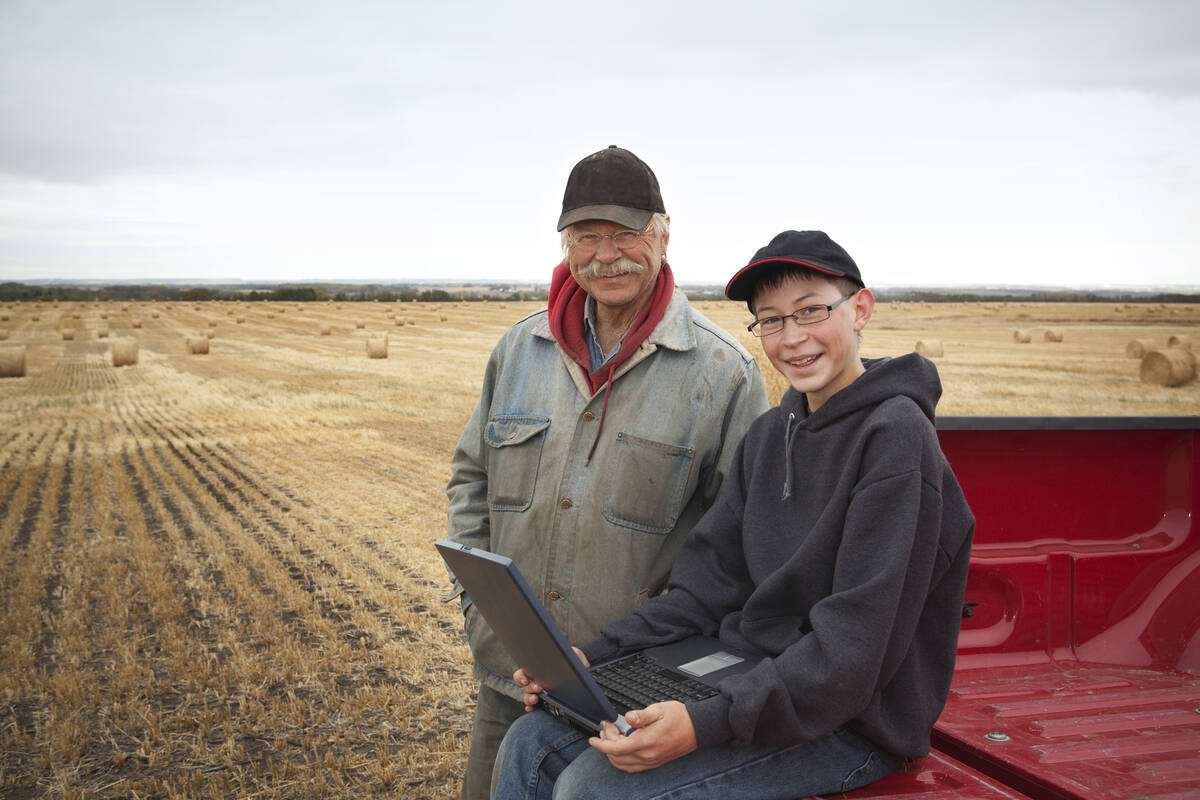
The challenge, Watson says, is that many families avoid those conversations altogether. Successful farm transition involves far more than tax planning. It raises emotional questions about fairness, identity, leadership and family relationships — topics many families would rather postpone than confront.
“Too often families avoid the tough questions, even though they are as much about business as emotions, because they were never taught how to have these conversations, and don’t want to create conflict,” explains Watson, noting that, unfortunately, avoiding them often creates exactly the conflict families hope to avoid.
Age and generational stereotypes can also fuel tension, with older farmers often labelled as resistant to change and younger farmers sometimes dismissed as impatient or inexperienced.
Watson says these stereotypes miss the point, explaining that older generations bring resilience, experience and lessons learned through decades of changing markets, weather and policy. Younger generations bring fresh thinking, new technologies and a desire to work smarter rather than simply harder.
“And the strongest farms find ways to combine both,” she adds.
Redefining what “old” means on the farm
MacCallum believes it might be time to redefine what it means to grow older on the farm, suggesting that it’s more about making space for each generation and respecting the knowledge and skills they bring to the farm rather than a number.
“That will look different for everyone,” she says. “For some it could be a farm that invests in an ATV to help Grandpa with his mobility so he can still play a small role and be involved, or including the older generation in key moments, like driving the combine to open the field on the first day of harvest.”
The future of Canadian agriculture may depend less on deciding when one generation steps aside than on finding better ways for generations to work alongside one another.
Because while machinery, technology and management practices continue to evolve, one thing hasn’t changed: successful farms have always been built by people willing to learn from each other and work together.
“We’re navigating an entirely new generation of farmers who are able to retire, but because farming isn’t just a job, it’s a lifestyle, many still want to stay involved,” says Bouma. “As an industry, we’re learning as we go.”
The post Redefining what it means to grow old on the farm appeared first on Farmtario.


