
Canadian Alliance for Net-Zero Agri-Food has launched the first phase of its new marketplace, which intends to help farmers be rewarded for climate-improving production practices.
“This first phase of the CANZA Marketplace is about making it easier for farmers to find and use climate-smart agriculture resources,” said Ashley Honsberger, interim executive director of CANZA, “while also beginning to demonstrate the real investment value of these practices.”
While the initial focus is Ontario, Honsberger said the multi-phased, multi-year initiative plan is to take the digital platform national by 2031. CANZA, launched in 2023, is funded by some of Canada’s largest food processors and retailers.
Marketplace brings funding programs and educational resources to one place, addressing a key agri-food sector challenge: navigating fragmented support programs and connecting on-farm environmental improvements to real economic value.
“When CANZA was launched, it was clear that Canada’s food system was at a turning point in sustainability and decarbonization,” said David Hughes, CEO of Generate Canada, in a press release.
The first phase of the CANZA Marketplace focuses on access, learning, and cost-share funding and includes:
- A centralized searchable directory resource for funding programs supporting climate-smart farming practices in Ontario, helping farmers and advisors identify and compare available funding opportunities, including CANZA’s Million Acre Challenge.
- A knowledge hub offering practical information on climate-smart and regenerative farming practices, helping increase awareness and adoption across the sector.
“Farmers cannot be expected to both produce food and enhance the environment on their own,” wrote Evan Fraser, Arrell Food Institute executive director and a CANZA founding partner.
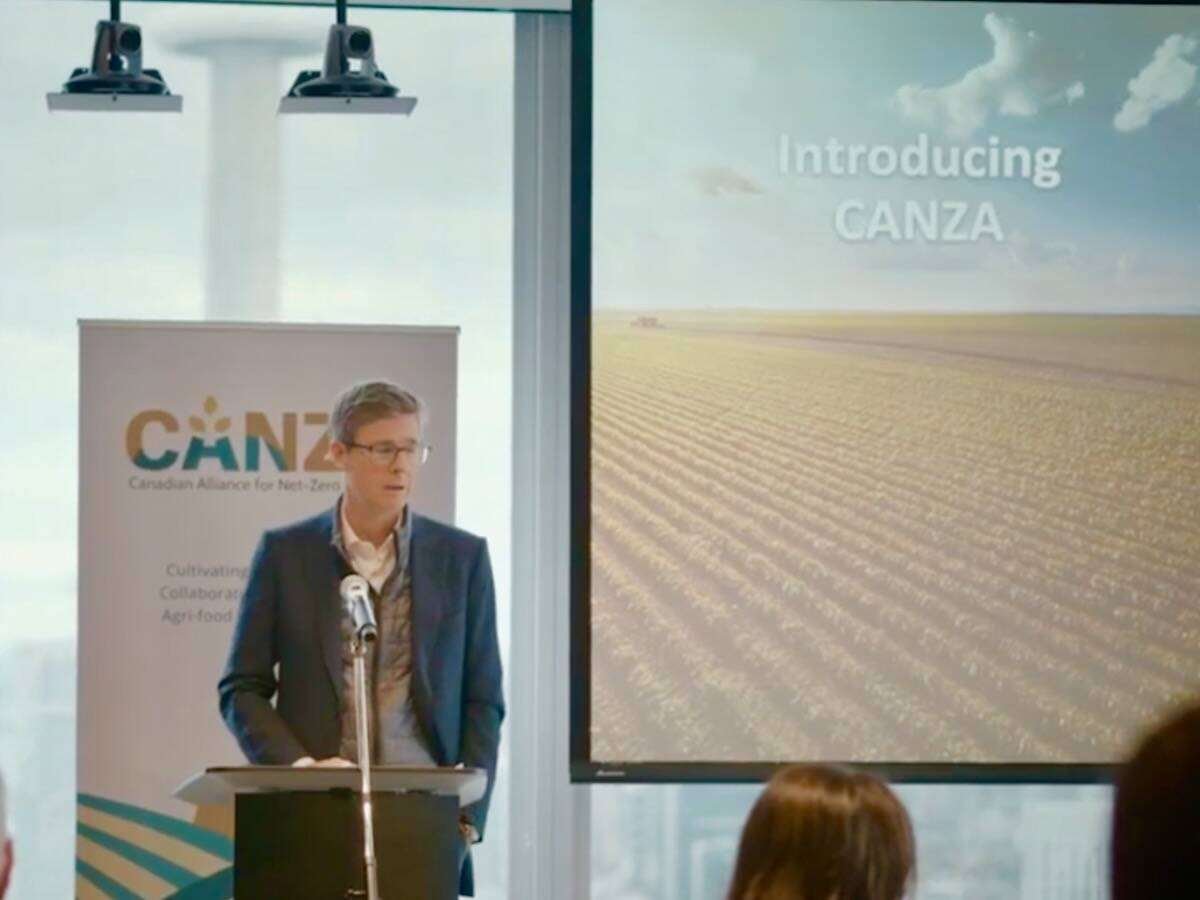
He said CANZA was founded on the belief that Canada can be a global leader in regenerative, climate-smart agriculture in a market that rewards farmers for sequestering greenhouse gases and protecting biodiversity.
“When we have mechanisms in place to provide financial incentives for environmentally beneficial practices, we will see truly economically and environmentally sustainable food systems,” Fraser said. “The CANZA Marketplace is an important part in the journey towards creating green economic growth.”
A central tool to browse for supports
The publicly accessible platform allows farmers, agricultural advisors and the public to browse funding opportunities without an account; however, creating one allows the user to save programs of interest and conduct side-by-side program comparisons.
In the future, the marketplace will support voluntary data entry by farmers for multiple climate-smart programs through a streamlined input process, providing valuable analytics for multiple support systems.
“Ultimately, all organizations working in the service of farmers are looking to reduce friction,” Honsberger said. “Friction can be time consumption, it can be accuracy of information, or access to data.”
She suggested that if organizations work collectively to share what is and isn’t working in creating a central tool to reduce those frictions, the entire value chain would benefit.
Honsberger said building on that foundation, they could see interest from insurance companies to join by 2031, supporting farmers for their environmental goods and services, such as water absorption.
She told Farmtario the knowledge hub’s goal isn’t to reinvent the wheel but to provide resources and information regarding climate-smart and regenerative farming practices and connect them to advisors and lending tools.
The post Resource hub launched to connect farmers with environmental incentives appeared first on Farmtario.


