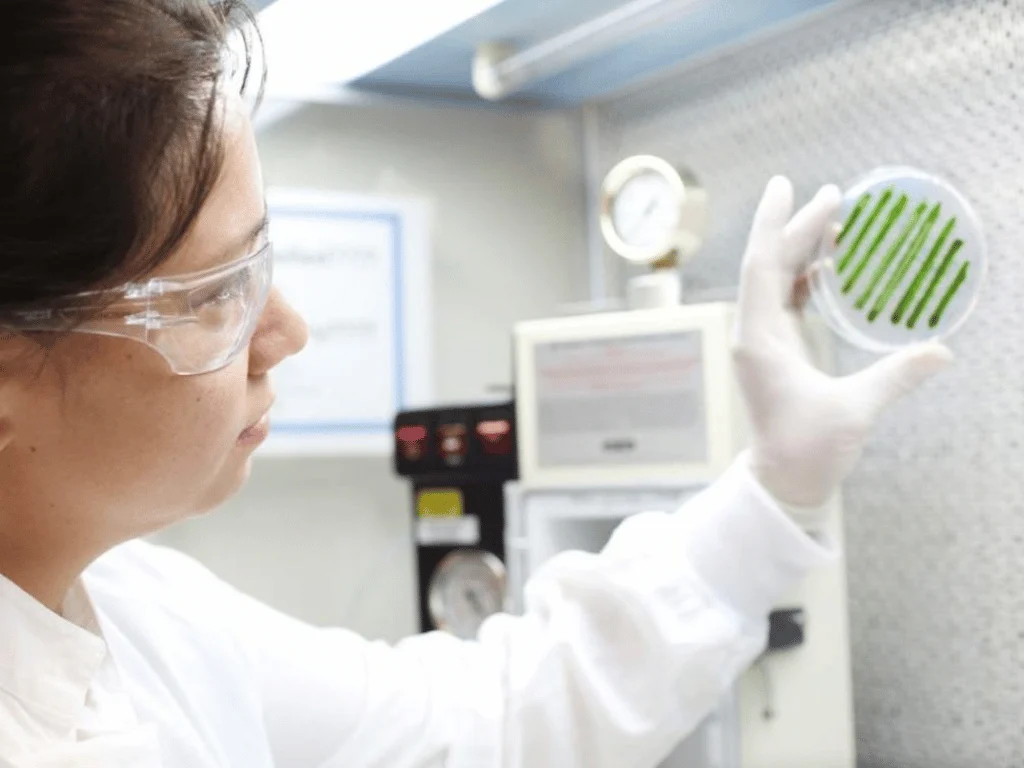
University of Queensland scientists have found a new way to grow microalgae. It uses waste from cultivated meat bioproduction. The biomass can then be processed. It’s fed back into the system. This could reduce the need for costly growth media and amino acids.
The approach could lower the cost of cultivated meat. That’s a key barrier to scaling these biomanufactured proteins. Researcher Melanie Oey said the team estimates growth media costs could drop by 60 to 90%.
Culture media are essential to growing animal cells in cultivated meat bioproduction. They account for most process costs. Growth factors drive the bulk of that expense. Cutting these costs matters for the industry’s viability. There are also ethical concerns tied to animal-derived inputs like fetal bovine serum.
The university worked with Melbourne-based biotech Magic Valley on the project. It was funded by the Australian Economic Accelerator. Magic Valley supplied waste material from its bioprocessing. This helped test the closed-loop system at scale.
Researchers grew Chlorella BDH-1 algae on spent culture media. The algae absorbed leftover nutrients. It also supplied oxygen to meat cells. Nutrients harvested from the microalgae could then return to the system. This creates a self-sustaining circular bioeconomy loop.
Combining algal lysate with co-cultivation offset a 50% cut in amino acids and serum. It also improved muscle cell growth by 40%. Some conditions outperformed standard growth media by more than double, according to the study.
Future work will focus on scaling up co-cultivation, the researchers said. Magic Valley’s Andrew Laslett called the biomanufacturing breakthrough potentially transformative for the sector. Media costs remain one of its biggest hurdles to commercial-scale production.
The post Scientists turn cultivated meat waste into biomass appeared first on World Bio Market Insights.