
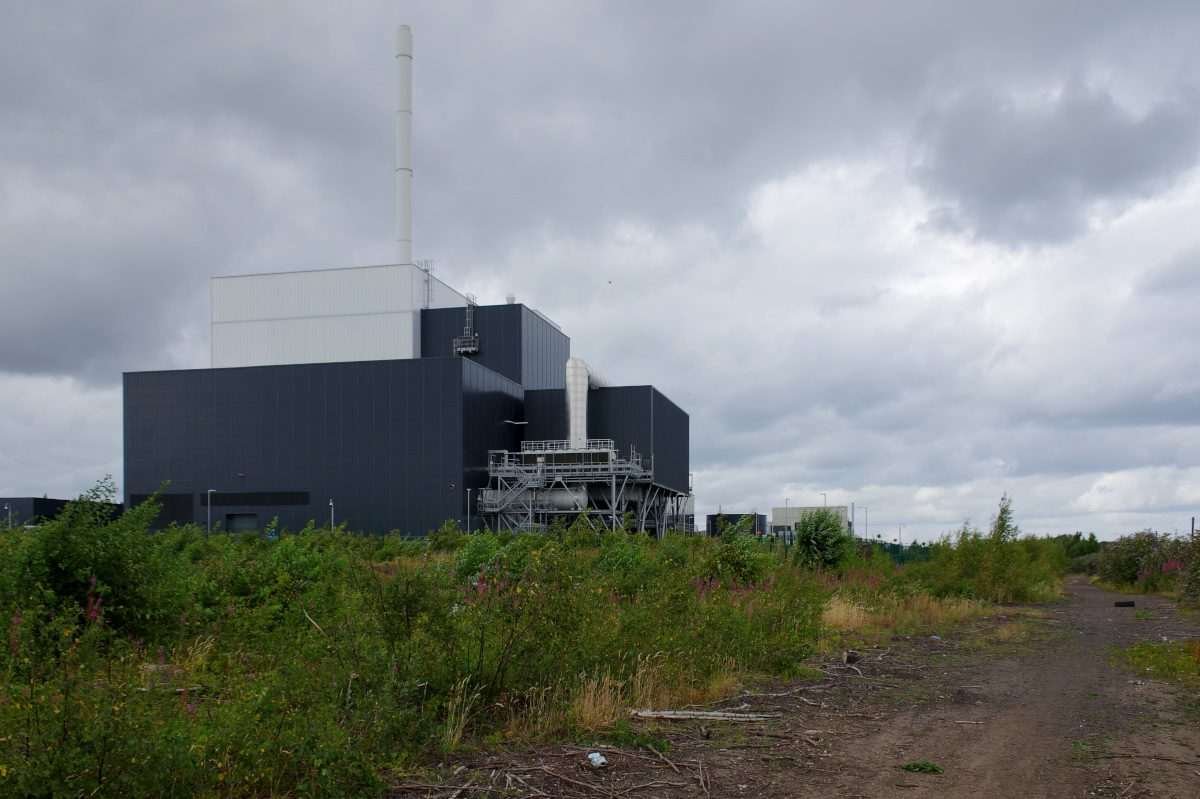
A new assessment of Scotland’s energy-from-waste (EfW) infrastructure has concluded that the country is not heading for significant overcapacity, although a lack of spare capacity during plant shutdowns could leave the waste system vulnerable.
The Energy from Waste Capacity Update for Scotland, prepared by SLR Consulting for Zero Waste Scotland on behalf of the Scottish Government, updates modelling undertaken for the 2024 Landfill Ban Assurance Study. It uses more recent waste arisings data, updated construction schedules and information supplied by EfW operators and developers.
A central finding is that, “contrary to the previous analysis published in 2024, the updated analysis undertaken does not indicate significant EfW overcapacity in Scotland in any of the scenarios modelled.” The change reflects more recent waste data and revised construction plans and timescales.
The assessment estimates that Scotland could have around 2.37 million tonnes per annum (Mtpa) of permitted EfW capacity by 2028, provided facilities in advanced construction or with targeted commissioning dates are completed on schedule. Actual operational capacity is estimated at around 1.96-2.08 Mtpa, based on Scottish and UK averages for waste combusted.
Three scenarios were modelled to 2035. Under a “self-sufficiency” scenario, in which all waste is managed in Scotland and there is no improvement in recycling or waste reduction, the capacity shortfall is estimated at around 0.53 Mt at the start of 2026, falling to 0.23 Mt by 2028 before approximate supply-demand parity is reached from 2030.
Under the business-as-usual (BAU) scenario, which assumes reductions in waste generation, improvements in recycling and continued RDF exports of around 0.1 Mtpa, the capacity gap falls from around 0.4 Mt in 2026 to 0.04 Mt in 2028. A surplus of around 170,000 tonnes emerges in 2029, rising to approximately 230,000 tonnes by 2035.
The third scenario, combining self-sufficiency with high recycling, produces a 0.36 Mt shortfall in 2026 but moves into a surplus of around 0.12 Mt in 2028. The report says the surplus subsequently builds to around 500,000 tonnes from 2030, which could be sufficient to accommodate current exports and potentially provide contingency during shutdowns.
However, the report cautions against interpreting nominal spare capacity as readily available contingency capacity. Theoretical additional headroom across the Scottish EfW fleet is estimated at between 285,000 and 407,000 tonnes per year, depending on assumed operating performance. This capacity is spread between facilities and may not be accessible because of operational, contractual and geographical constraints. Some operators told the study that their facilities do not maintain headroom for use by other operators.
This is particularly significant during maintenance periods. Most operators plan annual shutdowns lasting 14–21 days, with larger outages of 25–60 days every five to ten years. Existing contingency measures include diverting waste to other EfW plants in Scotland or England, baling and exporting waste, and temporary landfill storage in some remote locations. Operators repeatedly highlighted the absence of guaranteed spare headroom and called for short-term landfill derogations or a coordinated contingency framework.
The assessment warns that by 2028, when additional EfW facilities are expected to be operating and landfill is no longer available for biodegradable municipal waste, commercial and industrial waste producers could be left without a viable thermal treatment outlet during scheduled outages. A prolonged unplanned shutdown at a large plant could require waste to be exported unless temporary emergency landfilling were permitted.
“Outage period resilience remains the key vulnerability,” the report concludes, adding that the Scottish EfW fleet “does not have capacity to manage prolonged unplanned shutdown or facility failure.” Other risks include pre-treatment bottlenecks for particular residual waste streams, including oversized material and waste containing persistent organic pollutants (POPs), and delays in bringing new facilities into operation.
The timing of new capacity is therefore critical. The modelling assumes that South Clyde Energy Centre, Oldhall Energy Recovery Facility and Binn Farm EfW are operational by the end of 2028. Delays or cancellation would push back the point at which the capacity gap closes; the report notes, for example, that cancellation of the 84,000-tonne-per-year Binn Farm project would leave a capacity gap under the self-sufficiency scenario beyond 2035.
Exports are also expected to remain part of the picture in the near term. The assessment says exports will be required under the self-sufficiency scenarios while a capacity deficit remains, and that reliance on them is likely to continue unless waste reduction and recycling performance improve significantly.
The report identifies improved waste reduction and recycling as the longer-term answer to both closing the capacity gap and strengthening resilience, and calls for “swift progress” under Scotland’s Circular Economy and Waste Route Map to 2030. It also says issues including construction milestones, capacity monitoring, contingency planning and export tracking should be considered as the Scottish Government develops its Residual Waste Plan to 2045.


