
What is a Silvopasture?
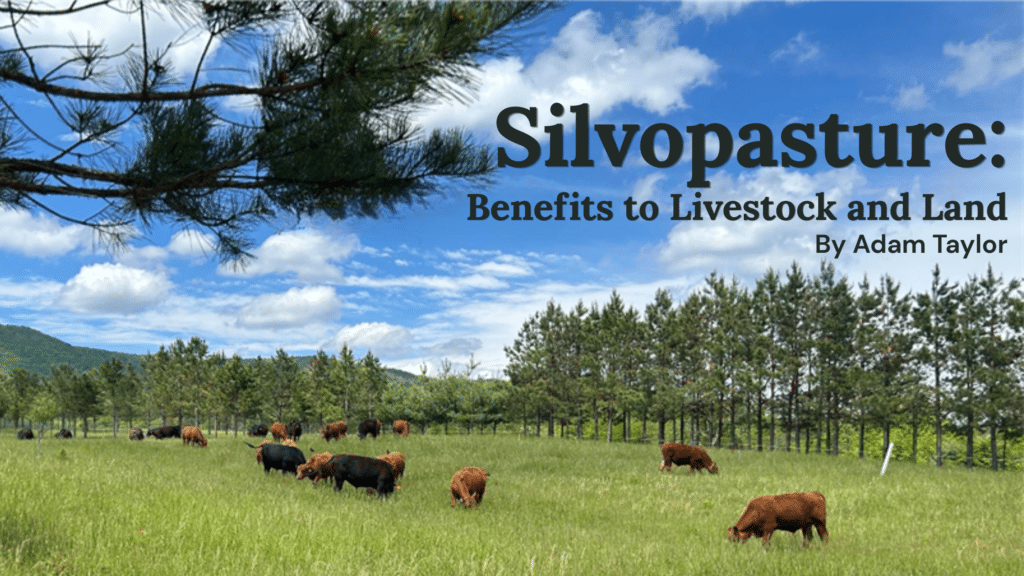
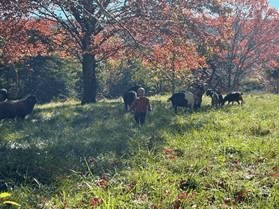
Silvopastures are grazing systems where trees, forage crops, and livestock are integrated on the same land. This blended microecosystem creates many beneficial symbiotic relationships between the soil, the plants, and the livestock. Silvopastures consist of a diverse mix of trees—such as hardwoods, conifers, fruit and nut producers, and nitrogen-fixing species—and support a wide range of livestock, including cattle, sheep, goats, pigs, and poultry. They can be established by thinning an existing tree stand and developing forages underneath, or by planting trees within an existing pasture. Once established, there are various short-term and long-term benefits to operations that incorporate silvopasture into their production systems.
Shade and Heat Stress Reduction
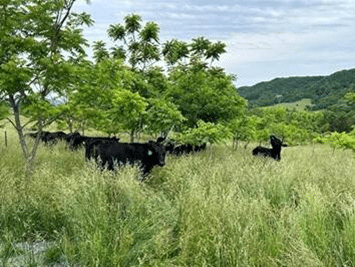
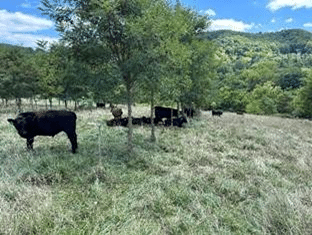
The most common benefit to livestock most people are aware of is the continuous access to shade silvopastures can provide. Heat stress on livestock can have many adverse effects on animal performance as well as reproduction, especially in pastures where Kentucky 31 tall fescue and its endophyte toxicity are present. Studies show that livestock with continuous access to shade in silvopasture systems experience reduced stress, reflected in lower body temperatures, decreased hair cortisol levels, and improved productivity and overall welfare compared to animals in open pastures. They also display more energy-conserving behaviors, such as lying down more frequently and spreading out, rather than clustering together in standing groups to create shade for one another in open fields.
Expanded Forage and Livestock Nutrition
Other livestock opportunities that silvopasture systems can provide include additional “overstory” forages as well as access to naturally occurring rich phytochemical compounds that aid livestock in “self-medicating” against sickness. Tree species examples like Honey Locust, Persimmons, Mulberry, Poplar, and Willow are faster growing species and provide alternative forages through fruits, leaves, and fodder at various times of year, increasing dry matter availability per acre. Mast-producing trees have shown to decrease winter feed costs combined with stockpiled forage. Pastured pork with access to trees like Oaks, Hickorys, and Chestnuts have exhibited a more desired flavor profile in their meat, and a higher marketable value.
Natural Animal Health Benefits
Pine tree varieties and Black Walnuts for example host high levels of tannins in their leaves that can aid in livestock health. Tannins work to improve rumen health and act as a natural dewormer, reducing parasite loads in livestock in a manner that does not affect soil biology like chemical dewormers can. They may also work to alleviate symptoms of endophyte toxicity in livestock, preventing the absorption of the toxin in the rumen. Overall, silvopastures add another diverse layer to forage options available to livestock in a pasture-based operation.
Soil Health and Microclimate Improvements
Silvopasture systems also work to enhance soil health. They create microclimates that can modify air, soil, and water temperatures, and have a positive impact on soil, plant, and animal dynamics. Certain tree species, such as Black Locust, are natural nitrogen fixing trees that provide an organic source of soil nutrients deeper in the soil profile and spread much wider than nitrogen fixing plants can. Trees, in general, can capture excess nutrients not available to plant roots, this along with soil temperature regulation from the shade they provide, has shown to increase microbial populations, diversity, and activity. Soil organic matter percentages are often increased due to the amount of biomass the trees shed each year, as well as their incredible ability to trap atmospheric carbon and sequester it underground. This added layer of nutrient absorption and microclimate conditions aids in the building of soil aggregation, thus creating soils more resistant to drought conditions by increasing their ability to absorb water, as well as growing a much more nutrient dense forage for livestock.
Biodiversity and Wildlife Habitat
Other benefits of silvopasture systems include increasing biodiversity. They create various habitats for wildlife, birds, and insects by providing food sources and shelter not found in open pastures. They also serve as wildlife corridors, providing adequate space for various species of wildlife to move across the landscape in search of food sources.
Challenges and Considerations
While silvopastures create many benefits, there are a few challenges that silvopastures can present. Establishment of the practice usually requires a significant initial investment and will take a few years before the benefits are utilized to the fullest. However, the integration of trees, livestock, and forage in a well-managed silvopasture system can lead to overyielding, where the combined productivity of all components exceeds that of a monoculture pasture.
Learn More
Silvopasture systems represent a diverse systems approach to improving both livestock performance and land stewardship. By integrating trees, forage, and animals into a single, well-managed system, producers can enhance animal welfare, diversify feed resources, and build healthier, more resilient soils. While establishment requires thoughtful planning and upfront investment, the long-term returns—ranging from improved productivity to greater environmental sustainability—make silvopasture a valuable tool for modern agriculture. As interest in regenerative and efficient farming practices continues to grow, silvopasture stands out as a practical solution that benefits both producers and the land they depend on.
For more information on incorporating silvopasture into your production system, contact one of our Understanding Ag consultants.
The post Silvopasture: Benefits to Livestock and Land appeared first on Understanding Ag.


