

A study run by the University of Technology in Baghdad, Iraq, has tested solar tracker pneumatic actuator design for harsh environments raising average efficiency by 62.3% and 66.4% respectively on a test panel using one axis and a single actuator, and two axes and two actuators.
Sydney-headquartered distributor of pneumatic technology for industrial actuation Air Springs Supply Technical Products Manager Vinh Lam said all the advantages that the engineers conducting the study found, apply to Australian conditions.
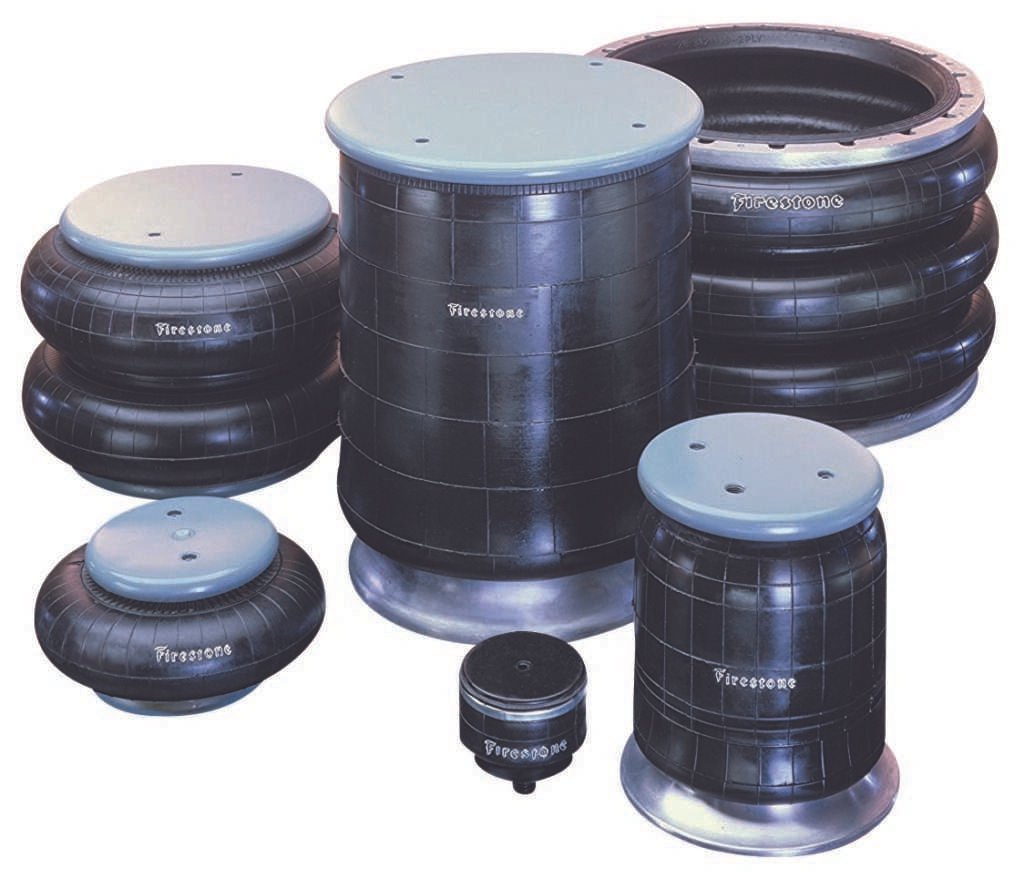
“Air spring actuators are well suited to a wide range of urban and rural solar actuation applications, and especially well-suited to rugged isolated conditions, such as mines and outback solar farms, or to rooftop applications, where users prize maintenance-free durability and long service life,” Lam said.
Published in 2025, in Science Direct, the study, titled Design and implementation of pneumatic actuators in a dual-axis solar tracker under the harsh climatic conditions of Karbala city, aimed to design pneumatic actuators needed to drive a closed-loop dual-axis solar tracker at the lowest costs, taking into account the maximum load under the worst climatic conditions in Karbala city, including wind speed and impact angles.
The approach relied on factors including inclination angle, actuator displacement, and required power to drive a closed-loop dual-axis solar tracker adapted to an arid desert climate, where summer temperatures peak at 45 degrees Celsius but frequently exceed 50 degrees Celsius.
The scientists explain in the study that two double-acting pneumatic cylinders were used in the tracking system as actuators to track the sun’s daily movements from east to west and seasonal movements from north to south. The inner piston diameter and cylinder stroke length are included in the design.
“Two valves and throttles were used to regulate the position of each pneumatic actuator to facilitate the movement of the cylinder. A rotating disk and chain on a slide converted the linear motion of one of the cylinders into rotational motion. The stability of the pneumatic system was also analysed by subjecting it to a PID-based closed-loop control,” they said.
The study reported three consecutive days were allocated to conduct experimental testing of the system.
“According to the findings, the average efficiency of the solar panel was raised by 62.3 % when it was moved on one axis using a single actuator and by 66.4 % when it was moved on two axes using two actuators,” the study said.
“A stability investigation of the pneumatic cylinder movement under PID control unit revealed that the system reacts satisfactorily, with steady-state error of 0.00734 %, overshoot of 0.505 %, settling time of 1.034 s, and rising time of 145.76 ms.”
Lam added that air spring actuators are designed to stroke through an arc without needing a mechanical clevis, allowing for an angular motion of up to 30 degrees.
“This is particularly useful in applications where movement is not perfectly linear, reducing complexity and wear points,” a company statement said.
Lam said the initial cost of air spring actuation can be half that of conventional pneumatic or hydraulic cylinders with similar force capabilities, and they are far simpler too than electric actuation and highly tolerant of adverse operational conditions.
“Naturally no single technology is universally ideal for all applications, but air springs have so much to recommend them for urban and rural solar that they certainly merit the engineering attention they are receiving as Australia advances into the solar era.”
The post Solar tracker pneumatic actuator design study improves efficiency up to 66.4% appeared first on pv magazine Global.


