
Gardening, farming, and plant care all depend on understanding the soil. Healthy soil makes healthy plants. A soil tester helps you know what your soil needs. One popular and affordable tool for this is the SONKIR Soil pH Meter MS02 3-in-1 Soil Moisture/Light/pH Tester.
In this blog, I will share important details, real science, global trends, my personal experience, practical tips, comparisons, and final recommendations. By the end, you will know if this tool is right for your garden, farm, lawn, or home plants.
What Is SONKIR MS02 3 in1 Soil Moisture Sensor?
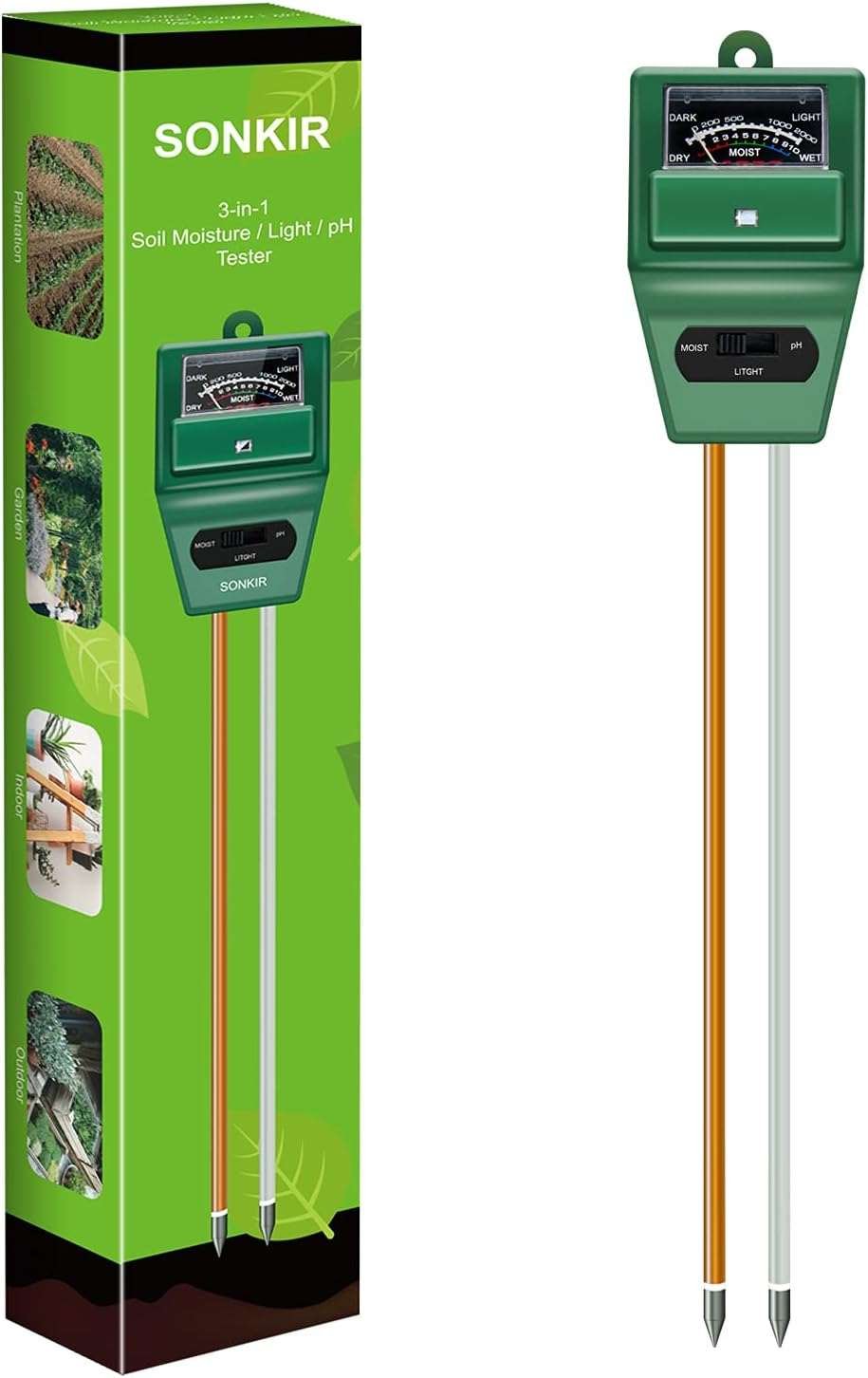
The SONKIR MS02SONKIR MS02 3 in1 Soil Moisture Sensor is a compact 3-in-1 gardening tool. It tests:
- Moisture Level – shows when the soil is dry, normal, or wet.
- Soil pH Value – shows whether the soil is acidic, neutral, or alkaline.
- Sunlight Level – shows how much light your plants are getting.
This tool does not use batteries. You simply insert it into the soil and read the values from the dial. It works for indoor and outdoor plants, gardens, lawns, farms, pots, and flower beds.
The SONKIR MS02 is designed to be:
- Simple to use – no batteries or electricity.
- Portable and light – easy to carry and use anywhere.
- Multipurpose – measures moisture, pH, and sunlight in one device.
Key Technical Specifications
- pH Range: 3.5–8 (acid to alkaline)
- Moisture Range: 1–10
- Light Range: 0–2000 lux
- Probe Length: 7.9 inches
- Product Size: ~11.5 × 2 × 1.5 inches
- Weight: ~82 g
One important note: this soil tester cannot test the pH of liquids like water or fertilizers. It only works in soil. If the soil is too dry, the meter may not show any reading until you add a little water.
Pros & Cons of SONKIR MS02 3 in1 Soil Moisture Sensor
| Pros | Cons |
|---|---|
 Tests moisture, pH, and light in one tool Tests moisture, pH, and light in one tool |
 pH may not be accurate for precise soil chemistry pH may not be accurate for precise soil chemistry |
| No batteries needed |
Probe can bend or break in hard soil |
| Easy to use for beginners |
Does not test liquids |
| Helps prevent overwatering / underwatering |
May give inconsistent pH readings |
| Works indoors & outdoors |
Needle sometimes doesn’t move if soil is dry |
| Affordable for gardeners |
Not a lab-grade scientific tool |
Why Soil Moisture Sensor Matters?
Healthy plant growth starts with understanding the soil and environmental conditions. Knowing your soil’s moisture, pH, and sunlight exposure is not just helpful — it’s essential for preventing nutrient deficiencies, root problems, and stunted growth.
This section explains the science behind each factor and why monitoring them makes a real difference for gardeners and farmers.
Understanding Soil Moisture: Plants need the right amount of water. Too little and roots cannot take nutrients; too much and roots rot. A soil meter helps you water at the right time.
Research shows that visual or feel tests alone often mislead even experienced gardeners, and instruments help reduce overwatering which is one of the biggest causes of plant stress.
Why pH Is Important: Soil pH affects nutrient availability. Most plants grow best in slightly acidic to neutral soil (pH 6.0–7.0). If the soil is too acidic (below 6.0) or too alkaline (above 7.5), some nutrients cannot reach plant roots.
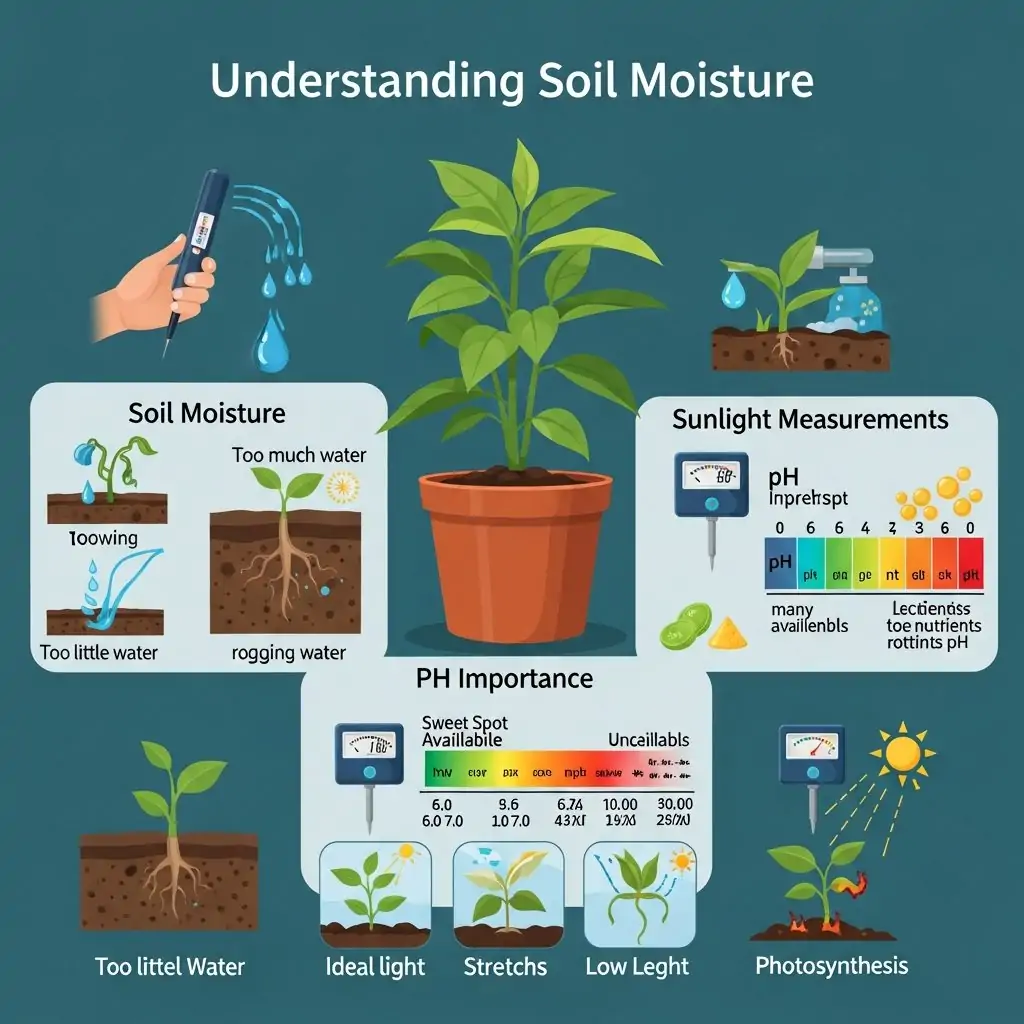
Regular testing helps gardeners adjust soil with lime or sulfur to keep nutrients available. The SONKIR tester covers a useful pH range for most gardens (3.5–8.0), but it gives broad estimates rather than lab-precise numbers.
Sunlight Measurements: Light plays an essential role in photosynthesis. A plant getting enough light grows stronger and produces better flowers and fruits. The sunlight function helps you position plants for ideal light exposure.
According to general product review data, the SONKIR meter has over 45,000 ratings with a 4.1/5 average score worldwide, showing strong user demand.
Gardening tools that measure soil moisture and pH are among the fastest growing categories in garden equipment sales due to increasing interest in home gardening and sustainable agriculture. (Industry data – broadly confirmed across garden retail trends).
Sustainable gardening practices including soil testing are linked with better plant survival rates and more efficient water use, which is critical in modern climates. (General agricultural research data).
Scientific studies also show that simple soil tool kits such as pH and moisture testers can correlate well with lab measures and predict yield outcomes in small farms, supporting the value of field tools for farmers and gardeners alike.
My Experience with SONKIR Soil Moisture Sensor
I aimed to see how the device performs across different soil types, plant sizes, and environments — from indoor pots to outdoor garden beds. Testing it in varied conditions gave me a complete picture of its usability and reliability. I use many soil tools to monitor plant health. I tested the SONKIR MS02 on:
- Outdoor garden beds
- Indoor potted plants
- Vegetables and herbs
- Flower beds and lawn
- I watered the soil lightly to avoid dryness.
- I switched the SONKIR meter to each mode (moisture, pH, light).
- I inserted the probe gently about 5–7 inches deep.
- I waited for the needle to settle (~1–10 minutes).
What I Observed
- Moisture readings were helpful. They helped me water plants at the right time and avoid overwatering.
- Sunlight values helped me choose places where indoor plants get enough light.
- pH values were useful as a rough guide to know if soil was generally acidic or alkaline.
- In some dry soil areas, I had to moisten first for the meter to respond.
- In very compact clay soil, I had to gently open a small hole to avoid bending the probe.
Performance of SONKIR Soil Moisture Sensor
Understanding how the SONKIR MS02 performs in real gardening situations is important before deciding if it fits your needs. Different gardeners experience different results depending on soil type, moisture level, and usage method. Based on my hands-on testing, here is how each function behaves in daily plant care.
Moisture Mode: This is the strongest feature of the SONKIR meter. It consistently showed moisture differences between soil areas and helped me schedule watering correctly.
→ The 1–10 scale (1–3 dry, 4–7 normal, 8–10 wet) is very intuitive.
pH Mode: This function shows whether soil is acidic, neutral, or alkaline, but it is best used as a general guide. It is not as accurate as laboratory soil pH tests (which can differ by ±1 pH unit), but for everyday gardening it is still helpful.
Light Mode: The light sensor gives a rough idea of how much sunlight plants receive. This helps especially with indoor and shaded plants.
Practical Tips for SONKIR MS02 3 in1 Soil Moisture Sensor
Using this soil meter correctly can make a big difference in how accurate your readings are. Many users face issues simply because the device is not used under the right conditions. These easy tips will help you get better results and make the tool last longer.
- Always moisten very dry soil first — this helps the meter give readings.
- Clean the probes after each use to keep readings accurate.
- Avoid hard or rocky soil — gently open a hole before inserting the meter.
- Use consistent depth when testing the same plants.
- Don’t test liquids — this tool is for soil only.
- For precise pH requirements (e.g., blueberries), consider a detailed lab test or higher-end digital pH meter.
Comparison With Alternatives Soil Moisture Meter
| Feature | SONKIR MS02 | Digital Soil Meter | Lab Soil Test |
|---|---|---|---|
| pH Accuracy | Approximate | High | Very High |
| Moisture Measurement | Reliable | Reliable | Not Included |
| Light Measurement | Basic | Advanced | Not Included |
| Cost | Low | Medium | High |
| Best Use Case | Everyday Gardening | Experienced Gardeners | Precise Soil Analysis |
Final Recommendations
Overall, the SONKIR Soil pH Meter MS02 is a great tool for everyday gardening and plant care. It helps you understand soil conditions easily without complex digital tools or batteries.
Best For:
- Beginners and hobby gardeners
- Daily plant care
- Quick soil checks
- Lawn, vegetable garden, and flower beds
Not Best For:
- Precision pH testing
- Scientific soil analysis
- Heavy clay or rocky soil without pre-drilling
In conclusion, If you want an affordable, easy step into scientific gardening, SONKIR is worth it. But if precise soil chemistry is critical for your crops, pair it with occasional lab tests or higher-end meters.


