
Established populations of spotted lanternfly have been confirmed in southwestern Ontario.
WHY IT MATTERS
The invasive spotted lanternfly threatens Essex County’s vineyards and Ontario’s broader horticulture sector.
The Canadian Food Inspection Agency (CFIA) confirmed the first spotted lanternfly observation on Sept. 15, 2026.
After hundreds of confirmed observations in Essex County, the CFIA changed the lanternfly’s Ontario classification in Ontario to “established” on Oct. 13 and is no longer recording individual pest reports. Instead, government officials, researchers and community members are focused on slowing the spotted lanternfly’s spread.
Establishment long anticipated
Native to southeastern Asia, the spotted lanternfly first established itself in Berks County, Penn., in September 2014, spreading across parts of the Northeast and Midwest, including Michigan, Ohio and New York. Quarantine attempts failed to stop its spread and regional grape and fruit growers have suffered significant losses, including damage to vines and trees, since its proliferation.
The lanternfly’s eventual establishment in Essex County, where wine and horticulture production are major industries, has been a concern for years. The CFIA previously published a response framework detailing methods to limit the pest’s introduction to Canada and subsequent spread.
With an established population declared in Ontario, the Agency’s response framework calls for enacting an area-specific regulations containment strategy.
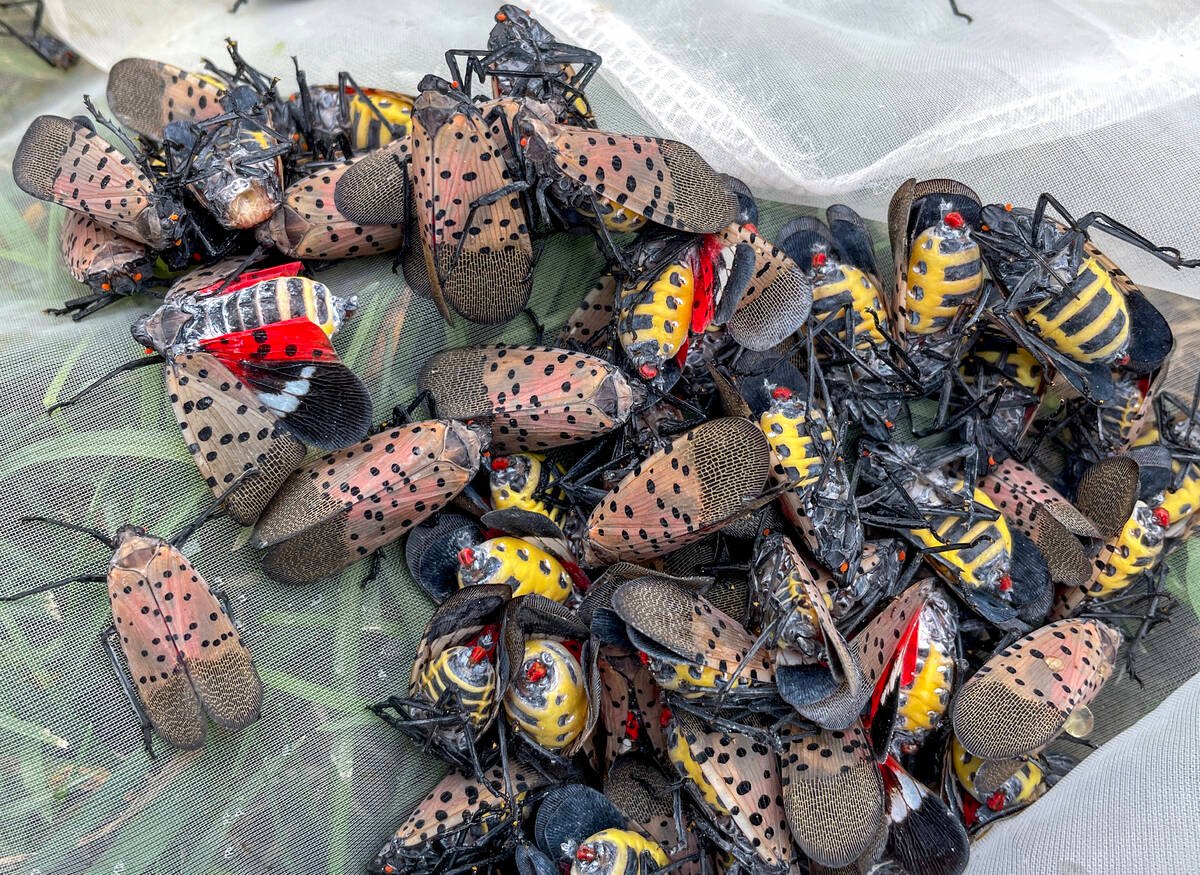
Emily Posteraro, program development coordinator for Canada’s Invasive Species Centre, says she witnessed the initial infestation in Windsor and was “not surprised at all” that the agency declared an established population.
“We found hundreds of spotted lanternflies,” says Posteraro, noting most were found on tree-of-heaven, a long-established invasive tree species in Canada and the lanternfly’s preferred plant host.
Community identification
The Invasive Species Centre distributed a pest alert, updated related resources, and provided media interviews to raise awareness about the spotted lanternfly, and continues to meet with researchers and industry stakeholders.
“If you know where to look, if you can find tree of heaven, chances are they’re on there,” she says.
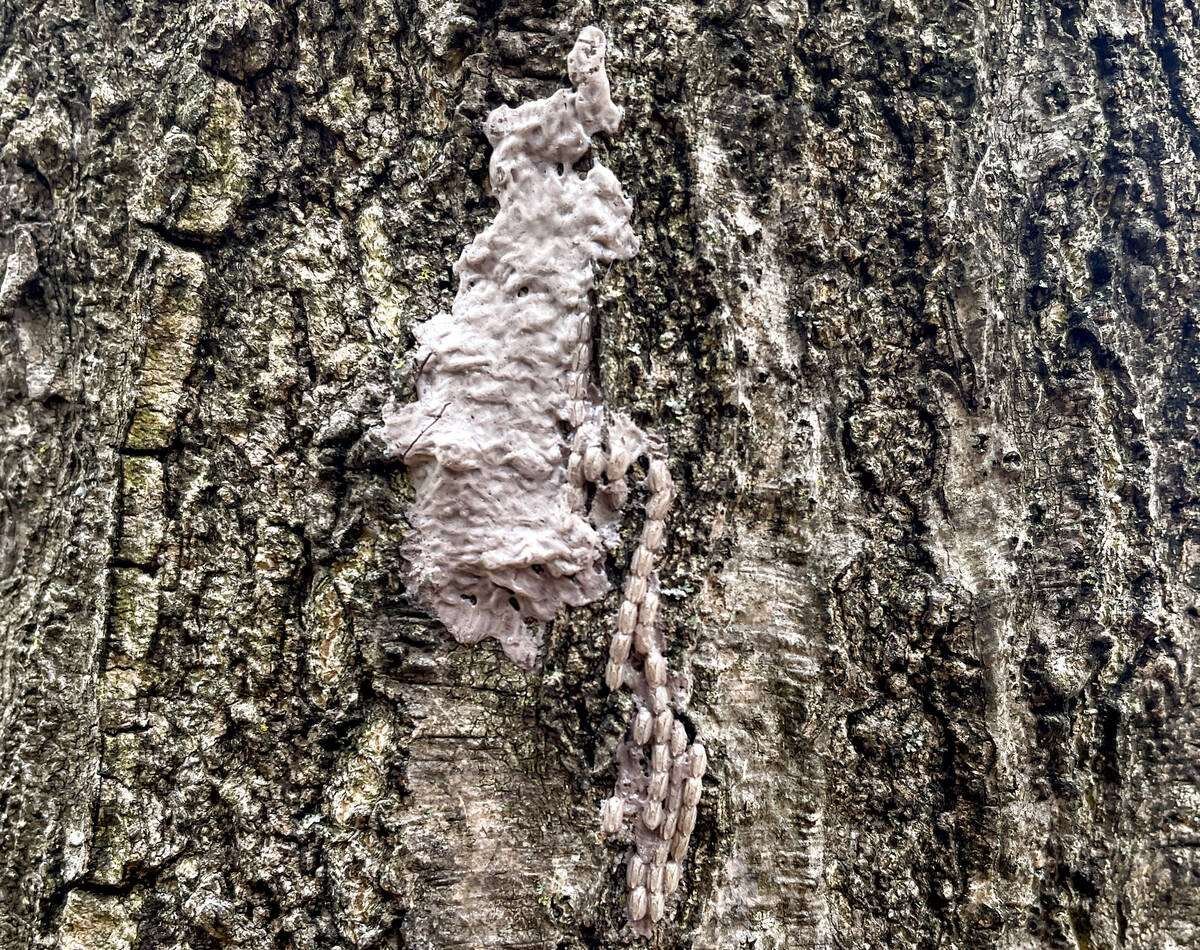
Lauren Des Marteaux, an Agriculture and Agri-Food Canada (AAFC), Harrow, entomologist and co-lead for the national biovigilance project targeting spotted lanternfly, says the first egg masses were identified in 2025.
The community’s additional identifications were made ahead of the 2026 Windsor sightings and sent to the Canadian Food Inspection Agency for confirmation. Agency staff must physically see lanternflies themselves before officially confirming cases; however, samples sent to the Ottawa headquarters did not count as documented sightings.
“What could have been done differently is (CFIA) could have deputized local experts. They have done that in the past. Why they didn’t this time is beyond me, because we’ve been having meetings about this for years,” says Des Marteaux.
“I really think they should do that with other provinces. Any entomologist down here could have told you it was lanternfly.”
Control efforts
Knowing lanternfly would inevitably establish in Ontario and other provinces, Des Marteaux says the federal government’s approach to population spread is proactive, with 2026 marking the biovigilance project’s third year. One tactic includes AAFC London-based research on a fungus that, after being inoculated in host trees, can kill lanternflies.
Others are working on controlling the invasive tree-of-heaven with eriophyid mites — although Des Marteaux notes lanternfly can feed on many other plants, such as black walnut — and the United States is working towards approving the release of a predatory native wasp.
“If they release (the wasp) in the United States, it’s going to get here anyway … In a way it’s great. It’s free bio-control. They’ve spent years to get it approved, and we just got lanternfly here recently.”
Posteraro and Des Marteaux say some registered chemical control options exist.
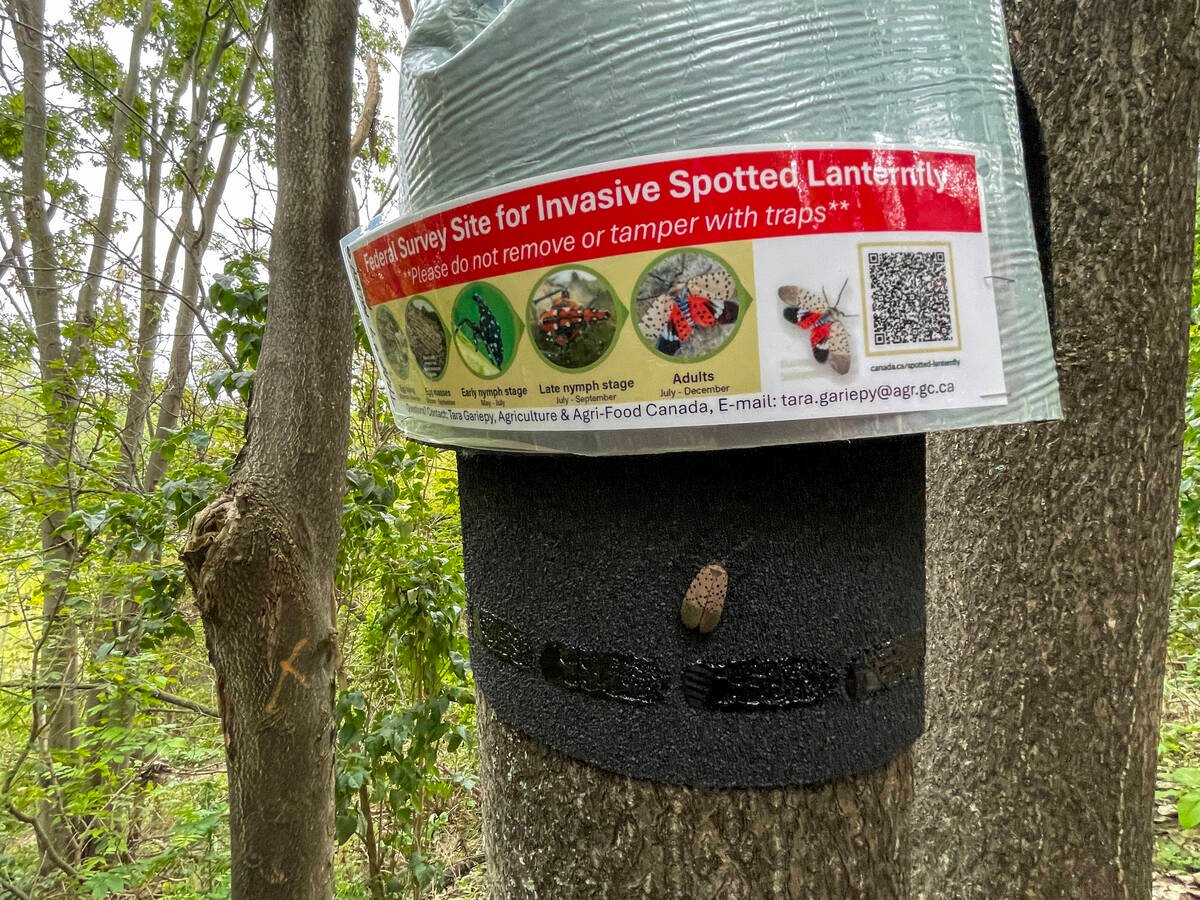
For Des Marteaux, specifically, lampshade traps have been very important in collecting and removing egg masses, as well as cross-border collaboration with colleagues at Pennsylvania State University, Ohio State University, the United States Department of Agriculture, and other institutions, to ensure Canada is not “reinventing the wheel.”
Public awareness
Crucially, she believes Canada’s lanternfly management strategy has, until now, been missing a targeted public-awareness campaign.
“The public is the most critical aspect for the identification of this pest. It’s easy to identify. In the United States, they have billboards about it. We could have been doing that … but no one has decided to put it up or pay for it,” Des Marteaux says.
She said a request to extend the lanternfly biovigilance project for an additional three years has been made, although no confirmation of the potential extension had been received as of October 2026.
“People shouldn’t necessarily be panicking yet. We are working on ways to suppress the population. Because to be clear, we will not eradicate it. From here, it’s all about population management and slowing spread in provinces where they don’t have it yet.”


