

Rapid growth in data centers, industrial production, and economy-wide electrification is straining power systems worldwide. At the same time, manufacturers of steel, cement, chemicals, and other materials remain largely dependent on fossil fuels to provide the high-temperature process heat they need.
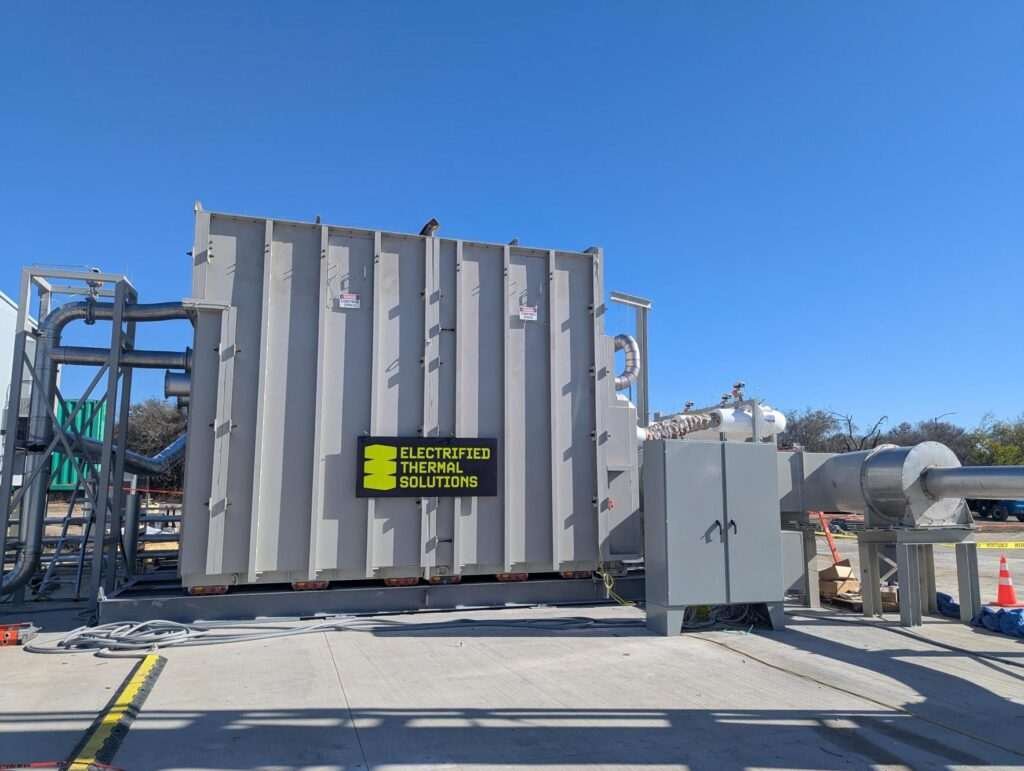
Electrified Thermal Solutions, a Boston-based startup, is developing a thermal storage system designed to electrify heavy industry while limiting strain on the grid. The company’s Joule Hive Thermal Battery (JHTB), also known as the E-brick, combines traditional firebricks with advanced firebricks that conduct electricity. The bricks serve three functions within the system: heating elements, thermal storage media, and heat exchangers.
The system allows high-temperature industrial facilities to store off-peak electricity as heat and, on demand, release that heat as hot air through channels in the bricks to furnaces, kilns, or boilers. Electrified Thermal Solutions says the E-brick is compatible with electrical supplies ranging from 480 V to 100 kV and can store heat at temperatures of up to 1,800 C. Output temperatures can be adjusted from 200 C to 1,800 C.
“We believe we are on track to deliver the lowest-cost, highest-value thermal battery on the market. For a thermal battery, the honest metric is the levelized cost of heat (LCOH), because our product is hot gas delivered to a furnace, displacing natural gas or other polluting fuels. And that cost is dominated by one variable: the price of the electricity you charge with,” Daniel Stack, CEO and co-founder of Electrified Thermal Solutions, told pv magazine.
“The Joule Hive converts and stores power as heat at greater than 98% efficiency, and the storage medium is essentially a brick. Hence, the capital adder on top of the electricity is small,” he added. “That means LCOH depends on three things: how cheaply you can buy power, the temperature and duration of the heat you deliver, and the size of the system, since larger installations store more energy per dollar of material. Today we can beat natural gas anywhere in the world where its delivered price is above €30 ($34.8)/MWh on a subsidy-free basis.”
“Every charge cycle of our first commercial-scale system is, in effect, a solar test,” Stack added. “It charges directly from the Texas grid, where solar and wind routinely set the price – including the negative-price hours we deliberately target. The bricks don’t care where the electrons come from: an AC grid connection, a co-located array, or both.”
Stack said thermal storage could be particularly valuable in markets with high levels of solar generation.
“In solar-heavy grids, where midday prices regularly go negative, a thermal battery is exactly the flexible load the system is begging for – it turns curtailed solar into useful energy,” he said. “For factories: pairing on-site PV with a Joule Hive lets a plant oversize its solar relative to its grid connection and convert the midday surplus into firm, 24/7 industrial heat.”
The company, founded in 2022, commissioned its first 20 MWh commercial system earlier this year at the Southwest Research Institute in San Antonio, Texas. To date, Electrified Thermal Solutions has raised $24.3 million across six funding rounds.
The post Storing renewables with firebrick thermal batteries appeared first on pv magazine Global.


