
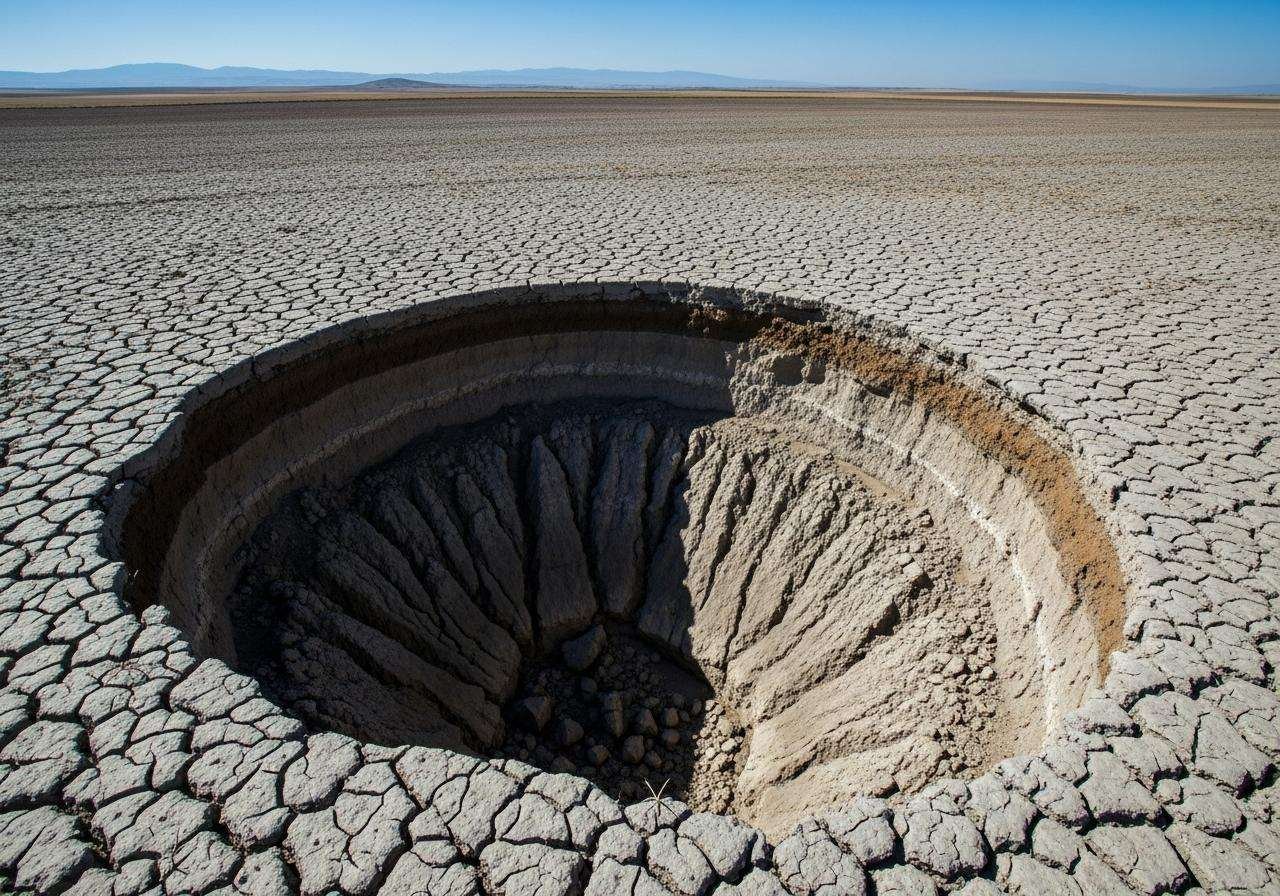
Sinkholes Devouring Farmlands in Turkey: A Growing Threat Beneath the Soil
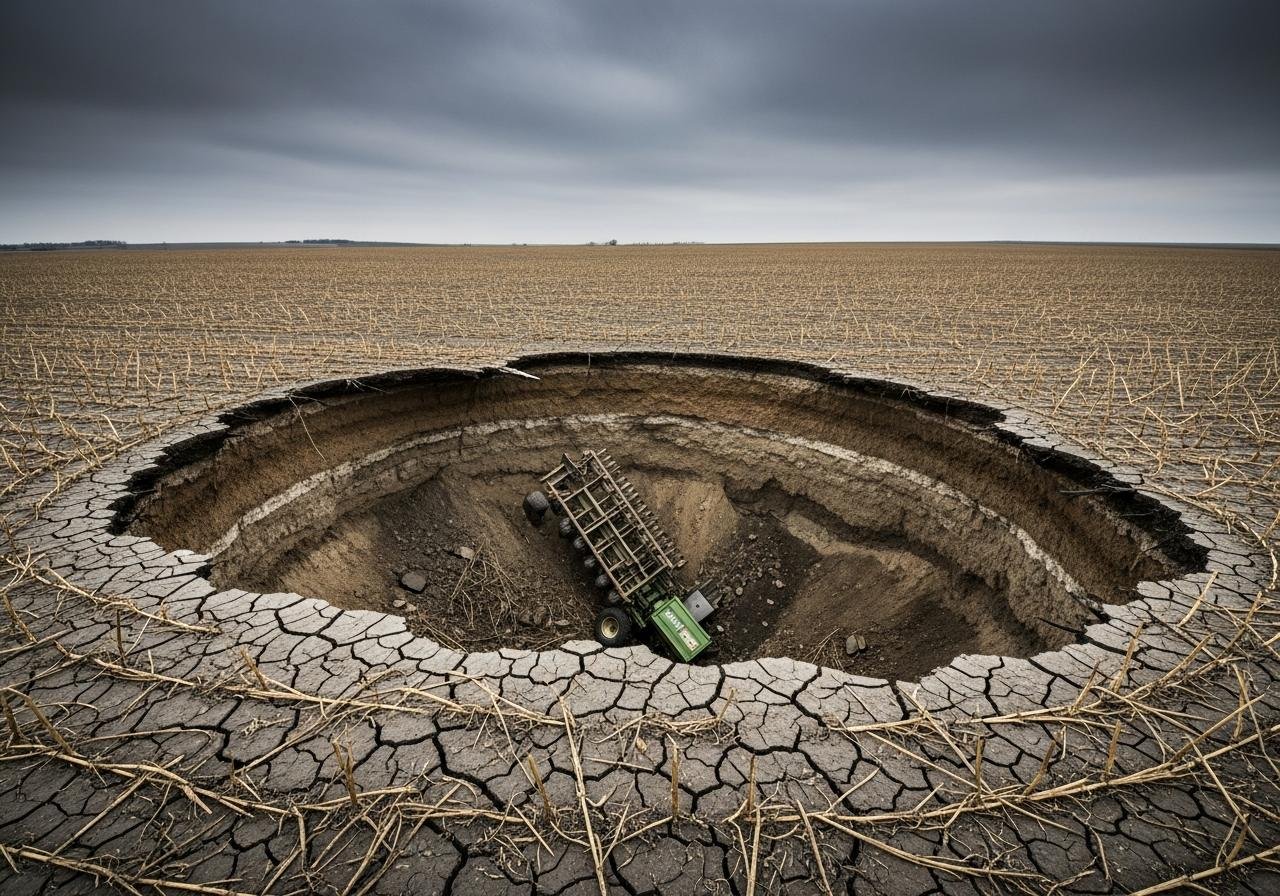
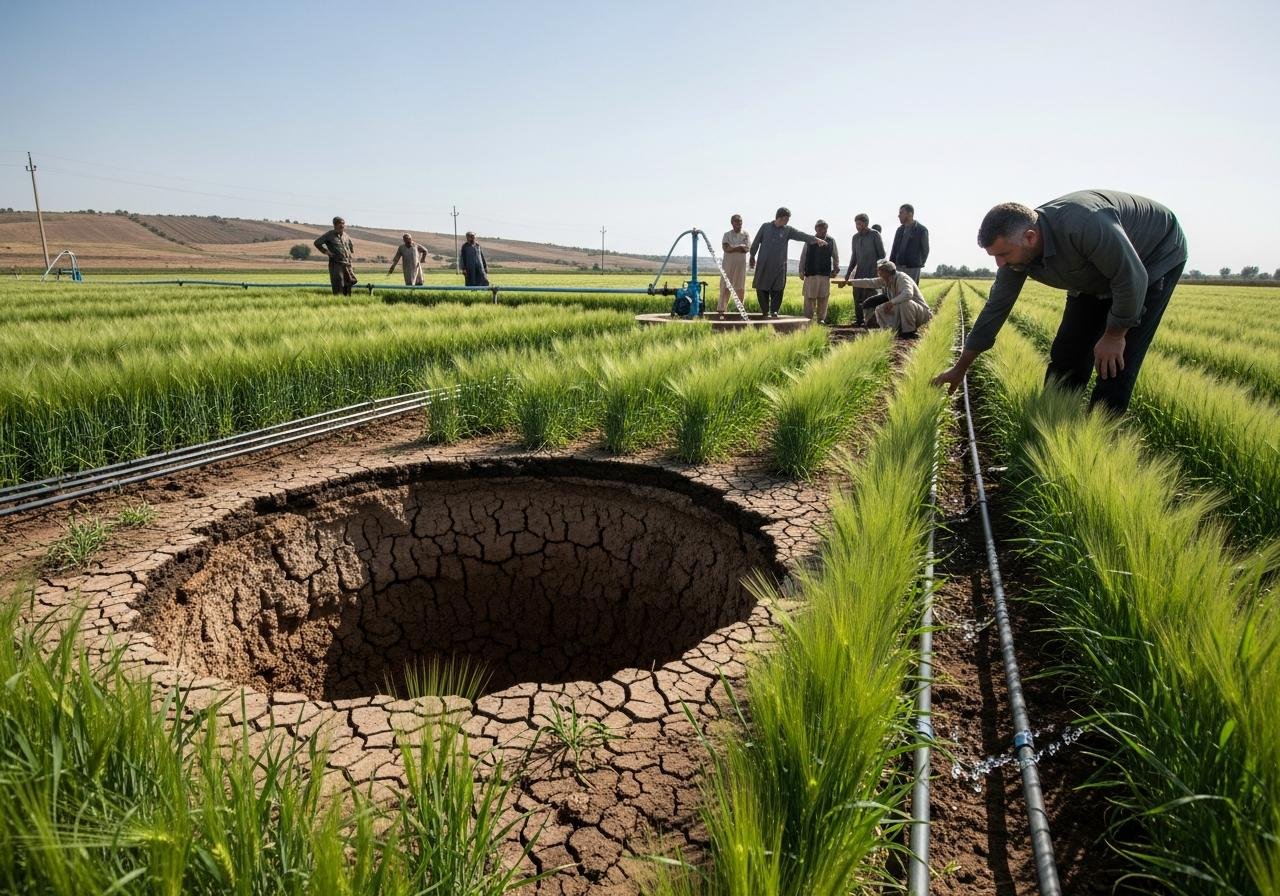
On a quiet morning in central Turkey, farmer Mehmet Yilmaz watched the earth open before his eyes. One moment he was checking his wheat field; the next, a deep crater large enough to swallow a tractor had appeared where his crops once stood. He says he now walks his land with careful steps, half-expecting the ground to vanish beneath him again. For many Turkish farmers, this isn’t a rare nightmare but an unsettling new normal.
Introduction to Sinkholes in Turkey
Sinkholes sudden collapses of land caused by underground voids have long existed in Turkey’s geological history. But over the past decade, their frequency and size have dramatically increased, especially in the Konya Plain, a vast agricultural basin often called the country’s “breadbasket.” This region is responsible for a significant portion of Turkey’s grain and sugar beet production, making its stability vital to national food security. Similar to issues seen globally, like the challenges faced by waste management sectors, these environmental issues call for urgent action.
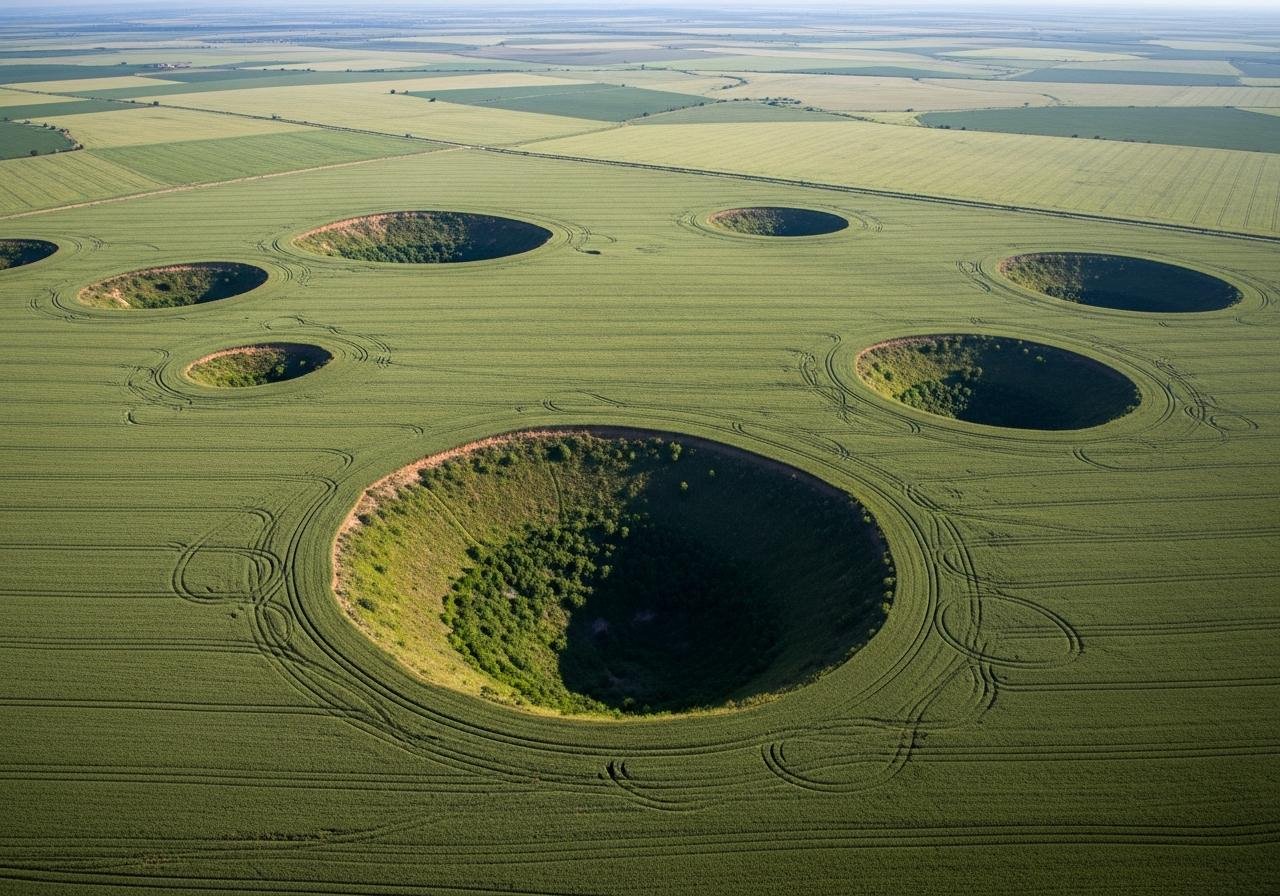
Historically, sinkholes appeared sporadically in certain limestone-rich areas, often small enough to go unnoticed. Today, however, some reach depths of 30 meters or more. With hundreds recorded in recent years, the surge is alarming farmers, scientists, and policymakers alike.
Causes of Sinkholes in Agricultural Lands
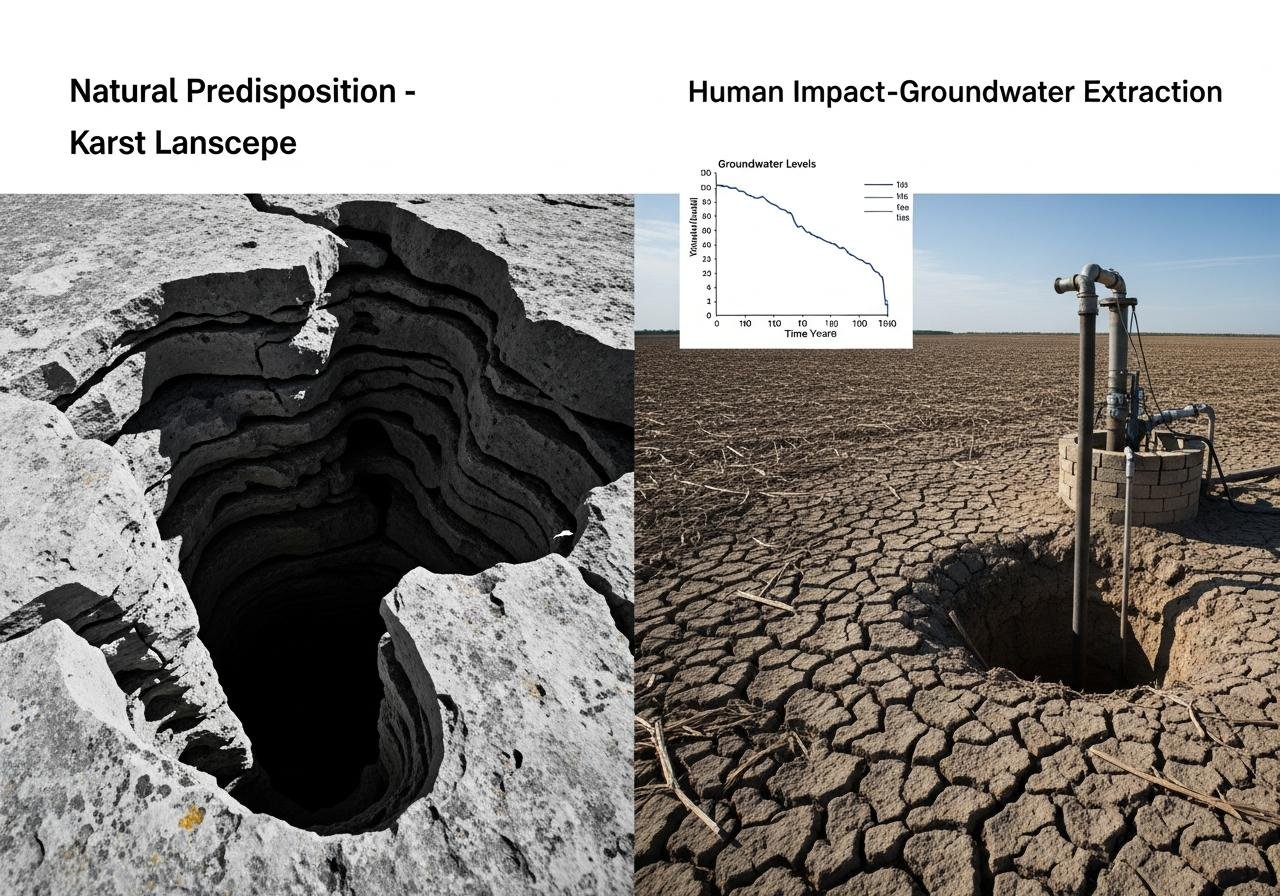
Turkey’s geology naturally predisposes parts of the country to sinkholes. Much of central Anatolia sits atop a karst landscape porous limestone and gypsum that gradually dissolves when in contact with water, forming underground cavities. Over time, these voids collapse, taking the surface down with them.
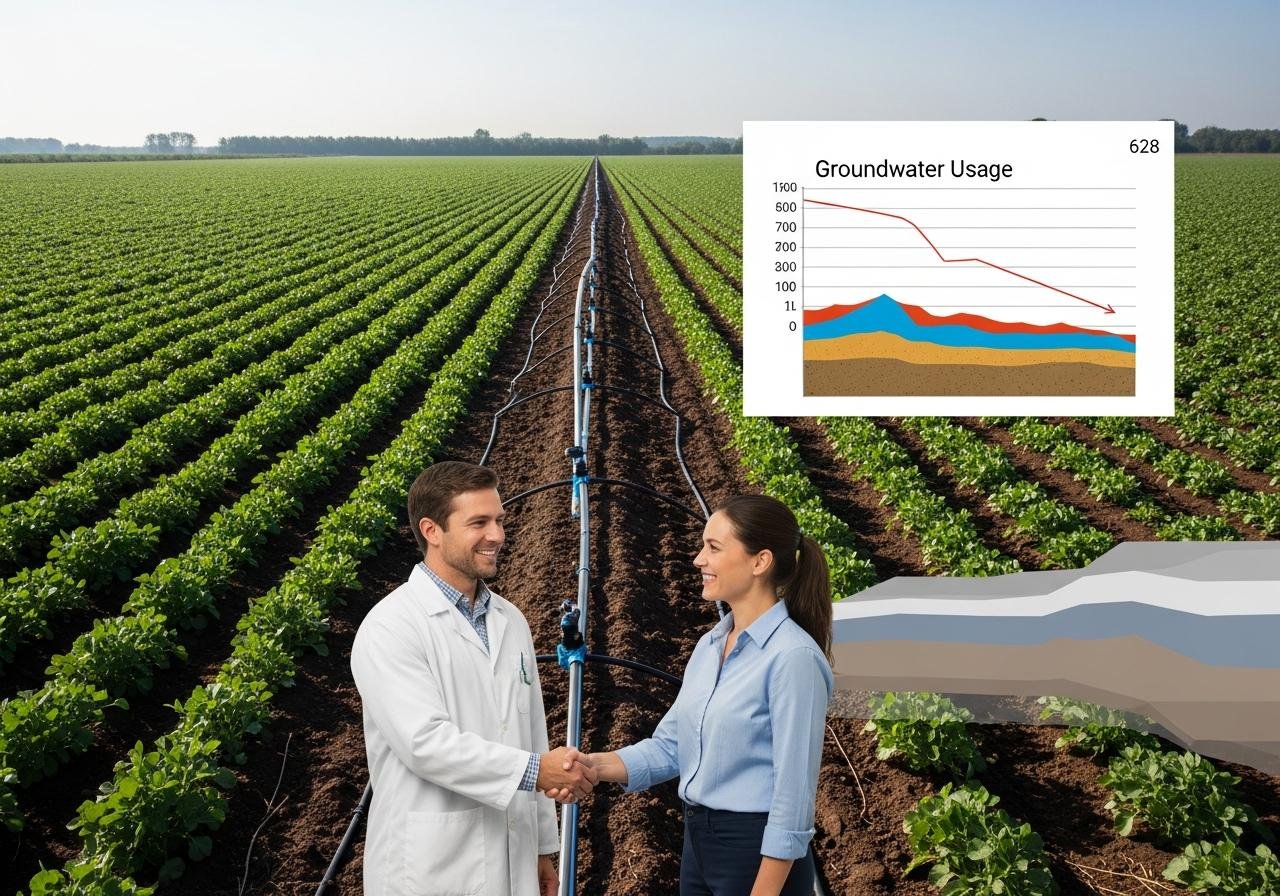
Yet natural processes alone can’t explain the current escalation. One major culprit, scientists say, is excessive groundwater extraction. Farmers, grappling with prolonged droughts, have turned to deep wells to irrigate their land. As water tables drop, the earth literally loses its underground support, setting the stage for collapse. This is akin to how excessive power demand challenges infrastructures, emphasizing the importance of sustainable practices.
Climate change adds a troubling dimension. Rising temperatures and erratic rainfall have intensified drought cycles, driving even more dependence on groundwater. It’s a chain reaction: drier weather leads to overpumping, which leads to weaker ground, which leads to sinkholes. Add mechanized farming and heavy irrigation, and the geological stress compounds even further.
Impact on Farmers and Agriculture
For the farmers of Konya and neighboring provinces, the consequences are both economic and emotional. A single sinkhole can destroy a year’s worth of crops, damage machinery, and render land unusable. Entire families have seen generations-old farms reduced to unsafe patches of earth surrounded by gaping holes.
Beyond lost income, there’s a pervasive sense of fear. Farmers describe checking their fields each morning with a mix of anxiety and resignation. Some report sleepless nights after hearing of nearby collapses. The uncertainty of not knowing where the next hole will open takes a quiet psychological toll, similar to the stress faced by industries navigating infrastructure investments in uncertain climates.
Financial recovery is also harder than it sounds. Traditional insurance rarely covers sinkhole damage, and government aid while available in limited cases rarely matches the losses. For many rural families, the ground beneath their livelihood has literally betrayed them.
Government and Community Responses
The Turkish government has begun mapping high-risk areas and regulating groundwater use, though enforcement remains uneven. Some proposals aim to cap the number of private wells and promote more sustainable irrigation methods. At the local level, municipalities have started awareness campaigns warning farmers about overpumping and unsafe land areas.
Yet challenges persist. Many farmers rely on old, unregistered wells because alternative water sources are scarce. While scientists urge stricter limits, farmers argue they can’t afford to cut back without better infrastructure or compensation. The result is a policy gap efforts are being made, but not fast enough to match the growing urgency.
Technological and Scientific Interventions
Researchers from Turkish universities are developing improved detection tools satellite imagery, drone-based mapping, and ground-penetrating radar to monitor early signs of sinkhole formation. These technologies can reveal subtle surface depressions before they collapse, offering a potential warning system for communities.
Other initiatives focus on groundwater management. Controlled irrigation, crop rotation, and water-efficient drip systems can reduce the need for deep wells. Some researchers are testing soil stabilization methods to reinforce vulnerable ground layers. Collaboration between geologists and agricultural engineers is beginning to reimagine how farming and geology can coexist more safely.
Case Studies of Affected Areas
In the village of Karapınar, one of the most affected regions, more than 2,500 sinkholes have been documented. Local families recall losing not only crops but also confidence in their land. Still, some communities have turned adversity into innovation installing rainwater harvesting systems and experimenting with crops that require less irrigation.
Globally, similar patterns appear in parts of Florida, China, and Mexico regions with karst terrains and intensive agriculture. The common thread is clear: without sustainable groundwater management, the earth eventually rebels. Yet, where preventive monitoring and efficient irrigation have been adopted, the number of collapses has noticeably dropped. Turkey’s farmers could benefit from similar cross-country learning.
The Future of Agriculture in Sinkhole-prone Areas
Looking ahead, scientists expect sinkhole activity to persist unless water extraction slows. But the picture isn’t entirely bleak. Farmers are beginning to adapt some shifting to less water-intensive crops like barley or pulses, others joining cooperatives to share water from collective wells.
Sustainable agriculture could be Turkey’s best defense. Smarter irrigation, stricter groundwater policies, and better farmer education might keep the land from collapsing literally and economically. Policymakers, too, have an opportunity to link sinkhole prevention with broader climate adaptation strategies, ensuring long-term food security for millions.
Conclusion and Call to Action
The growing maze of sinkholes across Turkey’s farmlands is more than a geological oddity it’s a warning about the fragile balance between people and the planet’s natural systems. Groundwater, invisible yet essential, has its limits. The farmers who live with that knowledge every day remind us how interconnected water, climate, and livelihood truly are.
Protecting Turkey’s farmlands will require cooperation: scientists studying, governments regulating, and farmers rethinking how to grow in harmony with the land beneath their feet. The goal isn’t to stop the earth from changing because it always will but to adapt with care, science, and just a bit of humility.
FAQs: Sinkholes Devouring Farmlands in Turkey
1. What is happening with sinkholes in Turkey?
In recent years, large sinkholes have been appearing across agricultural regions of Turkey, especially in central areas. These sudden ground collapses are damaging farmland, threatening homes, and creating fear among local communities.
2. Which region of Turkey is most affected?
The problem is particularly severe in the Konya Plain, one of Turkey’s most important farming areas. This region relies heavily on groundwater for irrigation, making it vulnerable to land subsidence and sinkhole formation.
3. What causes these sinkholes?
Sinkholes in Turkey are mainly caused by:
-
Excessive groundwater extraction for irrigation
-
Prolonged drought conditions
-
Climate change impacts
-
Natural geological formations such as limestone beneath the surface
When underground water levels drop significantly, empty spaces form beneath the ground, eventually collapsing.
4. Why are farmers living in constant fear?
Farmers worry because sinkholes can appear suddenly without warning. Some are dozens of meters wide and deep, capable of swallowing crops, machinery, and even buildings. The unpredictability makes daily farming activities risky.
5. How big are these sinkholes?
Some sinkholes in affected areas have reached over 30 meters (98 feet) in diameter and can be extremely deep, making them dangerous and costly to manage.
The post Surge in giant sinkholes threatens Turkey’s farmers appeared first on Green.org.


