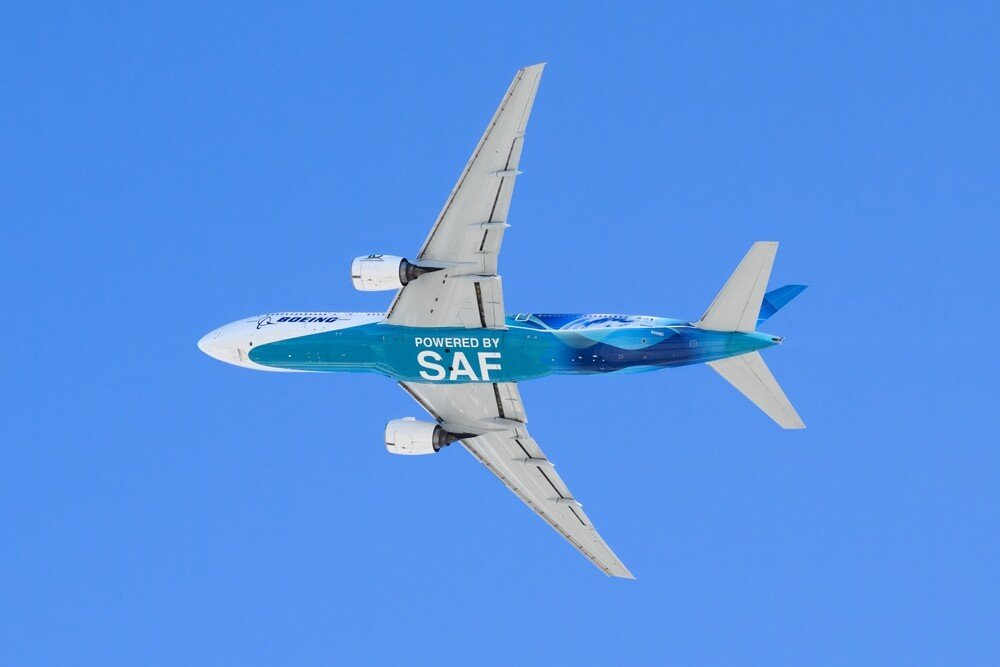
Thailand is moving toward a new chapter in sustainable aviation as the Department of Energy Business implements new standards for Sustainable Aviation Fuel (SAF). Since January 1, 2026, blending SAF into jet fuel is mandatory, supporting the country’s efforts to promote greener air travel.
Under the regulations, Jet A-1 fuel specifications will be categorized into three types: conventional Jet A-1, fuel produced via co-hydroprocessing, and a blend of conventional Jet A-1 with pure SAF. The standards for SAF itself require feedstocks and production processes to meet ASTM D7566 norms, with current focus on HEFA (Hydroprocessed Esters and Fatty Acids) technology.
Sarawut Kaewtathip, Director-General of the department, emphasized that these regulations aim to ensure Thailand’s SAF aligns with international standards. He highlighted that the move supports the government’s long-term goals of achieving carbon neutrality and net-zero emissions. The initiative also aligns with the International Civil Aviation Organisation (ICAO)’s efforts to encourage airlines globally to adopt SAF.
Thailand already has active SAF projects. Bangchak Corporation is constructing a plant using HEFA technology with used cooking oil as feedstock, capable of producing one million liters daily. PTT Global Chemical is also producing SAF via co-processing HEFA technology, with an existing capacity of over 16,000 liters per day.
Sarawut noted that these regulations mark Thailand’s initial step toward SAF adoption, focusing on HEFA technology. He added that alternative methods, such as Alcohol-to-Jet technology, are still under development and not yet commercially available.
The post Thailand introduces mandatory SAF blending appeared first on World Bio Market Insights.