

The multi-award winning music icon sits down with Environment Journal to talk about his plans to plant 1 million coconut trees across his Philippine homeland, alongside 400 million intercropping species.
People often wear multiple hats. Few can claim the kind of collection Allan Pineda Lindo has accumulated over the course of his 51 years.
Born in Angeles City, Philippines, the man better known as Apl.de.ap split childhood days between school and helping out on his family’s subsistence farm. Emigrating to the US, by the late-1980s he’d formed Black Eyed Peas with close friend will.i.am, with the band going on to become one of the all-time top selling music acts on the planet, bagging six Grammy Awards, one MOBO, eight American Music trophies, and four Latin Billboard prizes to date.
Most recently, he has returned to his roots by launching a groundbreaking biodiversity project back in his homeland, which could transform the fortunes of local people and the landscape of the Philippines itself. Over five years, more than 170 million coconut trees and around 400 million intercropping species will be planted — coffee, cacao, moringa — in one of the world’s biggest re-greening efforts. Work is also underway to bolster supply chains and infrastructure for growers, and help them maximise revenue by extracting and then selling coconut water, which has historically been discarded, while turning the waste husk into biochar that can return lost nutrients to degraded soil. Environment Journal finds out more.
You grew up in the Philippines. Can you give us an idea of where you lived, and the kind of landscapes you remember from that time?
I grew up in Sapang Bato, Angeles, Pampanga. This is a city about two hours outside of Manila, but it used to take a lot longer before the highway. This town was just outside Clark Air Base, where the Americans were stationed. I grew up farming, helping my grandfather tend to the water buffalo. There were mango trees and a horizon of rice fields. We live beside Mt Pinatubo. I emigrated to the US two years before its eruption.
You have been named the official Ambassador for Coconuts in the Philippines. What responsibilities come with the role?
It’s mostly a figurative one. I’m here to promote the Philippines’ coconut industry. We are the largest exporter of coconut in the world, and nationally we are advancing our manufacturing capabilities to almost be the most advanced coconut industry in the world.
There’s still a lot of work to be done. Currently the country faces an issue of aging trees with limited yields. We also have to do a better job at having more accurate data on our coconut farms so that we can make more predictable investments.
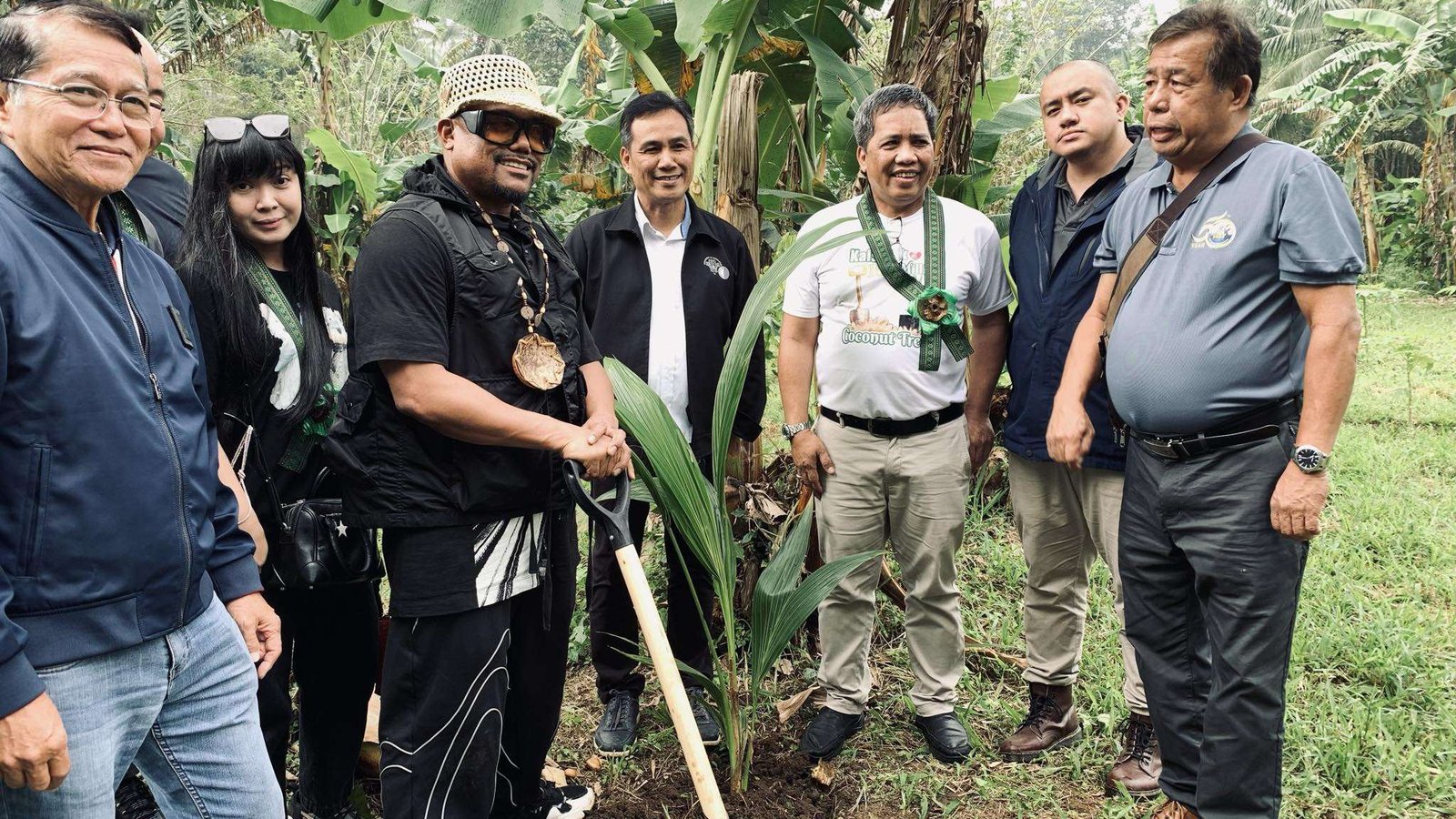
Before starting the 100 million coconut trees project, how long did you spend travelling across the Philippines to understand the challenges facing farmers? Which regions did you visit?
I’ve been travelling around the Philippines ever since I started coming back home, around 2005. Specifically looking at the agriculture industry. We started in late 2022, when the pandemic began easing. My team and I began to shift our focus during the pandemic when we started to understand how fragile food security was in the country.
I’ve been across the country — Cagayan Valley, South Palawan, Quezon City, Quezon Province, Batangas, Cebu, and Mindanao — trying to understand the issues facing farmers. Not just coconut, but all the people who keep us fed. A lot of talk about climate, and soil health, and looming debts from middle men impacting food supply chains.
How much work is needed to help farmers understand the high levels of waste being produced by focusing on coconut flesh, while discarding water and empty husks? How easy is it to change this behaviour?
People have an understanding of the other values that derive from a coconut — it’s called the tree of life. The problem is the ability to process the other aspects such as the water, the husk, the shell. We visit some coconut consolidators, they’re the people who purchase the coconut that’s been discarded by a producer, and most times they burn the husks to clear space for more coconut.
That was what our team was trying to solve initially: how to create a capture site that can collect husks for biochar. We began to create sites but, honestly, this proved difficult to scale. We need to invest in processing every part of the coconut so that we can get maximum value for the farmers.
The plan is to plant 100 million coconut trees. Where is this up to right now and how many trees have been planted?
A couple of thousand. We’re still piloting our planting models. But it’s more than coconut. We’re creating food forests of intercropped, complimentary trees. But as the project has expanded we’ve started to consider how reforestation efforts are also needed and begun fine tuning the model. Then we scale.
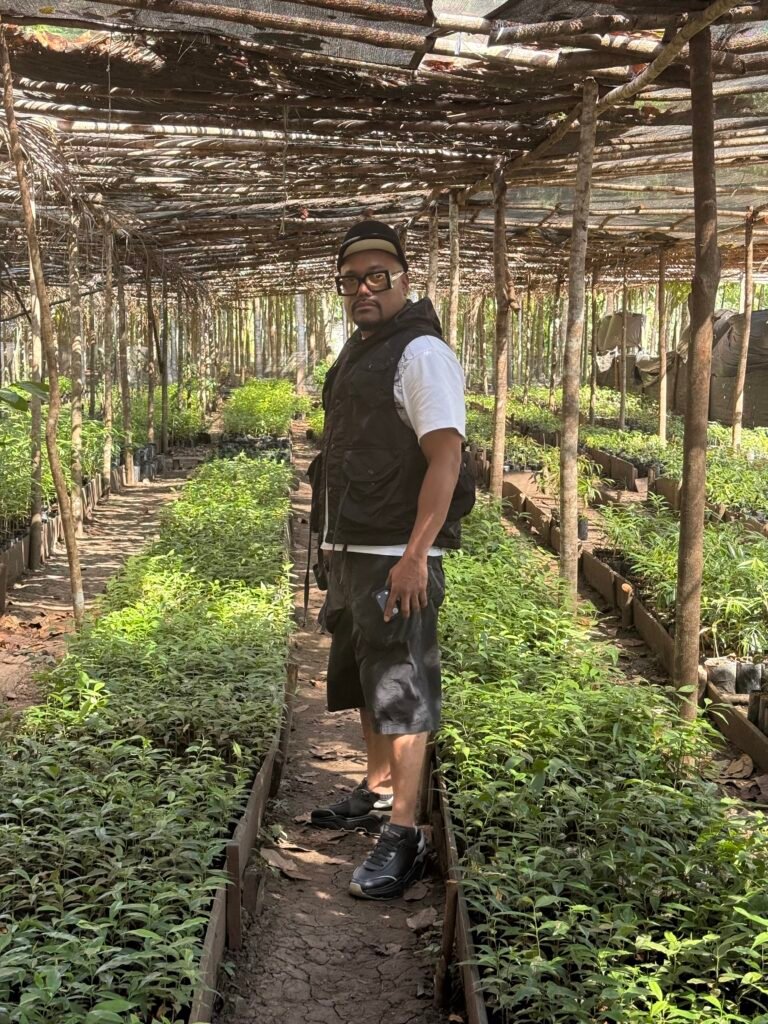
You aim to create a national cooperative of coconut farmers. How would this work in practice and why is this necessary?
There are already coconut cooperatives throughout the country. There are also organisations such as CONFED, the coconut farmer association. The problem again goes back to data, or lack thereof. But as we plant more trees it’s important to understand where they are, when they harvest, and how to maximise production from these trees. And the cooperative of farmers will be able to get more information on best practices, what market prices are, and how to participate in processing.
Are there any infrastructure or supply chain challenges that need to be overcome to increase coconut production in the Philippines?
We need to build the supply chain and infrastructure. The Philippines has always had challenges with supply chains because of its archipelago geography, but it’s not impossible. As we plant and have a better understanding of the harvests, we can make better strategic investments.
Biochar from coconuts has huge potential to revive nutrient-depleted soil. How is this side of the project developing? Is the BioChar only useful in places that grow coconuts, or could this be sold to other regions of the world?
All soil would stand to benefit from biochar. We continue to advocate and do grassroots, community-led biochar in Palawan. We plan to create more industrial-scale biochar facilities.
Skip forward 10 years, what would you hope to see in terms of the impacts of this work?
Farmers that feel financially secure. A younger median age for farmers in the country, wherein the next generation sees a future through farming and agriculture. More agri-entrepreneurs. Biofuel businesses from coconuts, water filters, and brands that derive from coconuts.
Is there anything more about this project that you feel needs to be understood, that we haven’t discussed?
It’s been touched on before, but I want to emphasise that our team isn’t only planting coconuts. We are creating intercropped food forests as we have always understood that we need to be planting diversely to help create a richer soil. This has always been something we’ve been concerned about. Also, the project continues to evolve. The more we listen, learn, and engage with local stakeholders, the more we learn about the issues that impact them and how we curate solutions to help support local issues. If anyone would like to learn more, please find us here.
More on biodiversity:
Beef and dairy responsible for 41% of farmland’s biodiversity damage
Solar farm delivers 41% boost to biodiversity, 12-year study finds
Ordnance Survey launches tool to boost biodiversity in housing


