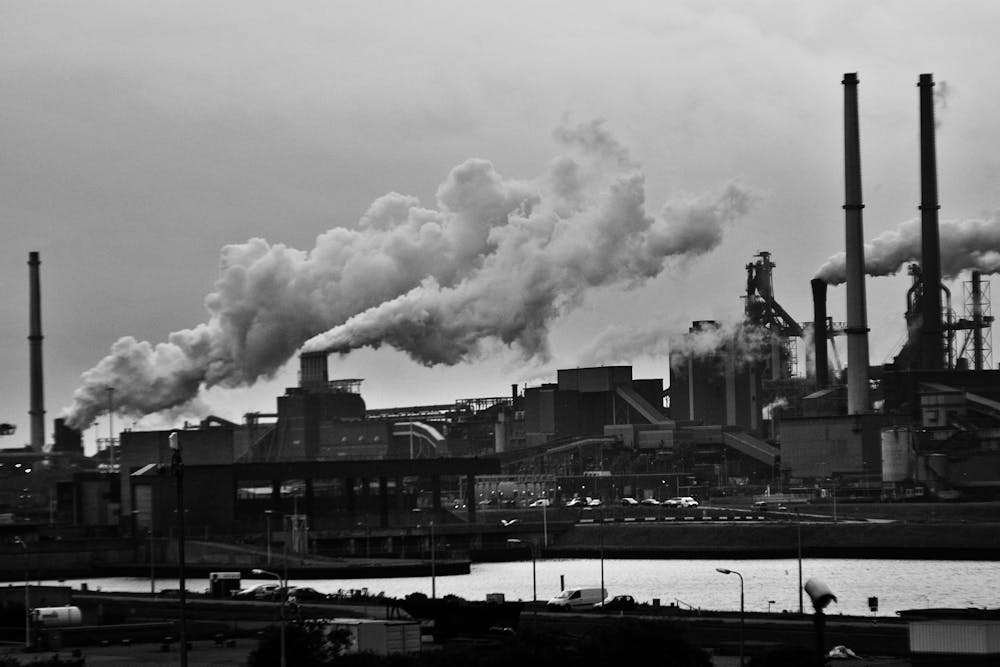
The global economy is currently at its most volatile since the start of the 2022 Russian war on Ukraine.
Oil broke $110 a barrel in less than two weeks after the US began bombing Iran in late February.
The economic shockwaves emanating from the Middle East conflict have shown how vital renewable supply chains are in a world wracked by geopolitical uncertainty.
Scaling biobased and circular supply chains enables countries to convert local biomass into strategic and economic value, easing dependence on fragile global supply chains.
By helping diversify the raw materials of global manufacturing away from oil, the circular bioeconomy can build buffers against global shocks, mitigating price rises that can cripple industries.
Here is how the circular bioeconomy supports economic resilience.
Petroleum skyrockets
Oil is everywhere in manufacturing. Everything from food to cosmetics uses it, meaning no sector is safe from inflation once petroleum prices rise.
We are seeing the volatile consequences of this fossil reliance play out in real time as the economy responds to the Middle East war.
Between the initial US bombardment of Iran on February 28 and March 9, oil prices rose 25%.
Petrol will not be the only thing that will be affected. Plastics are one of many oil-based commodities bracing for increased prices.
PET is one of the most common plastics, particularly in packaging. Futures prices for its dominant feedstocks, PTA and MEG, rose sharply after the conflict began – the direct result of oil price rises and carriers applying war-risk surcharges on cargo.
Further down the supply chain, plastic food-grade films, bottles, and closures are also facing higher costs and prices. These plastics are intricately embedded into the food system, serving as hygiene barriers and protective layers for goods in-transit. As a result, any spike will translate into higher consumer prices at the supermarket.
Aside from petroleum and its derivatives, natural gas is being squeezed too. Qatar suspended LNG exports after Iranian attacks on major facilities. Asia and Europe, both reliant on Qatari gas, are set to scramble for any remaining supply and bid up prices.
Even if Qatar restarted production now, it would take weeks or even months for normal volumes to reach the market again. All this means that fuel and chemical prices are set to increase in months to come.
The ripple effects of disrupted fossil supply extend far beyond fuel and plastics. It will also lead to rising food prices later this year. The reason for this is that synthetic fertiliser manufacturers depends on large amounts of natural gas. Prices for this vital commodity are surging as farmers around the world enter their March planting season.
A market in transition
With major fossil producers Iran, Saudi Arabia, and Qatar locked in conflict, global inflation across food, fuel, and manufactured goods are all but locked in.
Yet markets are never static. When prices rise, alternative industries step in, new producers increase market share, and substitute materials become economical.
This certainly applies to biobased producers, who may be about to gain both strategic importance and economic viability.
The biobased ag-etch industry is one of those poised to benefit from oil supply disruptions.
As farmers globally enter the spring crop planting season, locally-produced biobased inputs can provide some buffer for those unable to access oil-based inputs.
Biobased agricultural inputs could offer a more reliable flow of supply over the months to come, at least in certain farming regions. They could also become more price competitive with petrochemical versions if synthetic chemicals remain elevated.
More importantly for the bioeconomy, the current disruption should spur biobased producers to invest in capacity. Already, companies like Pivot Bio have announced a ramp-up to deliver biobased plant feed to US farmers about to be hit by high fertiliser prices.
If this capacity expansion is replicated across the industry, renewable products could become more
price competitive with petrochemical inputs longer-term.
Biobased resilience
This power of the bioeconomy to bolster economic security chimes with the policy mantra of the moment: resilience.
Resilience is the ability to cope with changing environments. In the context of the economy, it is the ability of a country to access or manufacture goods or materials, regardless of disruptions to conventional supply chains.
Since the pandemic, many governments have spotlighted economic resilience. It permeates all areas of EU policy, particularly in energy and critical minerals, where the bloc has focused on reducing its import reliance on major producers or potential adversaries, like China.
Part of why the bioeconomy can buffer against shocks is that industrially useful biomass can be found everywhere in the world. This contrasts to oil, where economically exploitable reserves are concentrated in a few regions globally.
Generally, this means the key bottleneck for biobased scale-up is whether there is enough processing capacity – not whether you have the appropriate raw materials available domestically. Building up the bioeconomy therefore becomes a matter of policy and capacity investments rather than geology or geography.
One of the best examples of how a single biobased feedstock can embed resilience into the economy is lignin. Lignin, a chemical found in the bark of trees and woody shrubs, grows almost everywhere. Like petroleum, it is versatile. Fuels, materials, and chemicals can all be produced from this single feedstock.
Biobased challenges
However, biobased supply chains come with their own potential supply challenges. For example, many biomass feedstocks can be seasonal. This can mean shortfalls at times of year where there is no harvest. Climate change heightens this seasonal supply risks – extreme weather conditions and novel pests can disrupt growth and harvests.
One way to smooth over seasonal supply disruptions in biobased supply chains is to increase storage capacity for feedstock not currently being used. This is similar to the way battery storage infrastructure is needed to store up solar and wind energy for deployment.
Large storage facilities that preserve feedstock quality can enable biorefineries to operate year round, regardless of seasonal supply flux.
Another way to overcome biomass seasonality is to use biobased feedstock that is available year round. One of these is algae – an emerging feedstock that produces plastics and biochemicals with a much smaller carbon and resource footprint compared to fossil materials or land-based crops.
Lignin is another potential source of large-scale, reliable biomass. This plant-based chemical is easy to source in all seasons. Like petroleum, it can be processed into a vast number of industrial and consumer chemical ingredients.
Yet lignin highlights another challenge that comes with scaling the bioeconomy. It is an abundant chemical but can be uneven in quality. Its composition and molecular architecture depend strongly on plant species, its developmental stage, and environmental conditions. This is problematic for industry, which must be able to turn diverse inputs into consistent products.
Addressing these technical challenges requires advances in plant biology, chemistry, and engineering. Advances are also needed to improve extraction and fractionation strategies, and the development of efficient routes that turn the basic substance into fuel and chemicals.
Scale-up possible with policy
For many countries, these technical questions have gained in strategic imperative since at least the pandemic. The current economic fallout from the war on Iran only confirms the sense that industry must reach beyond petroleum to insulate against price shocks.
Capacity in recycling, circular biomass, and biorefineries can support economic resilience in a changing world. Yet for biomanufacturing and biobased supply chains to meaningfully secure manufacturing industries from price shocks and volatility, it would have to scale dramatically.
Rapid biobased scale-up is not impossible with concerted government policy. China shows it can be done. There, industrial subsidies drove it to overtake European, US, and East Asian rivals in just over a decade for batteries, EVs, chemicals, and robotics.
The biggest lesson for the bioeconomy is that China came to dominate advanced supply chains by investing heavily in the midstream, or processing. In the bioeconomy, these would be the biorefineries that convert raw biomass into the basic building blocks of the chemical industries.
China also used policy to solve the chicken-and-egg problem inherent to scaling. The government incentivised consumers to buy EVs at the same time as subsidising the extraction and processing of battery raw materials. This type of policy ensures supply and demand grows in tandem – an issue that today’s biobased producers are grappling with.
The ability to convert local biomass into goods will become increasingly necessary as climate change and new geopolitical configurations erode old certainties about trade and supply chains. European and other Asian countries could draw on China’s industrial playbook in building up their renewable supply chains and fulfilling the strategic potential of their bioeconomies.
The post The bioeconomy in a world at war appeared first on World Bio Market Insights.