
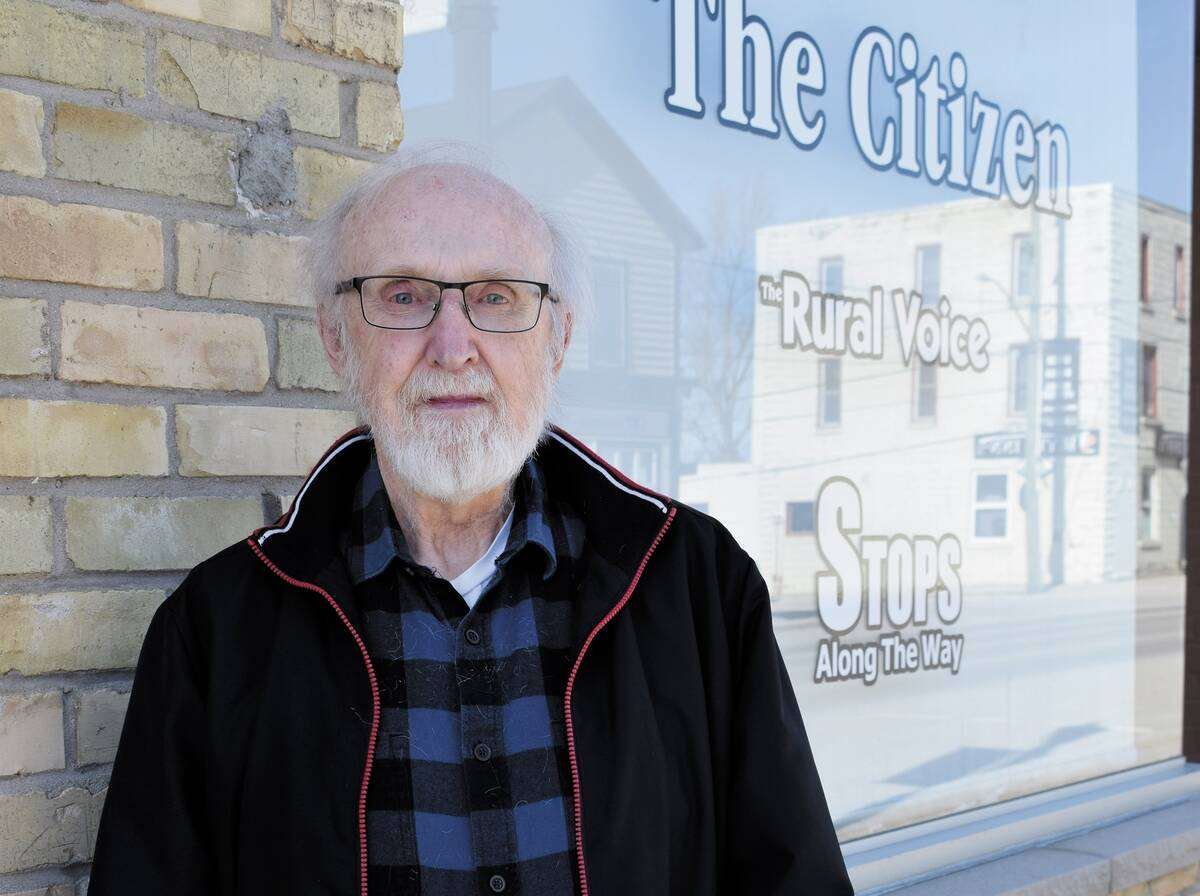
Every rural community needs a Keith Roulston. Unfortunately, there aren’t that many to go around.
Keith Roulston was a journalist, entrepreneur and a playwright. He was a driving force behind Blyth, a healthy, small rural community in Huron County, a model of small-town innovation and success.
Roulston embraced where he lived and reflected the realities of rural life to the people living in the area. That was the key to his success.
He was the founder of the Rural Voice, a farm publication, in the early 1970s that continues to publish today. He sold Rural Voice in 1979 to what eventually became the Signal-Star group based in Goderich. Roulston’s North Huron Publishing Company bought it back in 1991, an integral part of the company’s diversification.
He was given the inaugural Huron Federation of Agriculture award for outstanding contributions to agriculture in 1976.
Roulston’s largest contribution to Canadian (and especially Huron County) culture was founding the Blyth Festival Theatre with his friends, the playwrights and actors James Roy and Anne Chislett.
The Blyth Festival is a remarkable institution, especially for someone like me, steeped in the culture and agriculture of the counties along the Lake Huron shoreline. The theatre has produced more than 150 original Canadian plays, with most of them addressing rural and agricultural issues.
We have Keith Roulston to thank for that.
Many others helped along the way, but Roulston convinced his community that refurbishing an old, declining, local theatre was the right thing to do.
I’ve known Roulston since my university days, when I’d return home from journalism school to my family’s farm near Gorrie and look for summer jobs in my field.
I’d reach out to Roulston, but his was a small shop with little extra funds for summer workers. He was always encouraging, practical and realistic and I understood that’s how he ran things.
As the editor of a nearby newspaper in Wingham for a few years, and then farm publications, I continued to run into Roulston at community events.
He always had an interesting perspective on the latest issues affecting farmers and agriculture, one rooted in support for smaller farmers and their way of life. His opinions were tempered with suspicion of larger forces beyond farmers’ control that influenced their ability to do business.
Art, culture and indeed media are successful when they can reflect communities back to themselves. Not everyone can do that — especially in rural communities— but Keith Roulston sure could.


