
Basmati rice is one of the most famous aromatic rice varieties in the world. Globally, more than 7 million tonnes of Basmati rice are produced every year, with India and Pakistan being the largest producers.
The international demand for Basmati continues to grow, and in 2023–24, Basmati rice exports from India alone were valued at over USD 5 billion, while Pakistan earned more than USD 3 billion. The unique characteristics of Basmati rice, such as its long slender grain, aromatic fragrance, and post-cooking elongation, make it highly profitable for farmers.
With climate change and fluctuating input costs, the importance of using high-quality seeds has become more critical than ever to ensure productivity, profitability, and market competitiveness.
Basmati rice is known for its unique qualities such as aroma, elongated grain, and exceptional elongation post-cooking. High-quality seeds play a crucial role in determining the yield, grain quality, and profitability of the crop. The objective of this guide is to help farmers select and manage the best Basmati rice seeds for successful farming.
Selecting the Right Basmati Rice Seeds
Basmati rice seed selection is the foundation of a successful crop. Recent statistics show that using certified seeds can increase yields by 15–20% compared to farm-saved seeds.
With over 30 varieties of Basmati rice cultivated in South Asia, choosing the right one requires careful consideration of climate, soil, and water resources.
A. Understanding Varieties
Farmers can choose between traditional and modern hybrid varieties. Popular modern varieties include Pusa Basmati 1121, Pusa Basmati 1509, Pusa Basmati 1718, and Punjab Basmati 3.
These differ in crop duration, disease resistance, yield potential, and grain quality. Choosing the right variety depends on the farmer’s region, climate, and market demand.
B. Seed Quality Parameters
Good seed must meet essential standards such as physical purity, germination percentage above 80%, safe moisture content, and freedom from weed or other crop seeds. These qualities directly impact germination and final yield.

C. Certified Seeds vs. Farm-Saved Seeds
Certified seeds guarantee genetic purity, high germination, and freedom from seed-borne diseases. Farm-saved seeds, on the other hand, may suffer from genetic degradation and lower germination. If farmers choose to save seeds, they must do so carefully with proper drying, storage, and selection.
Seed Preparation and Treatment
Seed preparation is a critical step that can determine crop success. Studies suggest that seed treatment can reduce early-stage disease losses by up to 30%, which helps farmers achieve higher productivity.
A. Seed Testing
Farmers should test germination before sowing. A simple test can be done at home by sprouting a sample of seeds and checking germination percentage.
B. Seed Treatment Methods
Soaking and pre-germination improve uniform growth. Fungicide treatments protect against diseases like blast, while bio-fertilizer treatments with Azospirillum and Phosphobacteria improve root growth and nutrient uptake.
Sowing and Establishing the Crop
Proper sowing and establishment are essential for good yield. In South Asia, Basmati rice is usually grown during the Kharif season (June–October), and timely sowing ensures healthy crops. Research shows that correct sowing and transplanting practices can increase yields by 10–15%.
A. Nursery Bed Preparation
Farmers prepare raised, well-drained seedbeds. The recommended seed rate is 20–25 kg per hectare for Basmati. Proper nursery preparation ensures strong seedlings and reduces pest risks.
B. Transplantation
Seedlings are transplanted at 25–35 days old, with wider spacing to allow better air circulation and growth. Careful handling during transplanting reduces shock and helps seedlings establish quickly.
Crop Management for Seed Purity and Yield
Crop management is vital to achieving high yields and maintaining seed purity. Reports suggest that poor crop management can reduce productivity by up to 25%.
Roguing: Maintaining Genetic Purity: Farmers must remove off-type plants and weeds to maintain purity. This step is critical because contamination affects market quality and price.
Water Management: Basmati rice requires less water than coarse rice varieties. Good drainage is essential, as excess water can damage roots and affect aroma.
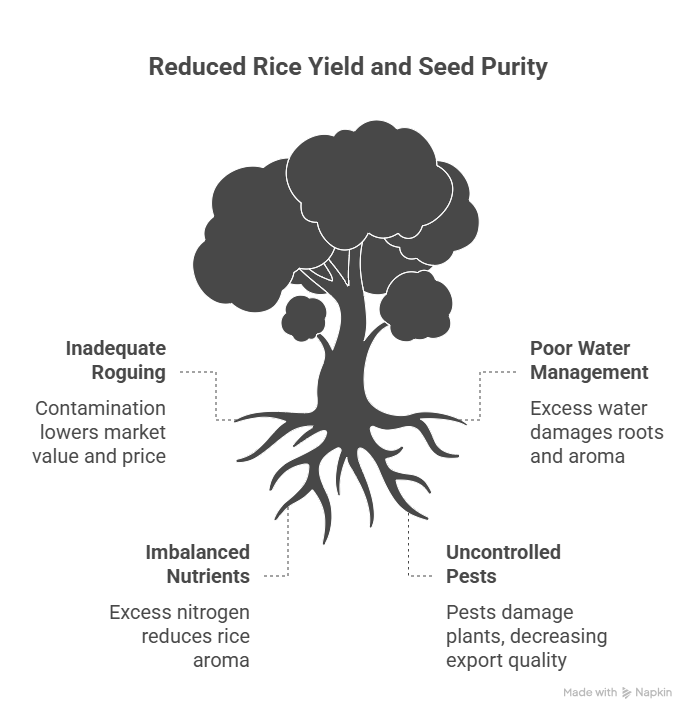
Nutrient Management: Balanced fertilizer application is crucial. Excess nitrogen reduces aroma, so farmers should apply it carefully. Micronutrients like zinc are also essential for healthy growth.
Integrated Pest Management (IPM): Common pests include stem borer, leaf folder, and blast disease. Farmers should use resistant varieties, biological control methods, and safe pesticide practices to reduce pest damage and maintain export quality.
Harvesting and Post-Harvest Handling of Seed
Harvesting at the right time is critical for maintaining seed quality. Studies show that harvesting too early or late can reduce yield by 10–15%.
Identifying Harvest Time: Seeds should be harvested when grain moisture is 20–25%. Timely harvesting prevents grain shattering and quality loss.
Threshing and Drying: Threshing should be done carefully to avoid seed damage. Seeds are dried to 12–13% moisture for safe storage.
Storage: Seeds must be stored in clean, airtight containers to maintain viability. Proper storage prevents pest infestation and ensures seeds remain healthy for the next season.
Economic and Sourcing Considerations
Seed costs are an important factor for farmers. In 2024, certified Basmati seed prices in South Asia ranged between USD 1.5–2.5 per kg depending on the variety. Using certified seeds ensures better profitability as yield and quality increase significantly.
Cost of Seeds: The investment in seeds may seem high, but the returns are greater due to better yields and export-quality produce.
Where to Source Quality Seeds: Farmers can source quality seeds from government agricultural departments, certified dealers, reputable seed companies, and Krishi Vigyan Kendras (KVKs).
Understanding Seed Certification Tags: Certification tags (blue, green, white) indicate the quality and class of seed. Farmers should check these tags to ensure authenticity.
Challenges and Solutions for Basmati Seed Farmers
Farmers face challenges such as climate change, erratic rainfall, and rising input costs. According to recent climate reports, changing temperature and rainfall patterns threaten rice production in South Asia. Ensuring access to certified seeds, maintaining genetic purity, and adopting new technologies are essential for overcoming these challenges.
Conclusion
Basmati rice farming depends heavily on seed quality. Investing in certified seeds and following proper management practices ensures high yields, better aroma, and stronger profitability. For farmers, quality seeds are the foundation of a successful and sustainable Basmati rice harvest.


