
The Five HVAC Energy Penalties of Duct Leakage | Insights from an ASHRAE Journal Paper
Duct leakage doesn’t cause just one type of energy waste. It creates several interacting energy penalties at the same time. While industry professionals widely recognize that duct leakage is an energy-waster, the full system-wide impact is often underestimated.
A paper in the October 2025 issue of ASHRAE Journal by Aeroseal’s Mahmood Farzaneh Gord, Ph.D., and Mark Modera, Ph.D., connects the physics of duct leakage to measurable energy savings and gives engineers a practical way to estimate those savings.
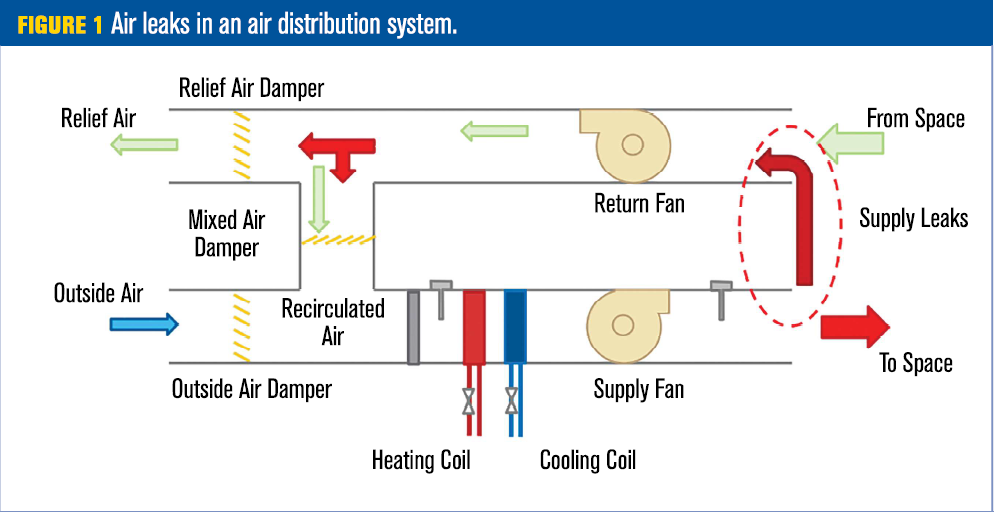
Duct leakage causes far more problems than simply losing airflow. It changes how several parts of an HVAC system operate. The paper identifies five key components where leakage drives additional energy use.
Five Ways Increases HVAC Energy Use
Fan Power
When ducts leak, HVAC fans must move more air to maintain required airflow at the zones. That additional airflow increases fan power and electricity use. Because fan power changes nonlinearly with airflow, relatively small increases in airflow can drive disproportionately larger increases in fan energy usage.
The analysis in the ASHRAE Journal paper shows how significant this effect can be. In some cases, a 20% reduction in airflow can reduce fan power by roughly 50%, highlighting how strongly fan energy usage responds to changes in duct leakage.
Cooling Load
Leaky ductwork also increases the cooling demand placed on HVAC systems. When conditioned air escapes through leaks, systems must produce additional cooling to maintain indoor temperatures.
In addition, duct leakage affects cooling demand. When fans work harder to move extra air through a leaky system, the additional fan power ultimately becomes heat in the airstream. That heat must then be removed by the cooling system.
The paper shows fan heat caused by duct leakage can meaningfully increase cooling loads, especially in large commercial systems where fans operate continuously. By sealing duct leaks and consequently reducing fan power. In addition, less heat is introduced into the airstream, lowering the cooling energy required to maintain indoor conditions.
Heating Load
Leaky ductwork also increases the heating demand placed on HVAC systems. When conditioned air escapes through leaks, systems must produce additional heat to maintain indoor temperatures.
The modeling in the paper shows a clear relationship between duct leakage and heating energy use. As leakage increases, heating demand rises accordingly. Sealing leaks reverses that effect, reducing the amount of energy required to keep buildings warm.
Reheat Requirements (VAV Systems)
In variable air volume (VAV) systems, duct leakage can also increase reheat energy. These systems often cool air centrally and then reheat it at the zone level to maintain comfortable temperatures.
When ducts leak, more cooled air must be supplied to maintain airflow requirements. That can increase the amount of reheating required downstream. The analysis highlights how reducing duct leakage can lower reheat energy by allowing the system to deliver the right amount of conditioned air without unnecessary reheating.
Peak Electrical Demand
Duct leakage can also increase a building’s peak electrical demand and electrical cost. As fans work harder and system loads increase, the electrical demand during peak operating periods rises as well.
The paper shows that reducing duct leakage lowers fan power and overall system load, which can reduce peak demand and peak demand cost. For many commercial buildings, this can translate directly into lower utility costs, since demand charges often make up a significant portion of electricity bills.
What the Modeling Showed
While each of these mechanisms contributes to energy use in different ways, the model reveals a clear overall pattern. The results suggest roughly 1% incremental energy savings for every percentage point of duct leakage sealed.
In the example analyzed in the paper, a commercial building with 16% duct leakage showed measurable savings across fan power, heating and cooling loads, reheat energy, and peak electrical demand after sealing the leaks.
Why this matters for building operators
For building owners and facility managers, these findings highlight how duct leakage can quietly drive energy costs across multiple parts of an HVAC system. What may appear to be a small airflow issue can, in reality, influence fan energy, heating and cooling demand, reheat requirements, and peak electrical demand.
By identifying and sealing duct leaks, building operators can address several sources of energy waste at once, improving system efficiency and reducing operating costs.
Read the Full Research
For a deeper look at the modeling and analysis behind these findings, the full article appears in the ASHRAE Journal. ASHRAE members can access the article through the Journal archive in the Technology Portal.
Solving Duct Leakage in Commercial HVAC Systems
Many duct leaks occur in sections of ductwork that are difficult or impossible to reach using traditional manual sealing methods. Aeroseal’s computerized duct sealing technology works from inside the duct system, allowing leaks to be measured and sealed without demolition.
Unlike manual sealing approaches that rely on accessing visible joints, Aeroseal’s process finds and seals leaks throughout the entire duct system. The process also verifies leakage reduction in real time, providing clear data on system performance before and after sealing.
Discuss Your Commercial Project
Connect with Aeroseal to measure duct leakage and explore how sealing hidden leaks can improve HVAC performance and reduce energy waste in your building.
The post The Five HVAC Energy Penalties of Duct Leakage | Insights from an ASHRAE Journal Paper appeared first on Aeroseal.


