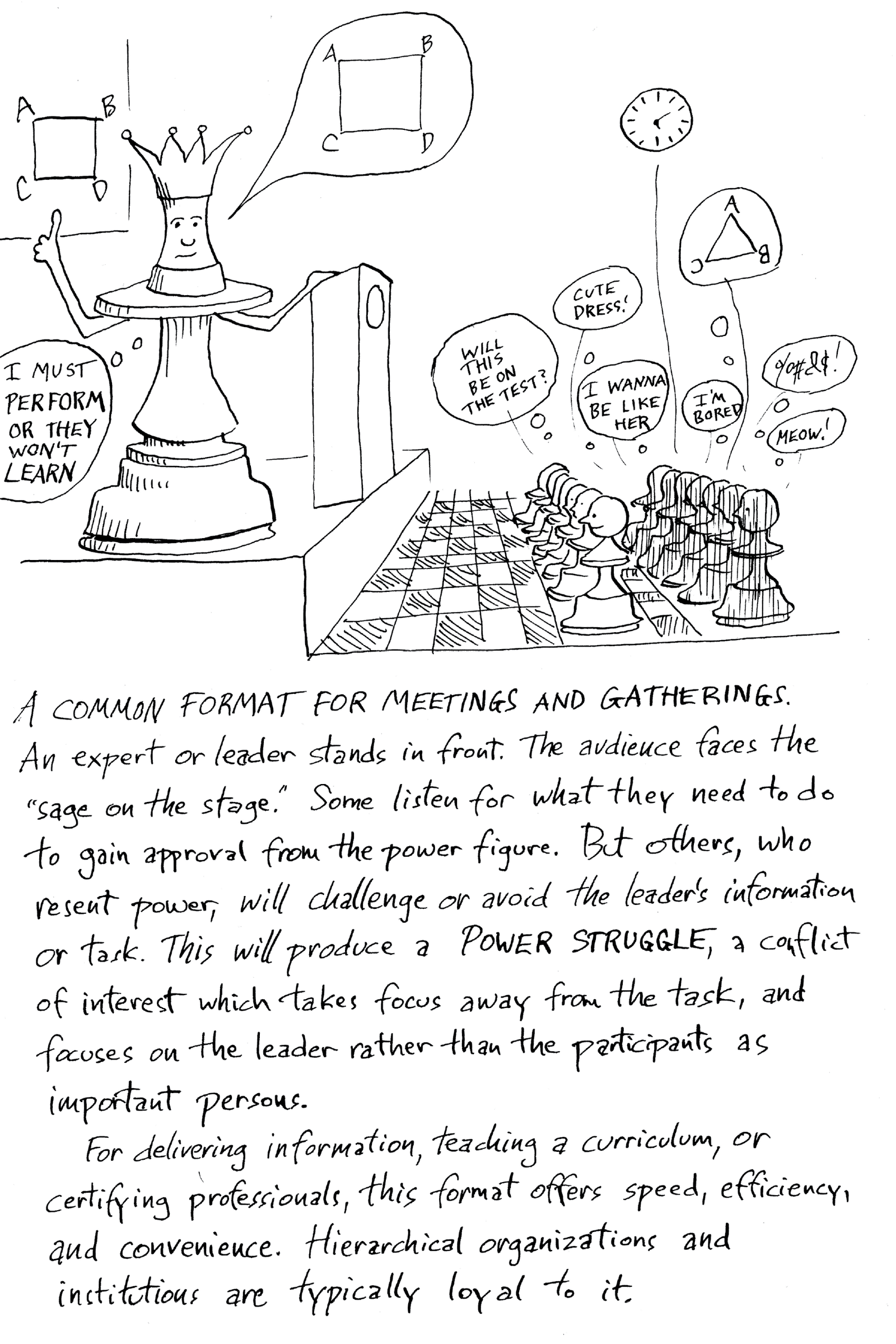
Daniel Yankelovich (1924-2017), an award-winning public opinion pollster, observed late in his career that government leaders, news organizations, and experts adhere to a dysfunctional, oversimplified understanding of public engagement. They put a premium on delivering information, often forgetting that when faced with hard choices, people make their decisions based on values and convictions more than information. This process takes time, sometimes decades. It requires conflict, dialogue, listening, growth, and deliberation.
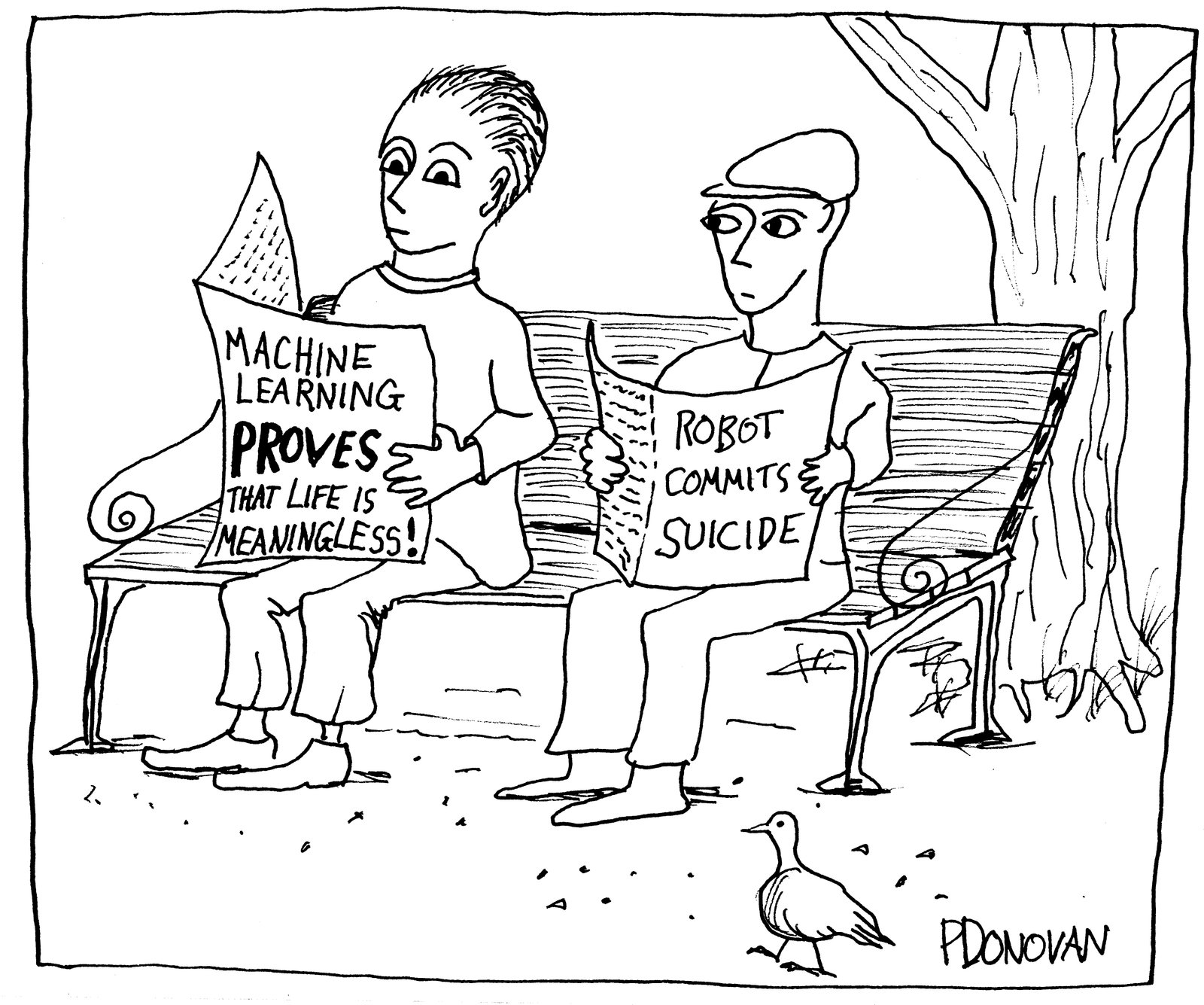
In our digital information age, speed wins. Faster and faster. Some people suppose that democracy and technical progress are incompatible because democracy is too slow. Controversies around artificial intelligence (AI) tend to focus on the rapid pace of its growth and scale, the rapidly increasing fears and hopes around its consequences, and the difficulties of governments, businesses, and citizens in coming to grips with it all, including the explosive buildout of data centers.
American historian Jill Lepore (author of These Truths: A history of the United States) has a new book, The Rise and Fall of the Artificial State (Liveright, 2026). It’s not just about artificial intelligence, but a larger context which she calls the Artificial State. From the book:
The Artificial State is a fantasy half built, dreaded, adored, awaited. I also believe it to be doomed.
The Artificial State is an unfinished digital communications infrastructure with which governments and especially private corporations organize and automate political behavior and public discourse by way of everything from direct mailing and robocalls to predictive algorithms, social media campaigns, AI agents, and bots (programs that mimic and often pass as humans). Within the Artificial State, nearly every element of public and democratic life–civil society, representative government, an informed citizenry, equality of rights, freedom of thought, freedom of expression, and faith in elections–is vulnerable to subversion through the reduction of politics to the digital manipulation of attention-mining algorithms, the trussing of government by corporate-owned digital architecture, the diminishment of citizenship to minutely message-tested online engagement.
The liberal nation-state requires the consent of the governed, the voice vote, quavering; the raised hand, sweating; the signature, wavering; the heart, pulsing. . . . . Liberal democratic states make citizens; the Artificial State makes trolls. . . .
Nearly two and a half centuries ago, Americans decided that societies of people are indeed capable of governing themselves by reflection and choice rather than being ruled by accident and force. But the question has returned, slightly revised: Are humans to abandon government by consent for government by machine?
The United States offers a chilling case study . . . .
The Artificial State that Lepore describes is founded on speed, convenience, and efficiency. We do things faster and more efficiently, and often they are the wrong things. We don’t want to be left behind. Opting out can feel regressive or contrarian.
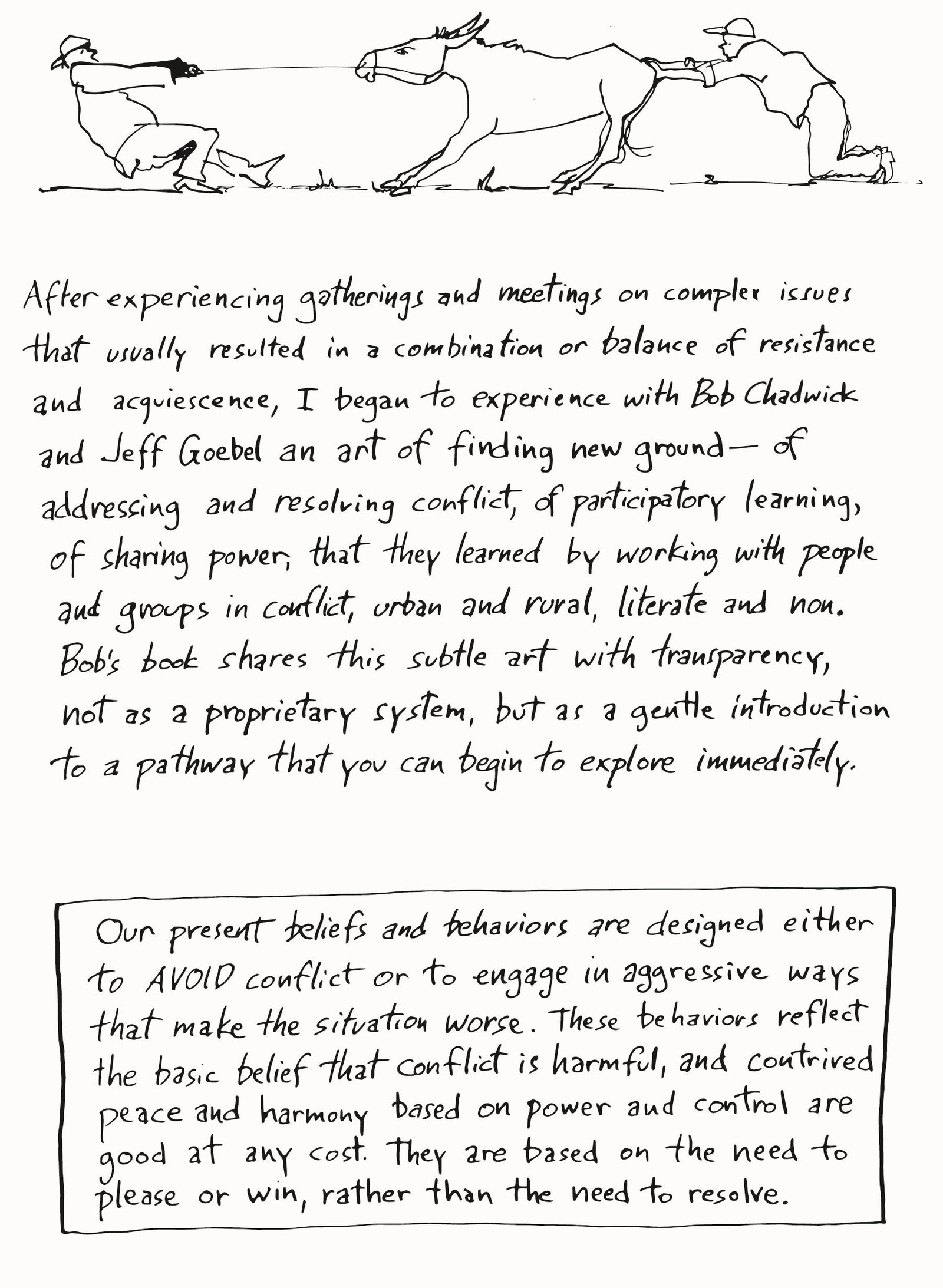
But we can opt in to dialogue, deliberation, and engagement. As Bob Chadwick said many times, “Is time the problem? Or is the problem the problem?” And, “go slow to go fast.” We forget how to do this, believing that time is scarce, and speed is all-important. So we have short engagements that promote messaging and suppress conflict.
Gather in a circle and take turns, with open questions. It takes time. It’s also more fun, with more learning, and might even be able to transform trolls into citizens.
The following panels are a couple of pages from one of the Tips booklets.