Hot food keeps changing after it leaves the kitchen. During takeout, delivery, drive-thru, catering, and grab-and-go service, a meal continues to lose heat, release moisture, and move inside its container.
Those changes affect each menu item differently. Fried chicken can lose its crisp coating. A toasted sandwich may soften as moisture escapes from the filling. Pasta and rice dishes can cool or shift during transport, while curries, gravies, and sauced entrées need packaging that can handle weight and movement without leaking.
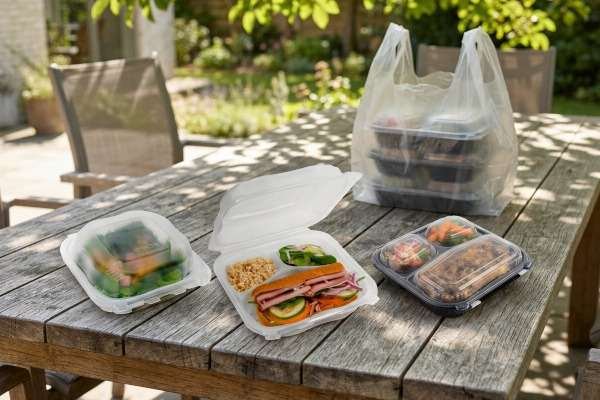
Choosing the right food packaging for hot food starts with understanding what the meal will experience between the kitchen and the customer.
What Happens After Hot Food Is Packed?
Three processes begin as soon as a hot meal enters a container.
Heat begins to move outward
Heat naturally travels from the food toward the cooler air, container walls, takeout bag, and surrounding environment. Packaging cannot add heat, but it can slow the rate at which the meal cools.
Several factors affect that rate:
- Starting temperature
- Portion size and density
- Container material and construction
- Amount of empty space
- Outdoor and vehicle conditions
- Holding and delivery time
A dense portion of lasagna may retain heat differently from a small order of fries. That is why packaging should be tested with the actual food and portion rather than selected by temperature alone.
Moisture leaves the food
Hot food contains moisture that continues moving outward after cooking. Pasta, vegetables, rice, meat, bread, and fried foods all release some moisture into the air inside the package.
The amount matters, but so does the texture customers expect. Moisture surrounding a soft, sauced entrée may cause little noticeable change. The same moisture can quickly soften breading, toasted bread, or fries.
Steam can become condensation
When warm, moist air reaches a cooler lid or container wall, droplets can form. That condensation may collect above the food, run down the sides, or settle back onto the meal.
The result can be softened breading, wet roasted vegetables, diluted sauces, or excess water around an entrée. A clear lid covered in condensation can also affect presentation and make order verification more difficult.
Heat Retention and Moisture Control Are Not the Same
Effective heat retention food packaging must slow temperature loss without creating moisture problems that damage the meal.
A tightly enclosed container may hold heat effectively but trap too much steam. A highly vented package may release moisture but allow certain foods to cool faster. The right balance depends on what matters most for the menu item.
| Menu item | Main risk during transport | Packaging priority |
|---|---|---|
| Fried or toasted food | Steam softens the exterior | Controlled venting and enough room |
| Pasta, curry, and sauced entrées | Cooling, shifting, and leaking | Depth, structure, and secure closure |
| Rice and grain bowls | Heat loss and ingredient movement | Stable base, fitted lid, and proper volume |
| Combination meals | Moisture transfers between foods | Compartments and separation |
| Meals intended for reheating | Package is unsuitable for customer use | Material appropriate for reheating |
Venting is useful when steam threatens texture. Some containers use permanent openings, while others allow vents to be activated only when needed. Our guide to vented food packaging also explains how selective venting can help when one part of a meal needs moisture release and another does not.
Match Packaging to the Way the Food Behaves
The best container is determined by more than serving temperature.
Fried and toasted foods need room for steam
Fries, tenders, fried seafood, breaded appetizers, and toasted sandwiches are sensitive to trapped moisture. These foods generally benefit from controlled ventilation and enough space to prevent crowding.
A vented polypropylene format such as a Clover™ hinged container can be considered when a hot meal needs moisture release, stacking stability, and microwave-safe convenience. The container still needs to fit the portion correctly. Venting cannot compensate for fries packed too tightly or breading crushed against the lid.
Sauced and dense meals need containment
Pasta, curries, rice dishes, meatballs, and other sauced entrées create a different set of priorities. These foods may need:
- A deeper container
- A secure, well-fitted lid
- Enough structural strength for the portion
- Resistance to movement during transport
- Microwave-safe convenience when reheating is expected
A bowl may perform better than a clamshell for meals that are stirred, layered, or eaten with a fork. For example, Grab-A-Bowl provides a stable polypropylene format for hot or cold bowl-based meals without forcing the food into a hinged package.
Combination meals need separation
A container can manage steam correctly and still deliver disappointing food if wet and dry components touch.
Gravy can move into fries. Vegetables can release moisture beside breaded chicken. Sauce can spread across rice, bread, or a crisp side during transport.
Compartmented containers, such as ProView™ Close-Off, and separate portion cups help protect each component according to its needs. The goal is not simply to divide the meal visually. It is to limit moisture transfer, movement, and flavor mixing before the customer opens the package.
Material Matters, but Application Matters More
Container materials have different temperature ranges and performance characteristics, but material alone does not determine the result.
Polypropylene may be useful for hot meals and microwave reheating. Molded fiber can support hot and cold applications where a fiber-based format fits the operation’s needs. Insulated formats may be considered when slowing heat loss is a priority.
Temperature range is only one part of choosing the right food packaging material. You can check the recommended application ranges in our material temperature guide, but temperature alone does not determine whether a material is right for a specific application. Food moisture, weight, holding time, and intended customer use should also be considered.
Size and Pack-Out Can Change the Result
Even a suitable material can perform poorly when the container and portion are mismatched.
A package that is too small can:
- Compress the food
- Trap moisture between pieces
- Place pressure on the lid
- Increase the risk of spills
A package that is too large can:
- Allow food to shift
- Create weak presentation
- Leave unnecessary empty space
- Make stacking less stable
Staff practices matter as well. Vents should not be covered, hot and cold items should be separated when appropriate, and sauces should be packed apart when direct contact would damage another component.
Test the Complete Order
Packaging should be evaluated under real service conditions, not only when empty.
- Pack the standard portion immediately after preparation.
- Close, stack, and bag the order as staff normally would.
- Evaluate it after realistic pickup and delivery times.
- Check temperature, condensation, texture, leakage, and presentation separately.
- Repeat the test with sauces, sides, and the largest normal portion.
- Compare another size, material, or venting option when results are inconsistent.
This process may show that the solution is not simply “more insulation” or “more venting.” The meal may need better separation, a deeper base, less empty space, or a different format altogether.
Build the Package Around the Meal
Good food packaging for hot food slows unwanted temperature loss, manages steam, protects the portion, contains sauces, and supports the way the meal will be transported and reheated.
The right choice may be a vented hinged container, a deep bowl, a compartmented format, a molded-fiber package, or an insulated container. The decision should begin with how the food behaves after packing, not with one material used across the entire menu.
The right package depends on the food, portion size, expected travel time, and how the customer will use it. For help comparing suitable formats or evaluating options for a specific application, contact our team.
The post The Science of Takeout: Heat, Steam, and Food Quality Explained appeared first on Genpak.