

The BYD Sealion 5 plug-in hybrid SUV has been awarded three ANCAP safety stars, ending the Chinese brand’s run of maximum five-star ratings.
The result contrasts with the five stars achieved by BYD’s new M9 plug-in hybrid people-mover, with both vehicles assessed locally against ANCAP’s tougher 2026–2028 protocols.
The Sealion 5’s shortcomings were concentrated in crash avoidance and safe driving systems, although additional crash-protection assessments also revealed reduced protection for larger occupants and at higher crash severities.
READ MORE: BYD M9 lands from $61,990: Forget other Chinese people-movers, the M9 is aimed straight at the top-selling Kia Carnival
READ MORE: 2026 BYD Sealion 5 Essential Review: It’s Australia’s cheapest PHEV, so does that make it good value?
READ MORE: Cheap EVs clear tougher new ANCAP safety tests: Geely EX2 and Leapmotor B05 score five stars
The three-star rating covers both Essential and Premium versions of the five-seat SUV.
Until last week’s announcement of the smaller BYD Atto 2 DM-i, the Sealion 5 was Australia’s cheapest PHEV. It was also identified as a fleet opportunity at its launch earlier this year.
The result is likely to complicate that ambition, with five-star ANCAP ratings preferred by fleet buyers and required under many fleet purchasing policies.
ANCAP purchased six Sealion 5s for its assessment, while BYD supplied multiple M9s. Both programs involved right-hand-drive vehicles tested locally by ANCAP, rather than results drawn from its European counterpart Euro NCAP.
BYD had shown little enthusiasm for pursuing a Sealion 5 rating at launch, when there was already an expectation it would fall short of five stars.
ANCAP chief executive Carla Hoorweg confirmed the safety organisation independently selected the SUV for testing.
“Since then BYD has been, and continues to be, proactive in bringing forward models for ANCAP testing. However, the SEALION 5 was a model the brand hadn’t actively pursued for testing, and was subsequently selected by ANCAP to ensure consumers have a clear picture of its safety performance,” she said.
The Sealion 5 scored 48 per cent for Safe Driving, 51 per cent for Crash Avoidance, 79 per cent for Crash Protection and 74 per cent for Post-Crash performance. The M9 scored 75, 78, 89 and 100 per cent respectively.
The new protocols assess safety across those four stages, covering how a vehicle supports its driver, avoids collisions, protects people during a crash and assists occupants and emergency responders afterwards.
The Sealion 5 was new to Australia, but its origins are older. It is an updated version of the Chinese-market BYD Song Pro, which debuted in 2019.
That provides context for its safety specification, although ANCAP identified shortcomings in capabilities it has assessed for years, as well as newer requirements.
BYD’s previous five-star results were achieved under earlier protocols, which also imposed demanding requirements. The changed assessment structure means their individual category scores cannot be directly compared with these latest results.
BYD defended the Sealion 5, saying its rating reflected the strengthened testing requirements.
“The Sealion 5 is a safe vehicle that complies with all Australian Design Rules and regulatory safety standards,” a BYD spokesperson said.
“ANCAP introduced an updated testing protocol in 2026, with a strengthened assessment criteria compared to the 2023–2025 protocol which was applicable to the Sealion 5 at the time of its global introduction.
“The current rating reflects this new standard, not any change in BYD’s commitment to safety. Every other BYD vehicle tested by ANCAP has been awarded a five-star rating, which speaks to this commitment.”However, ANCAP stressed that the Sealion 5’s weaknesses extended beyond newly introduced requirements.
Its emergency lane-keeping system did not intervene when the vehicle departed towards the road edge, a capability ANCAP has encouraged since 2018.
Intervention to prevent collisions with oncoming or overtaking cars and motorcycles in an adjacent lane was also limited to speeds below 70km/h.
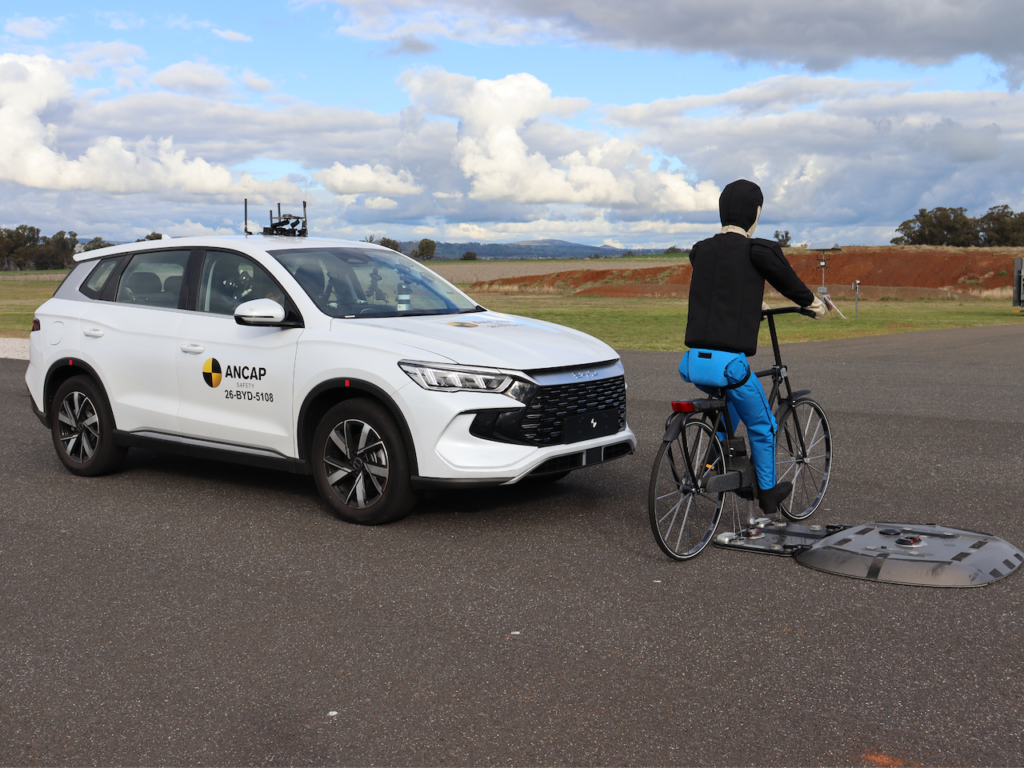
The SUV’s autonomous emergency braking system produced mixed results, with limitations in intersection scenarios, including T-bone collisions and turns across the path of pedestrians and cyclists.
Reverse autonomous emergency braking avoided collisions in only a limited number of assessed scenarios.
Child presence detection, which ANCAP has assessed since 2023, is not available. The Sealion 5 also lacks seatbelt misuse monitoring, occupant stature classification and a system to suppress unintended acceleration towards a pedestrian if the driver mistakenly presses the accelerator.
Its driver monitoring system could warn of several common forms of distraction but could not detect phone use or intervene for an unresponsive driver.
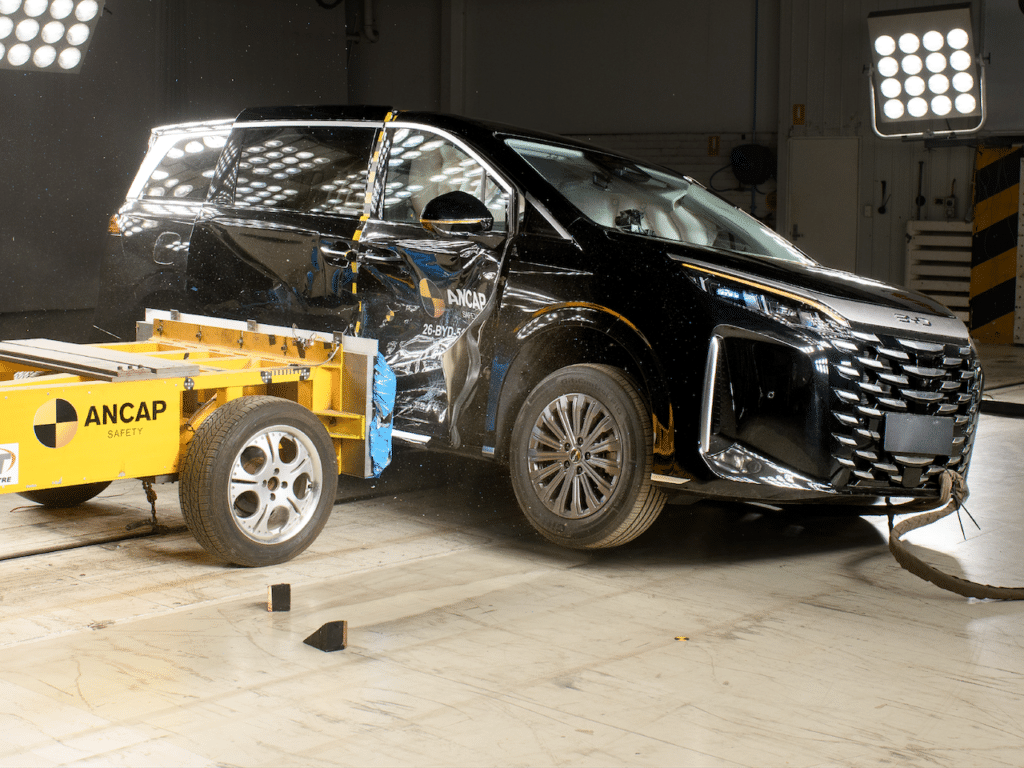
Physical crash testing produced stronger results, including maximum adult and child occupant-protection scores in the side-impact test.
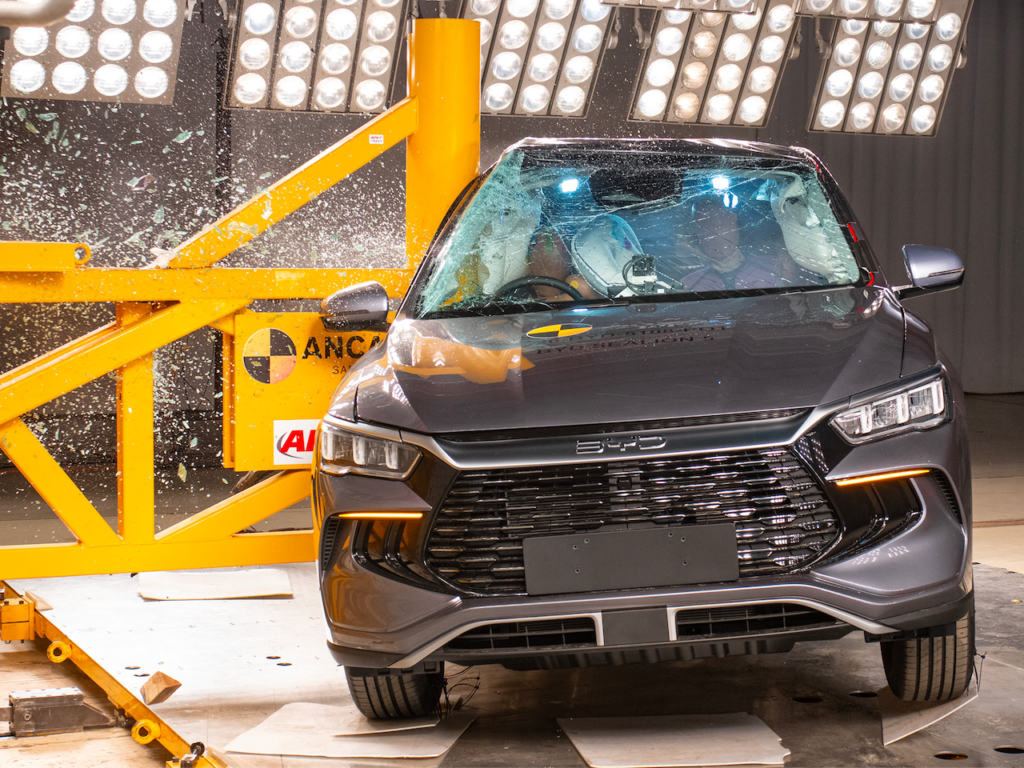
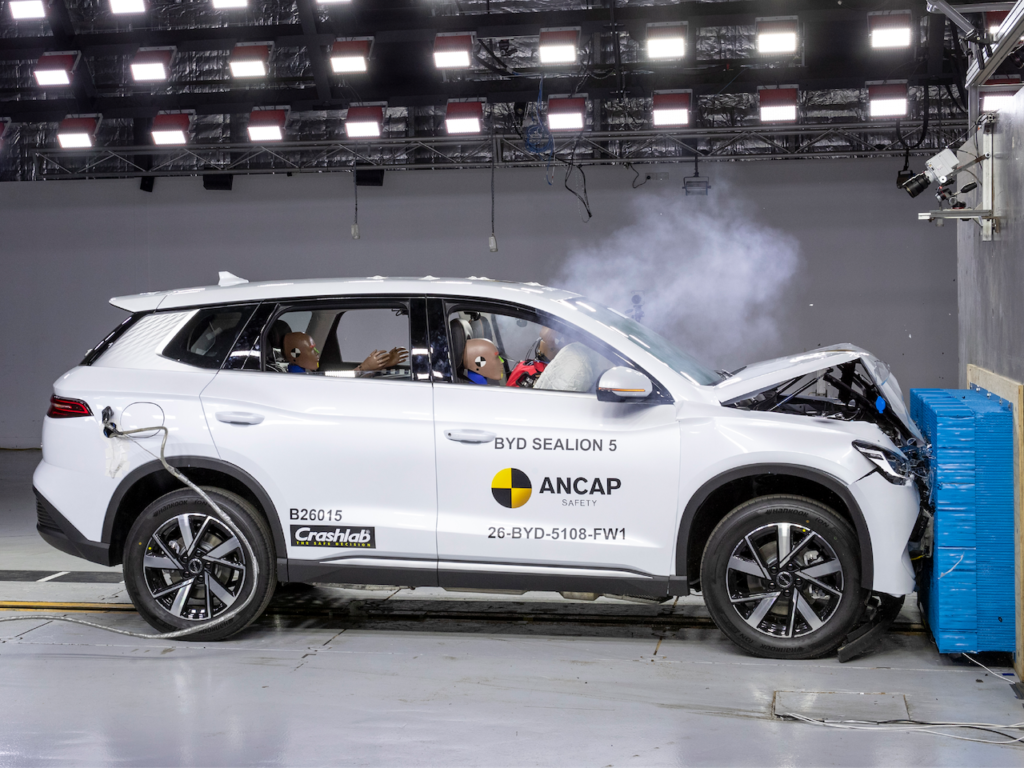
However, the frontal offset test identified higher injury risks to the driver’s chest and lower legs and the front passenger’s neck. Structures within the dashboard were also identified as potential injury sources.
Additional sled and virtual assessments, which examine different occupant sizes and crash severities, revealed weaker protection than the conventional full-width frontal test.
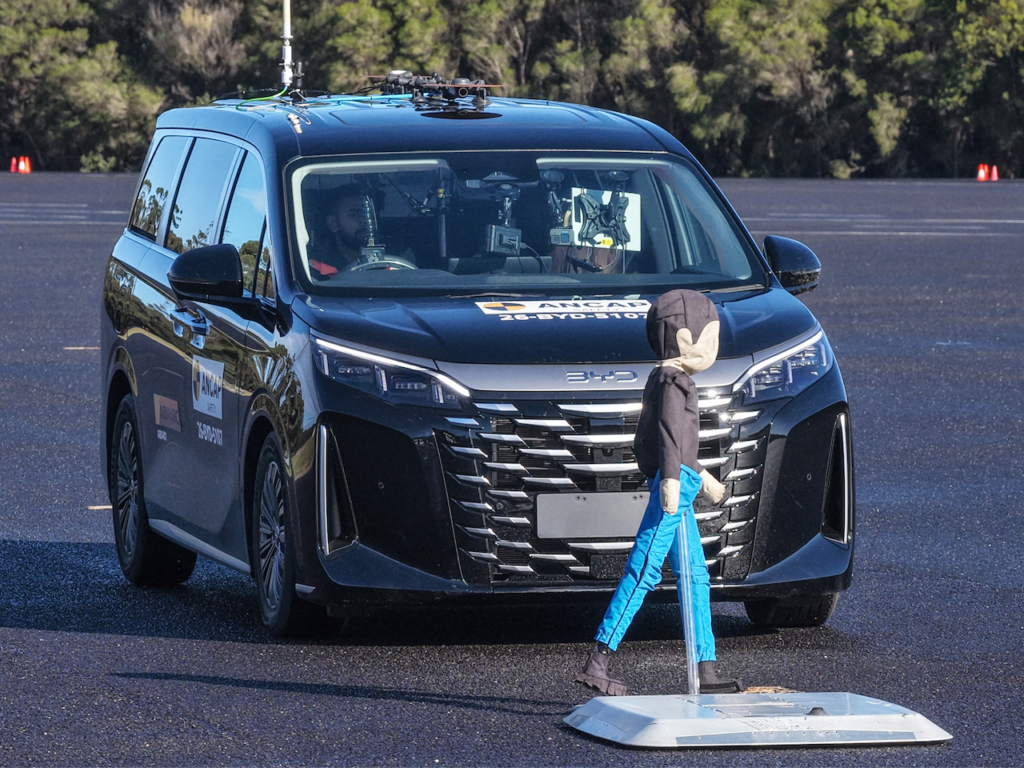
ANCAP also applied a crash-compatibility deduction because the Sealion 5 presented a higher risk to occupants of an oncoming vehicle in a head-on collision.
A separate rollover-protection penalty was applied because BYD did not provide evidence demonstrating that the curtain airbags would deploy in a rollover and remain inflated for the required period.
The Sealion 5’s centre airbag performed effectively, and all child restraints selected for the installation assessment could be correctly installed in its rear seats.
Post-crash testing revealed another shortcoming: following the full-width frontal impact, battery voltage did not fall to the required level within the specified time, attracting a penalty.
Voltage isolation met requirements in the other three destructive crash tests, and battery thermal propagation performance scored full marks.
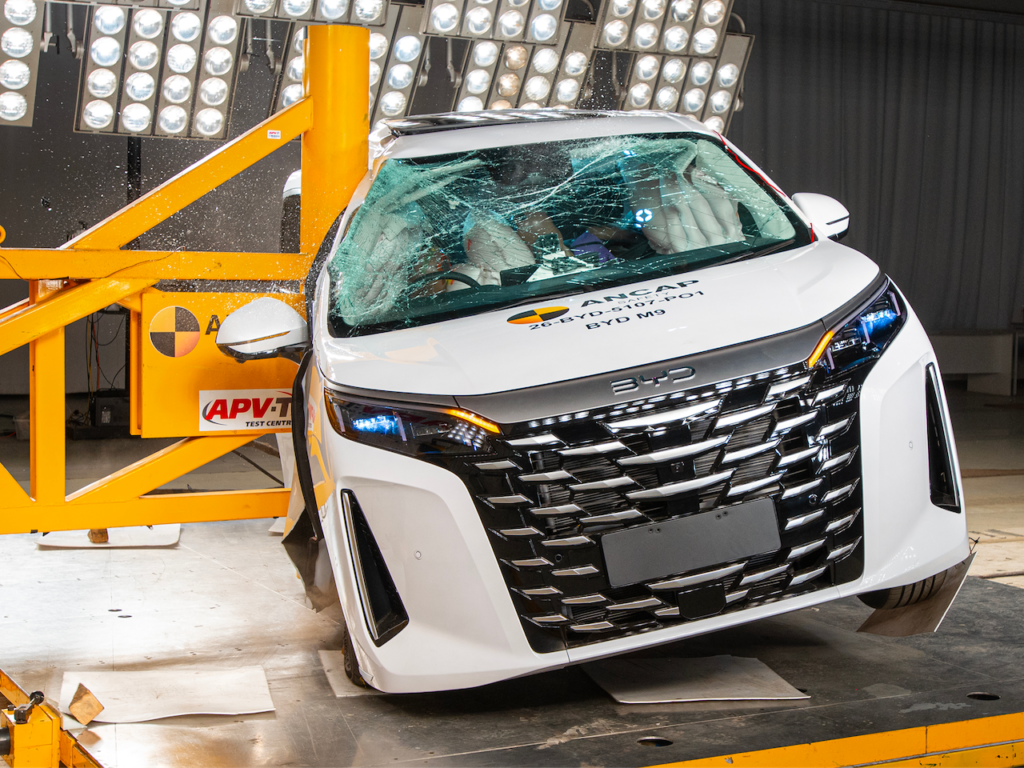
The Sealion 5 also lacks eCall, which can automatically summon assistance following a crash. Its seatbelt buckles, door releases and tailgate remained operable after the assessed impacts.
The M9 delivered stronger protection across frontal, side and rear-impact assessments, including maximum occupant-protection scores in the frontal offset and side-impact tests.
Its child presence detection system can notify the driver and activate the air-conditioning, while its lane departure prevention and low-speed collision avoidance systems performed well.
The people-mover achieved a perfect Post-Crash score, including effective battery voltage isolation, fire-risk management, accessible door releases and eCall.
However, its five-star result comes with qualifications. The rating currently covers seven-seat variants only, including Australia’s Premium. It does not cover the eight-seat Dynamic offered here. The vehicle tested was a seven-seat Dynamic variant sold in New Zealand.
ANCAP also identified marginal third-row whiplash protection. Most assessed child restraints could not be correctly installed in the third-row left seat, despite that position having ISOFIX and top-tether anchorages. Child restraints should not be used in the third-row centre or right seats.
Like the Sealion 5, the M9 attracted a crash-compatibility deduction because its structure presented a higher risk to occupants of an oncoming vehicle.
The post Three-star setback: BYD Sealion 5 breaks brand’s perfect ANCAP run as M9 people-mover scores five appeared first on EV Central.


