

Trying to keep up with environmental laws while ensuring your products don’t break during delivery is a big challenge. Managers want to avoid greenwashing risks, but they live in absolute terror of broken products and 1-star reviews if a sustainable option fails during transit.
Switching to eco-friendly materials is a great first step, but it doesn’t solve everything. If brands just swap plastic for recycled paper without changing the actual architecture of the box, it’s going to get crushed during transit and delivery.
To make this work, designing the shape and internal support of the package from the very beginning is your real safety net. It’s the only way to slash material volume by 80%, satisfy regulators, and save your margins without risking broken products.
Material Innovation: Swaps that Strengthen Your Sustainable Packaging Strategy
Fixing your packaging strategy starts with the materials themselves. Right now, standard shipping relies way too much on plastics and mixed materials that are impossible to recycle. But ditching them doesn’t mean risking damaged goods. That’s where better structural design comes in.
At Zenpack, our engineering team focuses on replacing the worst environmental offenders: bubble wrap, EPS, polyurethane, and laminated cartons. But a green material is useless if it jams up your packaging line or fails in transit. The real engineering happens when you make these eco-friendly options run smoothly in the warehouse while keeping your products completely safe.
Replacing Bubble Wrap with Paper-Based Cushioning
Storing traditional bubble wrap is not only non-recyclable, but it also takes up a lot of space. Because you can’t compress those giant plastic rolls on a pallet, they crowd your warehouse and eat up square footage that should be used for sellable inventory. Consequently, fulfillment teams have to use oversized shipping boxes just to fit all that plastic wrap around the product. That immediately drives up your shipping costs through dimensional weight fees.
Ditching plastic doesn’t mean leaving products unprotected. Brands can switch to paper-based void fill or honeycomb wrap instead. When pulling honeycomb paper tight, the flat sheet stretches into a 3D mesh. This geometry creates a springy, thick cushion that locks items in place, meaning nothing shifts when a delivery truck hits a pothole.
Because it is entirely paper, customers can toss the whole package straight into the recycle bin. Brands keep products completely safe during transit while giving customers a clean, premium unboxing experience.
Replacing EPS with Molded Pulp
Everyone knows Expanded Polystyrene (EPS), or Styrofoam, is great at absorbing shock. But the environmental cost is brutal. These blocks sit in landfills forever and break down into toxic microplastics. To avoid this liability, modern packaging design uses mycelium or molded pulp corner blocks instead.
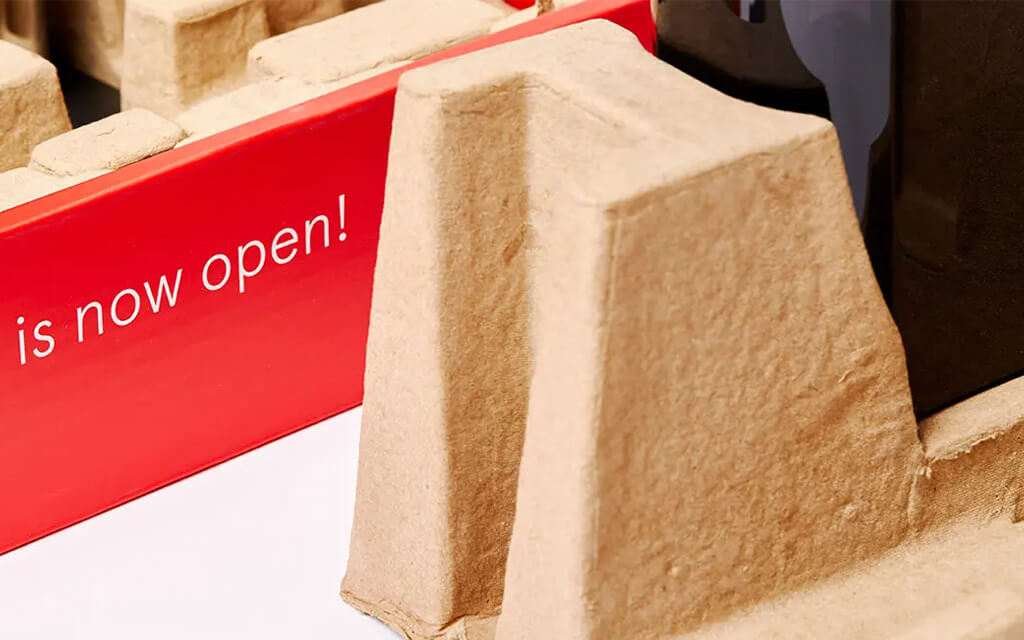
Zenpack proved this works for heavy electronics during their Drinkworks project. They needed to protect a fragile, 30-pound beverage machine without using any Styrofoam. The solution was a heavy-duty molded pulp tray. It stopped transit vibrations and kept the inside of the box looking clean. Zenpack also added a patented twist-lock mechanism to speed up the unboxing process for customers. This design ended up winning an AmeriStar Award.
Replacing Polyurethane Foam with Corrugated Packaging Design
Polyurethane foam handles heavy, irregular shapes well, but it’s toxic to make and impossible to recycle. Zenpack replaces this chemical composition with engineered molded fiber or custom corrugated inserts.
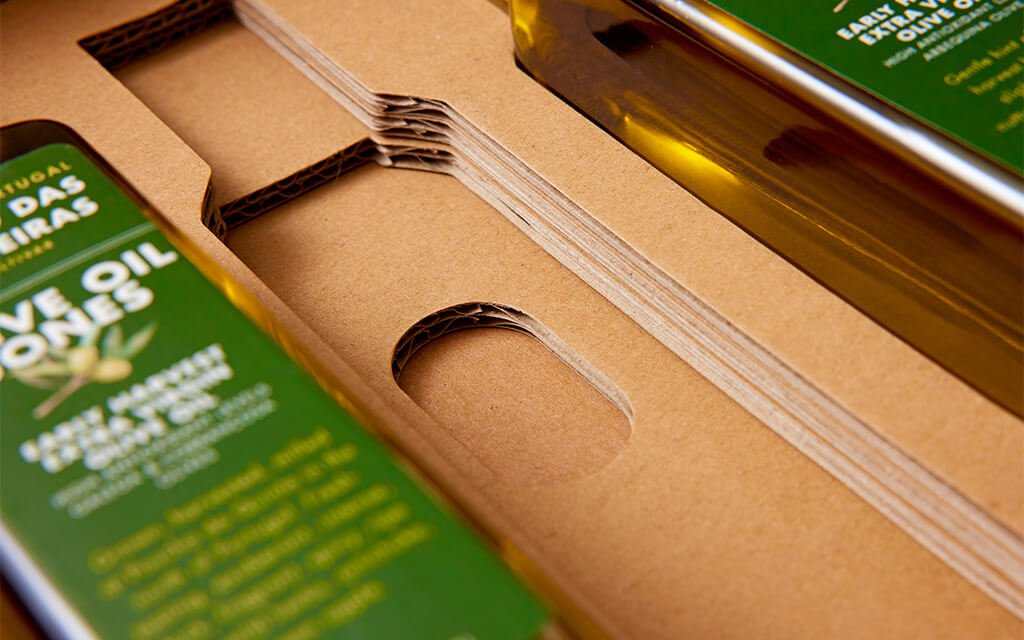
Zenpack successfully commercialized this sustainable framework for artisanal distributor Olive Oil Jones. They needed an unyielding, plastic-free shipper that could handle rough transit.
Rather than defaulting to polyurethane foam, Zenpack’s packaging engineers developed custom triangular corrugated structures combined with internal layers featuring circular cut air pockets. This precise geometry provides even weight distribution and dampens transit shock, fully isolating the vulnerable bottle necks from destruction. This compact, easy-to-assemble corrugated system streamlined fulfillment for the brand’s workforce while systematically protecting their operational bottom line.
Replacing Laminated Cartons with High-GSM Sustainable Packaging
Many brands still coat their boxes in shiny plastic, thinking it makes them look high-end. That choice creates a massive recycling issue. Once the thin plastic layer is applied to paper fibers, it becomes impossible to separate them at the recycling plant, sending the entire package straight to the trash.
Zenpack resolves this recycling conflict by switching to a high-quality, coating-free Recycled Kraft Board. Getting rid of the plastic shield means your packaging has to rely on real engineering, like high gsm thickness and raw tactile texture, to protect the product. This heavy material density gives your brand an authentic, eco-friendly presentation that still feels premium, while complying with global circular economy rules.
Structural Engineering: Why Smart Packaging Design Drives True Sustainability
While smart material swaps establish a strong foundation, the true efficacy of a sustainable packaging strategy is realized through physical geometry. Advanced packaging design must move beyond loose cushioning and embed protection directly into the box’s internal architecture.
By focusing on how a box is engineered, you can actually use less material while providing better protection. Here is how that works in practice across different design strategies.
1. Simplifying with Mono-Material Design
Gluing different materials together is the main reason most packaging fails sustainability checks. A classic example is sticking a plastic window onto a cardboard box. The fix is mono-material design: building the entire system out of one single material family.
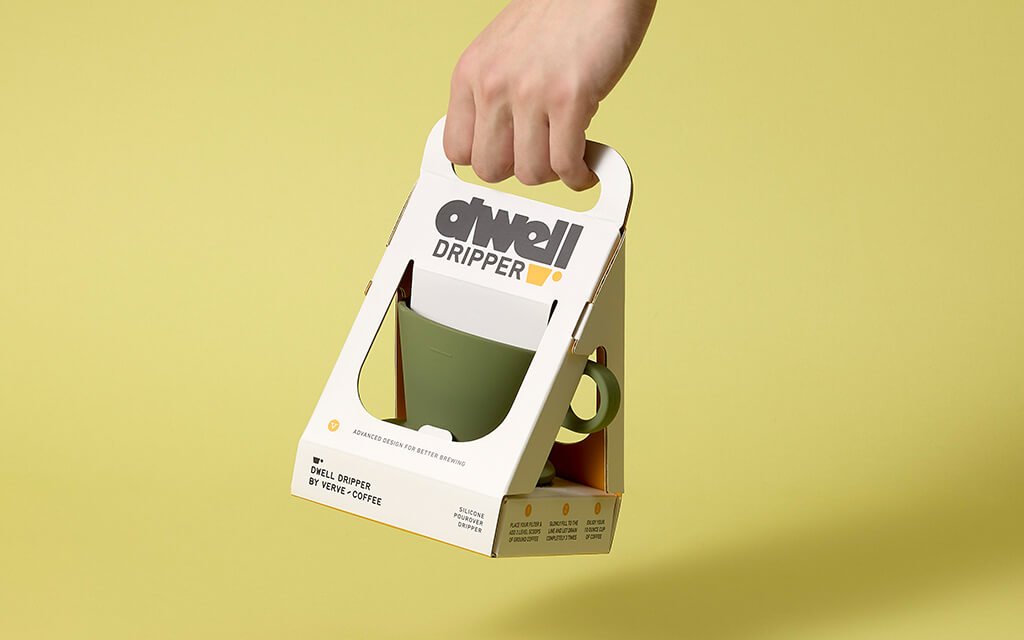
Zenpack executed this strategy for the Verve Coffee Dwell Dripper, creating a 100% paper system that completely eliminated plastic and glue. Inside, a custom paper insert holds the delicate dripper tight. Outside, the heavy outer carton takes the beating during transit.
Because it is a true mono-material made with roughly 60% recycled content, customers can drop the entire unboxing experience straight into one recycling bin without separating parts. This design took First Place at the Dieline Awards, proving you can easily meet strict global recycling laws without compromising on product safety.
2. Geometric Engineering Over Cushioning in Sustainable Packaging
Most companies waste piles of plastic bubble wrap for a simple reason: their outer shipping boxes are just too big. Zenpack resolves these sizing inefficiencies through strategic geometric engineering instead of relying on loose void fillers. By shaping the inside of the box correctly, the cardboard itself becomes a high-performance shock absorber.
For the Olive Oil Jones project, our engineering team used this approach to build the paper-based shipper out of recycled kraft board. They completely skipped the plastic wrap. Instead, they built custom cells and dividers directly into the cardboard along with special tension folds. It works like a built-in suspension system for fragile glass bottles. If a box drops, the paper geometry takes the hit, so the bottles never clink together.
Our team used only three highly circular components: recyclable corrugated cardboard, water-soluble white glue, and eco-friendly soy ink. That meant no bubble wrap. No air pillows. No plastic tape either. For a smaller operation, this was a massive win. They met their recycled-content targets, and more importantly, they didn’t have to sacrifice assembly-line speed just to Keep the bottle from breakage.

3. Precision Molded Fiber for Advanced Packaging Design
Electronic products have too many moving parts to risk letting them slam into each other during shipping. Yet, brands frequently default to cheap plastic trays to keep components separated. We swap those unrecyclable plastics for engineered fiber. Molded pulp can be pressed into incredibly sharp, rigid shapes. This paper layer easily handles drops and vibrations.
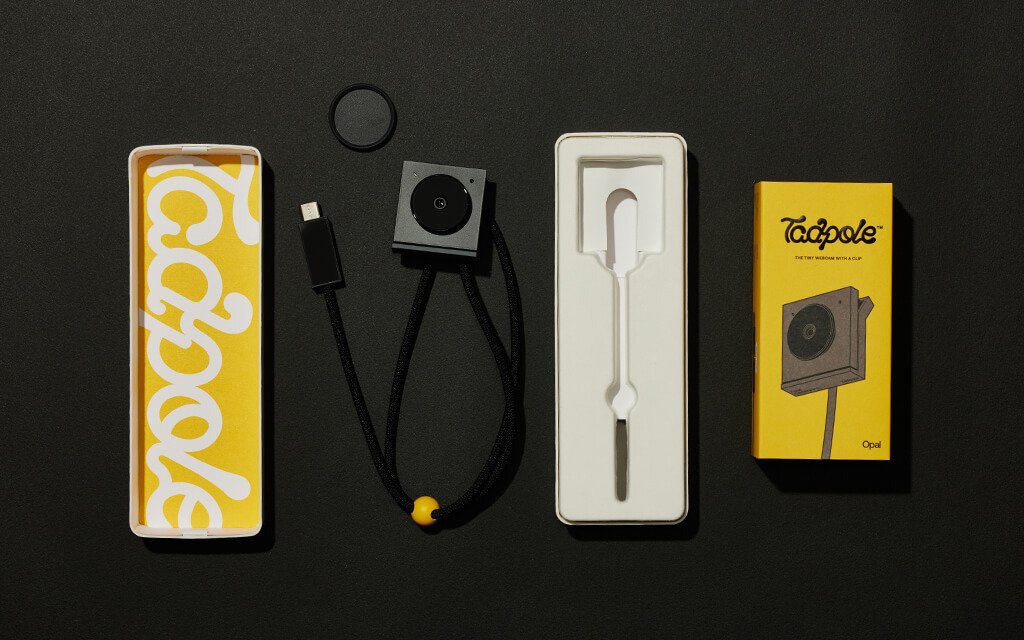
Zenpack deployed this configuration to eliminate plastic from the compact Opal Tadpole Camera, by pairing an eco-friendly molded pulp tray with a fully recyclable outer box. It wasn’t easy. Molded pulp normally struggles with fine details and tight manufacturing draft angles. To get around this, our team developed a custom die-cut tool.
This tool allowed us to punch narrow channels and an under-tunnel pathway straight through the tray, completely hiding the camera’s flexible cable. We also added a custom folded paper structure underneath. When you press the tray down, it catches the bottom with a satisfying, tactile click to lock everything in place. This layout sped up warehouse assembly and took home both a Silver Pentaward and a Dieline Award.
4. Integrating Circular Architecture into Long-Term Packaging Strategy
A package’s environmental footprint shouldn’t end the moment a customer opens the box. If a package is designed to stay on a shelf or serve for a secondary purpose, its long-term impact drops overnight. There are two ways to make this happen: building a durable structure meant for refills or using smart design to change how people dispose of the materials.
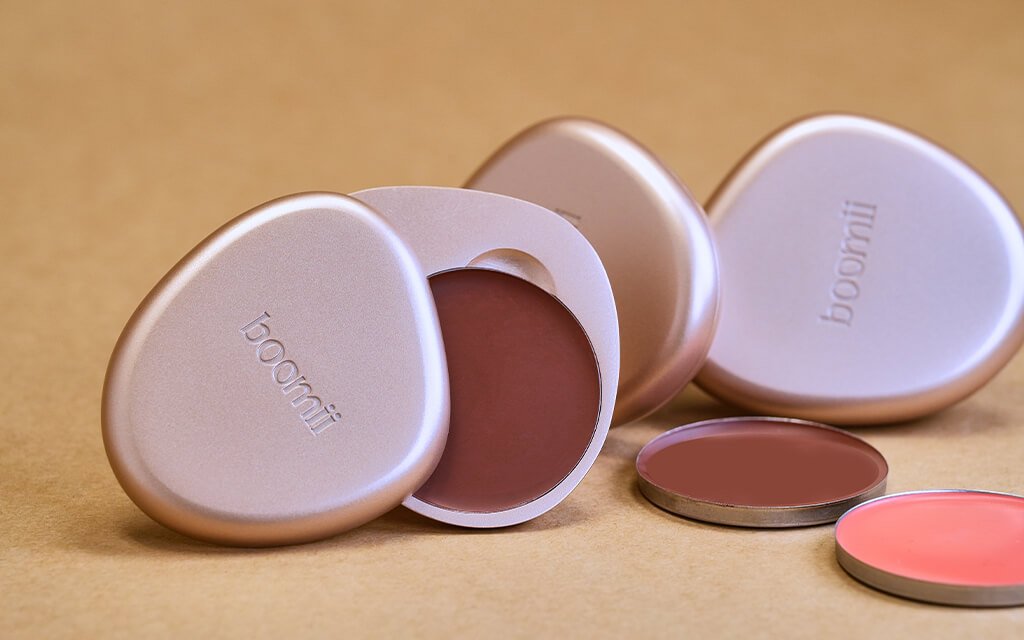
Zenpack took the refill approach for the beauty brand Boomii. We made a rugged, premium keepsake compact out of recycled aluminum. Inside, it holds lightweight stainless steel cartridges for refills. Because customers only swap the inner pod, Boomii cuts total material use by over 80%. It is a massive shift in how cosmetics get shipped. The packaging community noticed, too. The design landed on the Pentawards 2025 Shortlist.
Zenpack applied a different tactical approach for Cambio Roasters to actively guide consumer disposal behavior. Zenpack engineered a rigid molded pulp container held together by a glue-free paper belly band. Instead of tossing it out immediately, the customer can easily turn it into an elegant countertop recycling bin for their coffee pods. Once full, they can throw the entire pulp container into a composting or recycling bin. This project won an iF Design Award 2024, proving that circular design can naturally upgrade a brand’s long-term strategy.
Securing Margins with a Sustainable Packaging Strategy
Transitioning to sustainable packaging isn’t just about avoiding regulatory fines or doing the right thing for the environment. It is a direct way to optimize your bottom line. When you eliminate legacy plastics and oversized boxes, you stop paying carriers premium rates to ship trapped air.
Ultimately, keeping your products safe during a major material transition comes down to the relationship between smart materials and clever geometry. Whether you leverage mono-material setups, custom paper suspension folds, precision molded fiber, or refillable architecture, you can achieve zero-damage shipping without sacrificing a premium unboxing experience.
Reach out to Zenpack’s premium design team today, and let’s build your next-generation circular solution.
The post Transitioning from Traditional to Sustainable Packaging Without Risking Protection appeared first on Zenpack Blog.


