
Warm spells in the middle of winter can be problematic for grape growers. After harvest, grapevines gradually acclimate to cold and enter dormancy. But prolonged periods of warmer weather can wake them up, leaving them vulnerable to dramatic temperature fluctuations.
Saskatoon-based ABAzyne is developing a spray that could help growers manage that risk by helping vines prepare for winter earlier and protecting them from temperature swings longer.
Current options range from expensive wind machines and heaters to the labour-intensive practice of burying vines for the winter. A fall-applied treatment that improves the vine’s natural cold hardiness could provide another option as winter weather extremes become more frequent.
“Weather is something farmers can’t control. What we’re offering is a way to respond to the unpredictability of weather,” says ABAzyne CEO Jerome Konecsni.
In British Columbia, grape and tender fruit growers suffered catastrophic weather-related crop losses following an extreme polar vortex in January 2024 that saw temperatures plunge below -20 C after a warm early winter.
The company’s first product, ABAboost, has undergone sevenv to eight years of field testing in wine grapes, where trials have shown treated vines can withstand temperatures as much as 6 C colder than untreated vines, although results vary with weather and application timing.
ABAboost is based on abscisic acid, or ABA, a hormone found naturally in plants that helps regulate their response to stresses like cold, drought, heat and salinity. The technology was developed by Dr. Sue Abrams during her career as a scientist with the National Research Council.
According to Konescni, natural ABA acts as a messenger, triggering a plant’s response to stress, but its effects are relatively short-lived. Abrams, now an adjunct professor in the University of Saskatchewan’s department of chemistry, modified the ABA molecule so that its effects last longer.
“She used a similar concept that they use in slow-release drugs – modifying the molecule slightly so it stays in the plant longer and has the desired effects (longer),” he explains.
The product is sprayed on vines in the fall after harvest but before leaf drop, and weather conditions and the stage of the vine’s annual cycle can affect how strongly it responds to treatment.
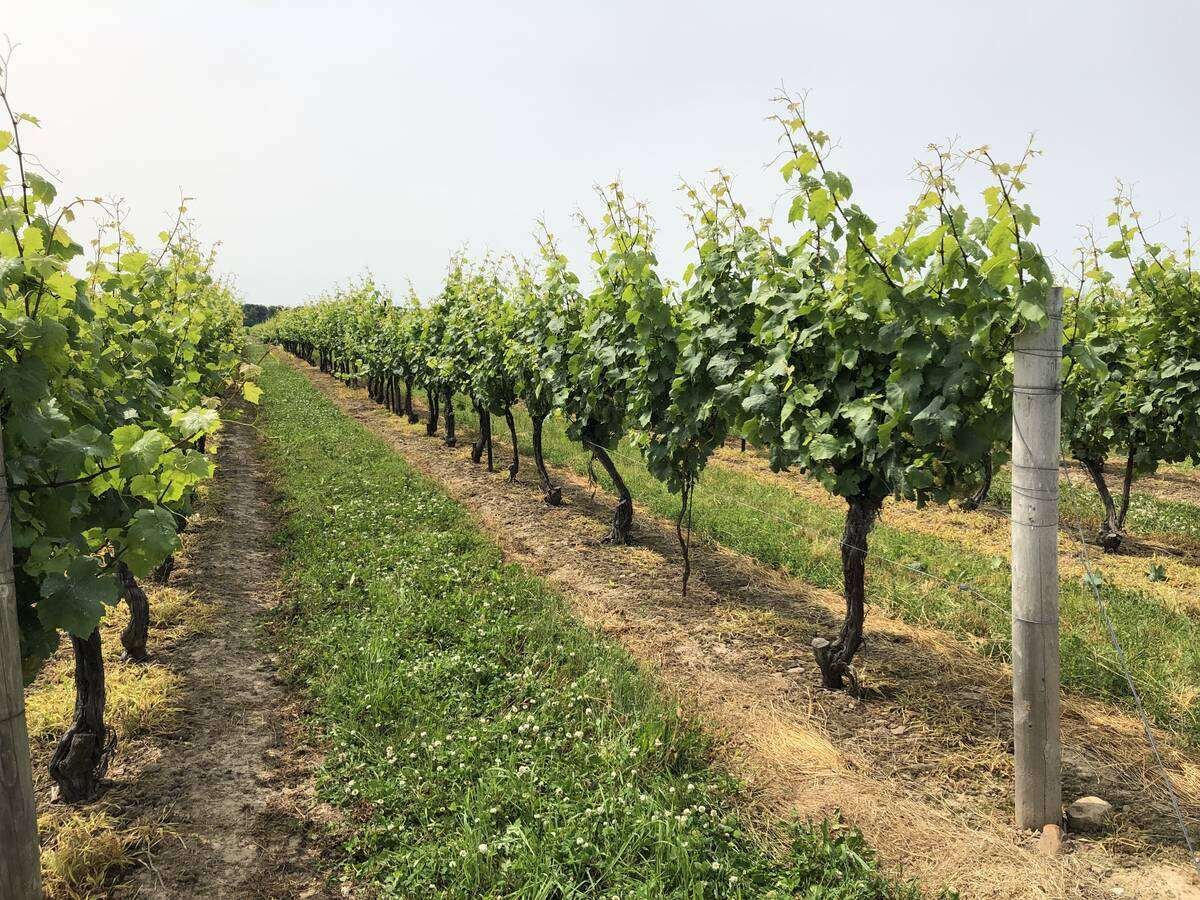
The technology has been tested at Brock University and Agriculture and Agri-Food Canada’s Summerland Research and Development Centre, as well as in four years of U.S. studies, including work at Cornell University and Penn State University.
“These are independent verifications of our technology; they’re trying to address these issues in wine grapes and other tree fruits. Cherries, peaches and blueberries in Canada have been hit with similar issues,” he says, adding that field studies to date have been limited to wine grapes.
Next up comes commercial-scale fruit trials, manufacturing
ABAzyne has applied to the Canadian Food Inspection Agency to register ABAboost as a fertilizer supplement. If approved, the company plans commercial demonstrations on approximately 30 to 50 acres across Canada. The larger trials will let the company work with growers to refine application rates and timing and determine whether the treatment makes economic sense for farm businesses.
Grape Growers of Ontario has supported six years of research into the technology, and ABAzyne has also worked with fruit growers and researchers in British Columbia.
More recently, the company received funding through HARVEST, an agri-tech commercialization program managed by Ontario Genomics and funded through Agriculture and Agri-Food Canada’s Agricultural Clean Technology Accelerator program.
Konecsni said the funding will help ABAzyne produce enough material to move from research plots into larger grower demonstrations.
“We need to make enough product so we can test it properly,” he said.
The company has also started testing ABAboost in other perennial crops, including cherries, apples and peaches, and is also developing another product called ABAblocker. It’s an earlier-stage technology that does the opposite of ABAboost by blocking the plant’s response to natural ABA and has been tested in canola, lentils and rice as a possible way to encourage earlier germination.
For now, however, the focus is getting ABAboost registered and into larger-scale grower trials.
The post Treatment to boost grapes’ winter hardiness beta-tested appeared first on Farmtario.


